







- Site Navigation -
Troughing Idler Roller Design and Benefits Guide for Conveyor System Efficiency
Author:yuexing Date:2026-05-15 16:44:02 Hits:170
Troughing Idler Roller Design and Benefits Guide
A troughing idler roller is a core mechanical component in belt conveyor systems designed to shape the conveyor belt into a concave trough, improving material containment and load efficiency. In modern bulk handling industries such as mining, cement, and logistics, its structural reliability directly determines system throughput and operational stability.
What is a Troughing Idler Roller
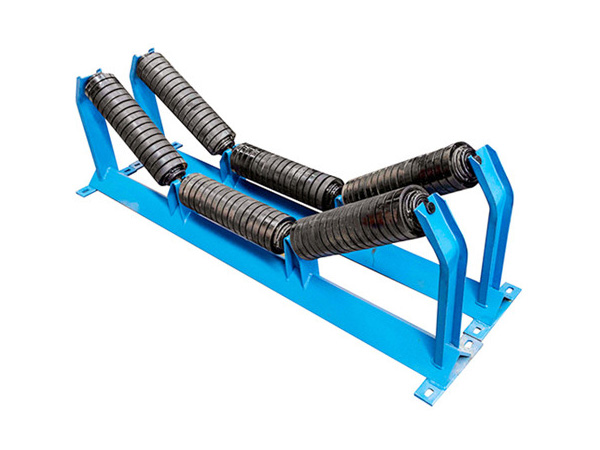
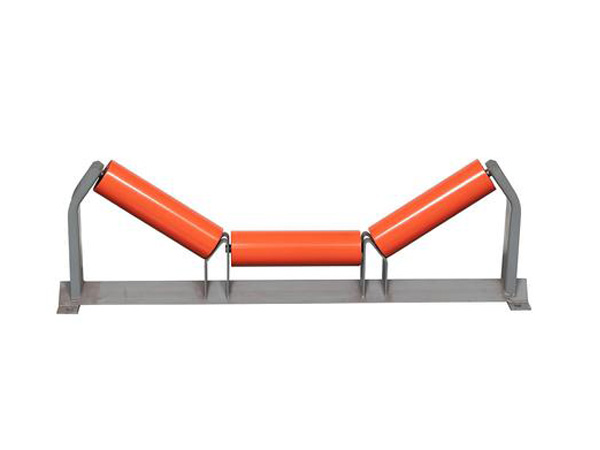
A troughing idler roller typically consists of one center roller and two wing rollers arranged at fixed angles. This configuration forms a “V” or “U” shape that supports the conveyor belt and stabilizes bulk material flow. Industry studies confirm that this geometry significantly improves load distribution and reduces belt misalignment risks.
Structural Design Principles
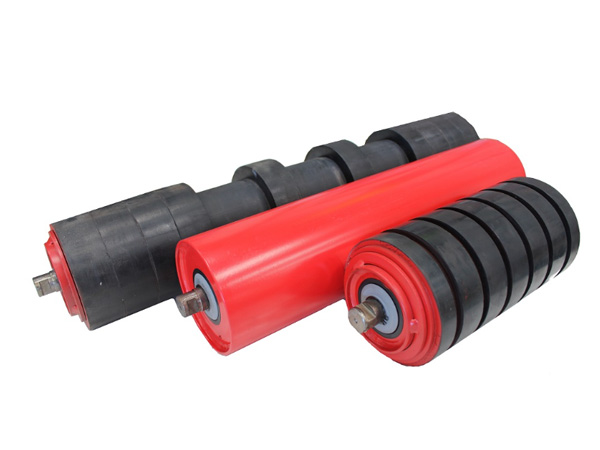
The design of a troughing idler roller focuses on balancing mechanical load, rotational friction, and structural durability. The frame must maintain precise alignment to avoid uneven belt wear. Engineers typically use steel, HDPE, or composite materials depending on environmental conditions and abrasion levels.
Trough Angle and Load Distribution
One of the most critical parameters is the troughing angle, commonly between 20° and 45°. A higher angle increases carrying capacity by expanding the cross-sectional material volume on the belt. However, it also increases belt stress and energy consumption. Proper selection requires balancing throughput efficiency and mechanical wear.
Material Spillage Control
A major advantage of the troughing idler roller system is spillage reduction. By maintaining a concave belt profile, material is naturally centered during transport. This reduces loss of fine particles, improves workplace cleanliness, and minimizes environmental contamination—especially in mining and aggregate handling systems.
Energy Efficiency and Belt Stability
Troughing idlers reduce lateral belt movement and frictional losses. Stable belt tracking ensures lower energy consumption in drive motors. In long conveyor systems, even small reductions in misalignment can translate into significant energy savings over time.
Maintenance and Service Life
Durability depends on bearing quality, sealing systems, and roller surface treatment. Sealed bearings protect against dust and moisture ingress, while precision machining reduces vibration. Regular inspection intervals are critical for preventing premature failure in high-load environments.
Industrial Applications
Troughing idler rollers are widely used in:
Mining conveyors
Bulk grain transportation
Cement plants
Port logistics systems
Heavy industrial assembly lines
Their ability to handle abrasive and high-volume materials makes them essential in continuous production environments.
Engineering Selection Guidelines
Selection should be based on:
Belt width and speed
Material density
Environmental exposure
Required trough angle
Load cycle frequency
Incorrect selection may lead to excessive belt wear and reduced system efficiency.
Conclusion
The troughing idler roller remains a foundational component in modern conveyor engineering, enabling higher efficiency, safer material transport, and improved system reliability across industrial applications.
References
CEMA, Belt Conveyors for Bulk Materials, Conveyor Equipment Manufacturers Association
Roberts, A.W. (1981), “Belt conveyor design considerations,” Bulk Solids Handling
Woodcock, C., Mason, J. (1987), Bulk Solids Handling: An Introduction
Matsushita, H. et al., (2018), “Conveyor system optimization in mining applications,” Powder Technology Journal

Contact Us
Tel:8615031765579
WhatsApp:+8615031765579
E-mail:905675277@qq.com
Add:Likou Village, Chenzhuang Town, Xian County, Hebei Province, China
Url:https://www.yxidlerrollers.com