







- Site Navigation -
Spiral Idler Roller Cleaning Performance Explained: Mechanisms, Benefits, and Selection Criteria
Author:yuexing Date:2026-05-31 13:52:41 Hits:162
In industrial material handling, spiral idler roller technology represents one of the most effective engineering solutions for maintaining conveyor belt cleanliness. Belt carryback—residual material clinging to the return run—is a persistent source of equipment wear, safety hazards, and unplanned downtime across mining, aggregate, cement, and recycling operations. Understanding how spiral idler rollers achieve their cleaning performance is essential for procurement managers, plant engineers, and maintenance supervisors seeking reliable, low-friction belt-cleaning systems.
What Is a Spiral Idler Roller and How Does It Work?
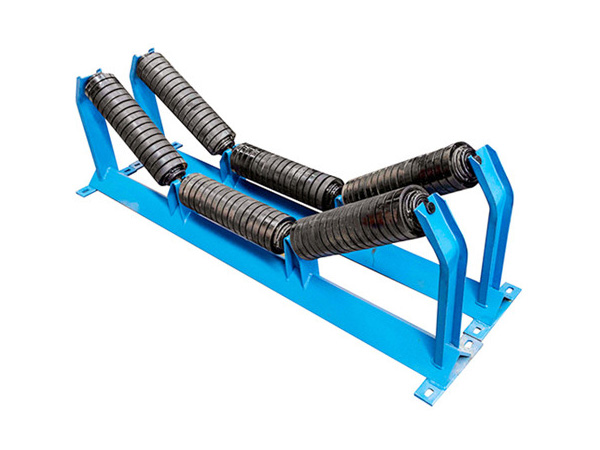
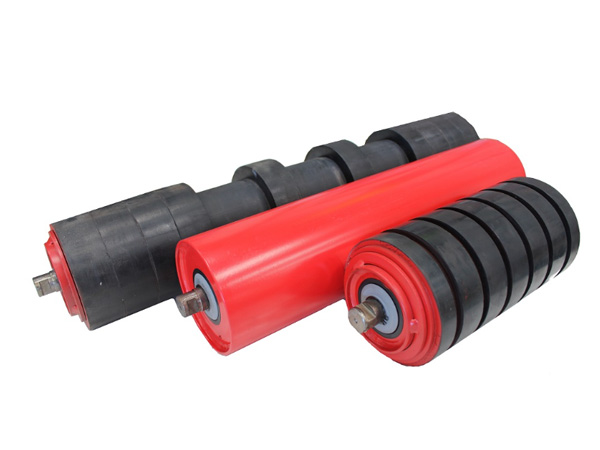
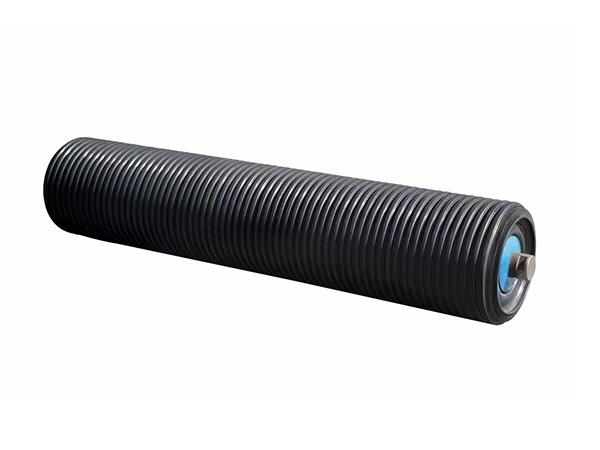
A spiral idler roller is a specialized conveyor component featuring a continuous helical vane or fin wound around a central shaft. Unlike standard cylindrical return idlers, the spiral geometry creates a self-cleaning action: as the conveyor belt travels over the roller, material adhered to the belt surface is progressively lifted and flung away from the belt path by centrifugal force generated through the rotational movement. The spiral's pitch and profile are engineered to match the belt's running speed and the adhesive properties of the conveyed material.
The cleaning mechanism operates continuously during normal belt operation, eliminating the need for manual intervention or external scraper systems in many applications. This passive design reduces mechanical complexity and eliminates the component wear associated with active cleaning devices.
The Self-Cleaning Mechanism: Centrifugal Action in Detail
The core cleaning performance of a spiral idler roller derives from the interaction between belt movement, roller rotation, and material physics. When the return belt wraps around the spiral idler, the differential surface speeds between the belt's smooth underside and the spiraled roller surface generate a peeling and lifting force on accumulated carryback. As the spiral rotates with the belt, each vane acts like a small ejector, slinging loose material outward at each contact point.
The cleaning efficiency is primarily determined by three factors: the spiral pitch (distance between successive turns), the roller diameter, and the rotational speed of the belt system. Standard spiral idler rollers for heavy-duty applications typically operate with pitch angles between 15° and 30°, optimized for material-specific adhesion characteristics ranging from fine dry powders to wet clay composites.
Why Cleaning Performance Matters for Conveyor System ROI
Carryback accumulation causes measurable economic impact across industrial operations. Industry surveys from the Conveyor Equipment Manufacturers Association (CEMA) indicate that carryback can account for 1–3% of total material throughput lost to spillage and rehandling annually on unscrutinized conveyor lines. Beyond material loss, accumulated carryback increases belt weight asymmetry, accelerates pulley and bearing wear, creates slippage risk at drive stations, and generates hazardous working environments through material accumulation on walkways and machinery housings.
Effective spiral idler roller cleaning performance reduces these risks systematically. Operations implementing properly specified spiral idler systems report measurable reductions in carryback-related maintenance events, with some plant managers citing 40–60% decreases in scheduled conveyor cleaning labor hours within the first six months of installation.
Material Applications: What Spiral Idlers Handle Effectively
Spiral idler roller systems are best suited for dry, free-flowing materials with low-to-moderate moisture content. The spiral geometry works exceptionally well for materials such as limestone, sand, coal, grain, phosphate, and similar granular substances where material adhesion to rubber belt surfaces is primarily caused by surface tension and static charge rather than chemical bonding.
Performance degrades with highly cohesive or tacky materials such as wet clay, certain polymer resins, or adhesive-coated substrates. For these challenging materials, operators should evaluate comb idlers or specialized belt cleaner configurations in conjunction with or instead of spiral idler systems.
Key Specifications for Evaluating Spiral Idler Cleaning Performance
When specifying a spiral idler roller for a new or retrofitted conveyor system, procurement teams should evaluate the following parameters:
Bearing load rating: Ensure the bearing series matches the calculated belt tension and idler spacing.
Spiral pitch and profile: Match the pitch angle to the conveyed material's stickiness and the belt running speed.
Shaft diameter and sealing: Look for double-lip labyrinth seals rated to IP66 or higher for dusty environments.
Shell material: Steel shells for heavy-duty applications; high-density polyethylene (HDPE) shells for corrosive or low-friction environments.
Idler spacing on return run: Typical spacing ranges from 1.0 m to 2.5 m depending on belt width and material density.
Installation and Alignment Best Practices
Optimal spiral idler roller cleaning performance requires precise installation. Misalignment—even at angles as small as 1–2° off perpendicular to the belt centerline—can reduce cleaning effectiveness by up to 30% and accelerate belt edge wear. Installation technicians should use laser alignment tools and verify belt tracking through the full return loop before commissioning.
Additionally, spiral idlers must be installed with correct rotational orientation. The spiral's helix direction must be consistent across all idlers on the return run and oriented to fling material away from the belt's centerline, not toward it.
Maintenance Intervals and Service Life Expectations
One significant advantage of the spiral idler roller design is its inherently low maintenance requirement. With no moving parts beyond the roller itself—already rotating freely with the belt—the spiral idler incurs minimal mechanical fatigue under normal operating conditions. Most industrial spiral idler rollers deliver service lives of 30,000 to 50,000 operating hours in non-abrasive, well-ventilated environments, with bearing replacement typically required at the upper end of that range.
Regular inspection intervals of 2,000–3,000 operating hours are recommended, focusing on bearing play, shell wear at spiral vane edges, and shaft integrity at welded joints.
FAQ: Spiral Idler Roller Cleaning Performance
Q1: Can a spiral idler roller completely eliminate belt carryback?
No cleaning system achieves 90% carryback elimination. Spiral idler rollers typically achieve 70–90% carryback reduction depending on material characteristics, belt speed, and proper installation. For critical applications, pairing spiral idlers with belt scrapers at the discharge point yields the best combined results.
Q2: How does belt speed affect spiral idler cleaning performance?
Higher belt speeds enhance centrifugal cleaning action, improving spiral idler roller performance up to a point. However, excessive speeds (above 4.5 m/s for standard belt widths) can cause material ejection patterns that deposit material on belt structure rather than clear it from the system entirely.
Q3: Are spiral idlers suitable for reversible conveyor belts?
Standard spiral idler configurations are designed for unidirectional belt travel. Reversible conveyor applications require symmetrical dual-spiral idler designs or additional cleaning measures. Consult the idler manufacturer for application-specific recommendations.
Q4: What is the typical cost difference between spiral idlers and standard return idlers?
Spiral idler roller units typically cost 2.5–4× more than standard cylindrical return idlers. However, when evaluated against total cost of ownership—including reduced cleaning labor, lower carryback material loss, and extended conveyor component life—the payback period frequently falls within 12–24 months for moderate-to-high-volume operations.
Q5: Do spiral idlers increase belt power consumption?
The rolling resistance of a spiral idler is marginally higher than a standard smooth roller due to the spiral profile geometry. In most applications, this power increase is negligible—typically less than 1–2% of total conveyor drive power—and is offset by savings from improved belt tracking and reduced scraper drag.
Conclusion
The spiral idler roller is a proven, passive conveyor cleaning solution that delivers measurable improvements in belt cleanliness, system reliability, and operating cost efficiency across a wide range of industrial applications. Its self-cleaning mechanism—leveraging centrifugal force through a helical profile—requires no external power, operates continuously, and imposes minimal maintenance demands on plant operations.
For engineering and procurement teams evaluating belt-cleaning strategies, spiral idler rollers should be considered a foundational element of a comprehensive conveyor hygiene program. Proper specification, alignment, and periodic inspection are the key variables that determine whether a spiral idler system achieves its optimal cleaning performance over a multi-year service life.
References
1.Conveyor Equipment Manufacturers Association (CEMA). Conveyor Installation Standards for Belt Conveyors. CEMA Publication 575. Tampa, FL: CEMA, 2019.
2.Nordell, L.K. "Belt Conveyor Clean-Out: A Systems Engineering Approach." Bulk solids handling, vol. 17, no. 3, 1997, pp. 345–358.
3.Jenike, A.W. Storage and Feeders for Bulk Solids. Sydney: University of New South Wales Press, 1987.
4.Zanker, A. "Carryback Control on Belt Conveyor Systems." Zanker Production Ltd. Technical Review, 2003. Available at: https://www.zaker.co.uk/docs/carryback_control.pdf

Contact Us
Tel:8615031765579
WhatsApp:+8615031765579
E-mail:905675277@qq.com
Add:Likou Village, Chenzhuang Town, Xian County, Hebei Province, China
Url:https://www.yxidlerrollers.com