







- Site Navigation -
Comb Shaped Sweeping Idler Roller Working Principle: A Complete Engineering Guide
Author:yuexing Date:2026-06-09 16:15:32 Hits:134
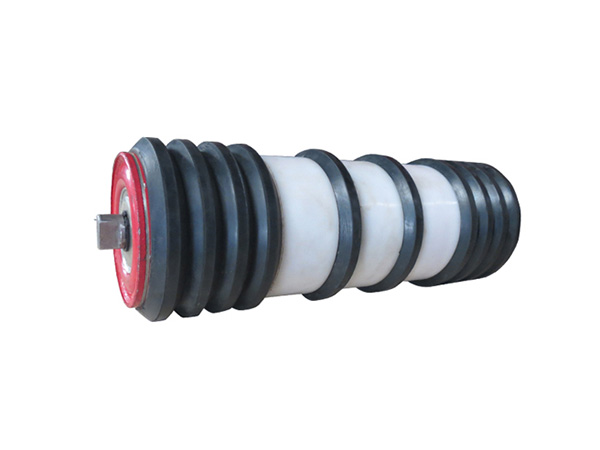
In the hierarchy of conveyor belt cleaning components, the comb shaped sweeping idler roller occupies a specialized position designed for the most demanding carryback challenges. Unlike standard return idlers that passively support the belt, the comb shaped sweeping idler roller actively intervenes in the material-belt interface through a mechanically aggressive, finger-based cleaning action. For plant engineers, maintenance supervisors, and procurement professionals specifying conveyor systems in mining, cement, aggregates, and bulk terminal operations, understanding the working principle of this component is essential for achieving reliable, low-maintenance belt cleanliness in high-adhesion material applications.
Definition and Core Concept of Comb Shaped Sweeping Idler Roller
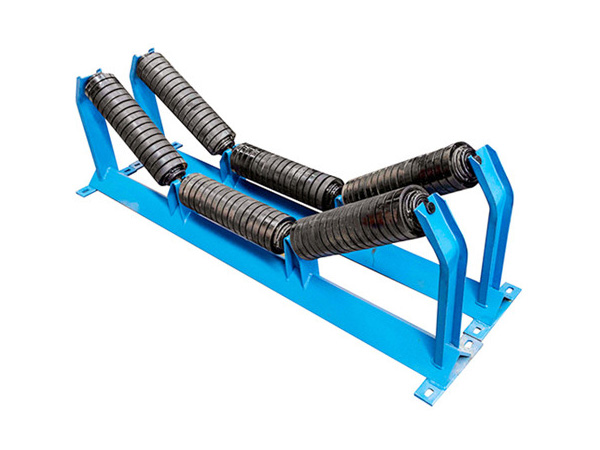
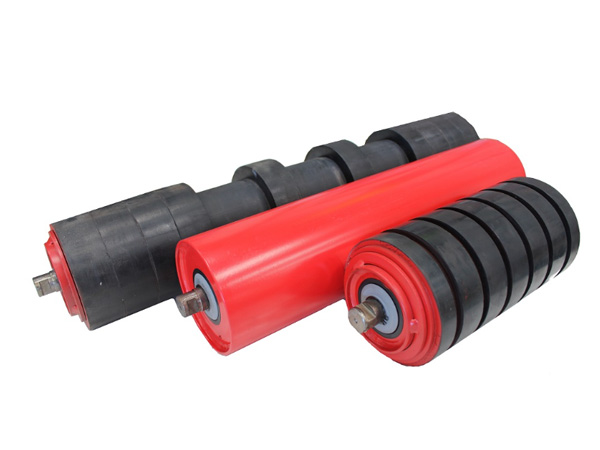
A comb shaped sweeping idler roller is a return-roll component fitted with radially extending fingers or fins arranged in a comb-like geometry around the roller shell. The "sweeping" designation refers to the finger tips' action as they sweep across the belt surface during rotation, physically dislodging material that has adhered to the belt during the loaded carry run. The comb geometry—multiple discrete fingers rather than a continuous helical vane—creates intermittent, high-pressure contact points that penetrate and shear accumulated material layers more aggressively than spiral-profile idlers.
The working principle relies on three synchronized physical mechanisms: penetration of the material layer by the finger tip, shear force generation along the material-belt interface, and centrifugal ejection of dislodged material away from the return belt path. This three-stage process repeats at each finger contact event, creating a rhythmic cleaning cycle that operates continuously during normal conveyor operation without external power or control systems.
Mechanical Working Principle: Step-by-Step Analysis
The comb shaped sweeping idler roller operates through a precisely timed sequence of mechanical interactions between the rotating fingers, the return belt, and the accumulated carryback material. The following analysis breaks the working principle into its constituent phases:
Phase 1: Finger Penetration and Load Application
As the return belt travels over the comb idler, the leading edge of each finger contacts the belt surface and begins penetrating any material layer present. The finger's tip geometry—typically rounded or chisel-shaped depending on the design—is engineered to minimize belt cover damage while maximizing penetration depth into the carryback layer. The penetration force is a function of finger stiffness, belt tension, and the adhesive shear strength of the material layer.
Phase 2: Shear Force Generation at the Material-Belt Interface
Once the finger tip has penetrated the carryback layer, continued belt movement causes the finger to bend slightly (in spring-loaded or pivoting designs) or transmit shear force directly through the finger-belt interface. This shear force acts parallel to the belt surface, directly opposing the adhesive bond between the material and the belt cover. When the applied shear force exceeds the material-belt adhesive strength, the material layer fractures and detaches from the belt surface.
Phase 3: Material Ejection and Discharge
Following detachment, the dislodged material fragment is carried outward by the rotating finger and ejected radially by centrifugal force. The ejection trajectory is engineered to direct material away from the return belt path and into a collection chute or designated spillage area. The spacing between adjacent fingers is calculated to prevent material re-adhesion to the belt before ejection is complete.
Key Design Parameters Influencing Working Performance
The cleaning effectiveness of a comb shaped sweeping idler roller is governed by several interdependent design parameters. Procurement and engineering teams should evaluate these parameters when specifying comb idlers for their conveyor systems:
Finger spacing (pitch): Typical center-to-center finger spacing ranges from 80 mm to 150 mm, optimized for the belt width and material particle size distribution.
Finger protrusion height: The radial distance between the finger tip and the roller shell centerline, typically 25–50 mm for standard designs.
Finger profile and tip geometry: Rounded tips reduce belt cover wear; chisel or wedge profiles increase penetration depth for high-cohesion materials.
Number of finger rows: Single-row designs for narrow belts (≤800 mm); double-row or staggered configurations for wider belts to ensure full belt width coverage.
Bearing and shaft specification: Sealed ball or roller bearings rated for the calculated radial and axial loads imposed by finger impact forces.
Comparison with Spiral Idler Cleaning Mechanism
Understanding the comb shaped sweeping idler roller working principle is best achieved by comparing it with the better-known spiral idler mechanism. The fundamental difference lies in cleaning continuity versus cleaning intensity:
Spiral idlers: Continuous helical profile provides gentle, ongoing cleaning action suitable for dry, free-flowing materials with low adhesive strength. Cleaning force is distributed evenly along the belt width.
Comb shaped sweeping idler rollers: Intermittent finger contacts deliver concentrated, high-intensity cleaning at discrete points. This design excels with cohesive, wet, or sticky materials where spiral idlers cannot generate sufficient adhesive-shear force.
Field studies indicate that comb shaped sweeping idler roller systems achieve 85–90% carryback removal efficiency for wet clay and high-moisture fine aggregates, compared to 55–70% for spiral idlers under identical material and belt speed conditions.
Material and Application Suitability Based on Working Principle
The working principle of the comb shaped sweeping idler roller makes it particularly effective for the following material categories:
Wet fine aggregates and washed sands: High moisture content (5–12%) creates strong capillary adhesion to belt surfaces; comb finger penetration effectively breaks these bonds.
Cement raw meal and clinker dust: Fine particulate materials with electrostatic adhesion mechanisms; finger impact disrupts both electrostatic and capillary bond components.
Coal washery rejects and tailings: High-clay, high-moisture waste streams from mineral processing operations.
Municipal solid waste (MSW) and RDF: Heterogeneous sticky fractions in waste-to-energy and materials recovery facilities.
Materials that are dry and free-flowing (e.g., dry sand, grain, dry coal below 3% moisture) do not require the aggressive cleaning action of a comb shaped sweeping idler roller. Specifying comb idlers for these applications adds unnecessary cost and belt wear risk without commensurate cleaning benefit.
Installation Guidelines for Optimal Working Performance
Even a well-designed comb shaped sweeping idler roller will underperform if improperly installed. The following installation practices are critical:
Position relative to head pulley: Install the comb idler within 300–600 mm of the head pulley on the return run, where belt speed is highest and carryback is freshest (least time to cure/adhere).
Perpendicular alignment: The idler shaft must be perpendicular to the belt centerline within ±0.5°. Misalignment causes asymmetric finger-belt contact and accelerates belt edge wear.
Idler spacing: For belts wider than 1,000 mm, consider two comb idlers spaced 500–800 mm apart on the return run to ensure full-width cleaning coverage.
Return belt tension verification: Verify that return belt tension is within design limits; excessive sag between idlers reduces finger penetration depth and cleaning effectiveness.
FAQ: Comb Shaped Sweeping Idler Roller Working Principle
Q1: What belt speeds are compatible with comb shaped sweeping idler rollers?
Comb shaped sweeping idler roller designs are validated for belt speeds from 0.8 m/s to 5.0 m/s. Below 0.8 m/s, finger impact energy may be insufficient for effective cleaning. Above 5.0 m/s, finger fatigue and belt cover wear become significant concerns. Always consult the manufacturer's speed rating for specific comb idler models.
Q2: Do comb shaped sweeping idler rollers damage conveyor belts?
When properly specified and installed, comb shaped sweeping idler roller units do not cause belt damage. However, excessive finger protrusion height, incorrect finger tip geometry for the belt type, or misalignment can generate localized belt cover indentation or premature wear. PVC and lightweight fabric belts are more susceptible to damage than heavy-duty steel-cord or multi-ply rubber belts.
Q3: Can comb shaped sweeping idler rollers be used on reversible conveyors?
Standard unidirectional comb idler designs should not be used on reversible conveyors, as the finger orientation is optimized for one belt travel direction. Reversible conveyor applications require symmetrical finger patterns or specialized bidirectional comb idler designs. Specifications must explicitly state reversible operation requirements to the manufacturer.
Q4: What maintenance interval is recommended for comb shaped sweeping idler rollers?
Inspect comb shaped sweeping idler roller units every 1,500–2,500 operating hours, focusing on finger wear (replace when protrusion height falls below 70% of original specification), bearing play (replace bearings when radial play exceeds 0.4 mm), and shell integrity at finger attachment points. Service life typically ranges from 18,000 to 35,000 operating hours depending on material abrasiveness.
Q5: How does the comb shaped sweeping idler roller working principle compare to belt scrapers?
Belt scrapers apply continuous tangential force against the belt surface and are highly effective at the head pulley discharge point. The comb shaped sweeping idler roller working principle applies intermittent normal force and is optimized for the return run where scrapers cannot be easily installed. The two technologies are complementary: scrapers handle primary carryback removal; comb idlers handle residual carryback on the return run.
Conclusion
The comb shaped sweeping idler roller working principle is founded on a mechanically elegant, three-phase cleaning cycle—penetration, shear, and ejection—that delivers superior carryback removal performance for cohesive and high-adhesion bulk materials. Its intermittent finger-impact mechanism fills a critical performance gap between gentle spiral idler cleaning and aggressive belt scraper systems, making it an indispensable component in conveyor systems handling wet, sticky, or fine-adhesive materials.
For engineering and procurement teams evaluating conveyor belt cleaning strategies, the comb shaped sweeping idler roller should be specified wherever carryback material exhibits high cohesion, moisture content above 5%, or adhesive bond strength that overwhelms standard spiral idler designs. Proper selection, installation, and maintenance of comb shaped sweeping idler rollers yield measurable returns in reduced carryback, extended belt life, and lower conveyor system operating costs.
References
Roberts, A.W. "Design and Application of Conveyor Belt Cleaning Systems for Bulk Solids Handling." Chemical Engineering & Technology, vol. 26, no. 2, 2003, pp. 177–184.
Conveyor Equipment Manufacturers Association (CEMA). Belt Conveyors for Bulk Materials. 7th ed. Naples, FL: CEMA, 2014.
Nordell, L.K., and Ciozda, Z.P. "Transient Belt Stresses from Belt Cleaner Scrapers and Return Idlers." Bulk Solids Handling, vol. 15, no. 4, 1995, pp. 421–428.
Woodcock, C.R., and Mason, J.S. Bulk Solids Handling: An Introduction. London: Chapman and Hall, 1987.
Schulz, J., and Feise, H.J. "Adhesion of Moist Bulk Solids to Conveyor Belt Surfaces: Measurement and Mitigation Strategies." Powder Technology, vol. 283, 2015, pp. 149–158.

Contact Us
Tel:8615031765579
WhatsApp:+8615031765579
E-mail:905675277@qq.com
Add:Likou Village, Chenzhuang Town, Xian County, Hebei Province, China
Url:https://www.yxidlerrollers.com