







- Site Navigation -
Wholesale Conveyor Idler Roller Pricing Guide
Author:yuexing Date:2026-11-12 22:16:06 Hits:68
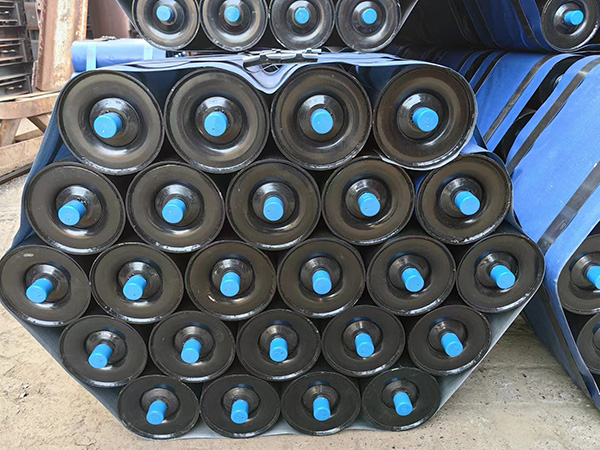
When procurement teams search for conveyor roller wholesale supply, the first instinct is to line up unit prices. That is also the fastest way to make a bad decision. Two quotes for an "89 mm × 950 mm steel roller" can differ by 30–60% for reasons that have nothing to do with margin — and everything to do with what is actually inside the roller. This guide explains the cost levers so you can negotiate and compare intelligently.
1. The Anatomy That Drives Cost
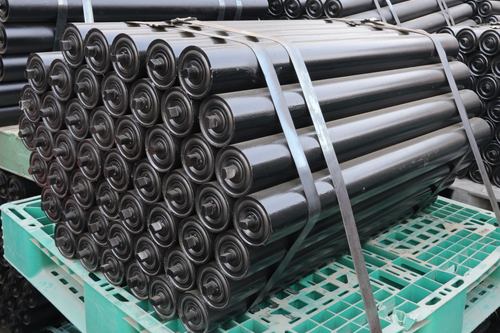
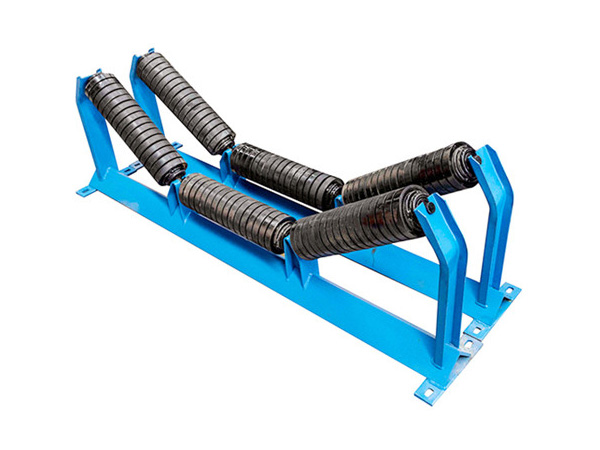
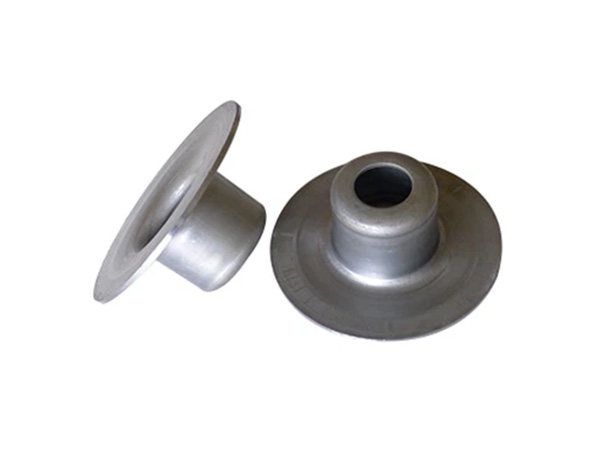
An idler roller looks simple — a tube, a shaft, two bearings, seals, and a housing — but each element has a cost tier. Understanding them turns a price into a specification.
1.1 Tube material and wall thickness
The shell is usually welded or seamless steel tube. Wall thickness (commonly 3.0–4.5 mm) is the single biggest material cost driver and the biggest determinant of deformation under load. Thinner walls are cheaper but bend and dent more easily; for heavy mining duty, thicker walls are non-negotiable. Stainless steel or aluminum shells raise cost further but are required for corrosive or food-grade environments.
1.2 Roller diameter and length
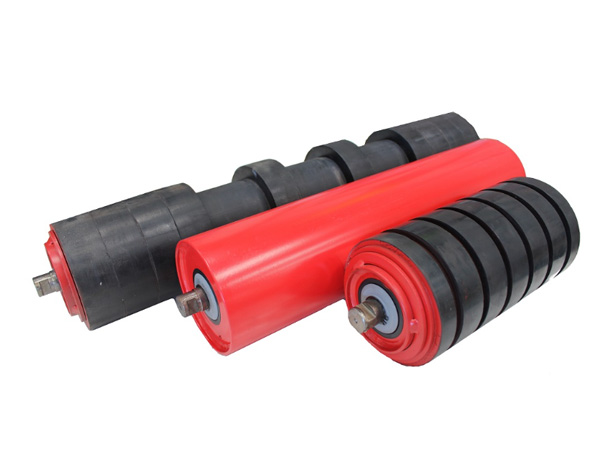
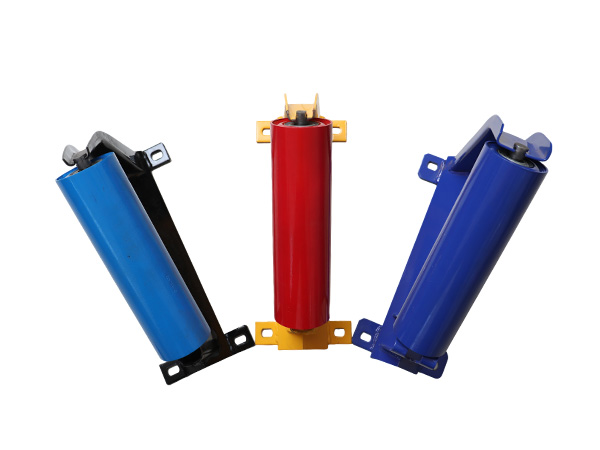
Standard diameters follow regional series (e.g., 63.5, 76, 89, 102, 108, 114, 127, 133, 159 mm). Larger diameters use more material and require larger bearings, raising cost. Length scales with belt width. Non-standard sizes add tooling and setup cost.
1.3 Bearing brand and class
Bearings are the heart of roller life. Branded deep-groove ball bearings (e.g., SKF, FAG, NTN, or qualified domestic equivalents) cost more than unbranded units but deliver predictable life and lower rotating resistance. The bearing size (6204, 6205, 6206, 6305, 6306, 6307, 6308) scales with load.
1.4 Seal design
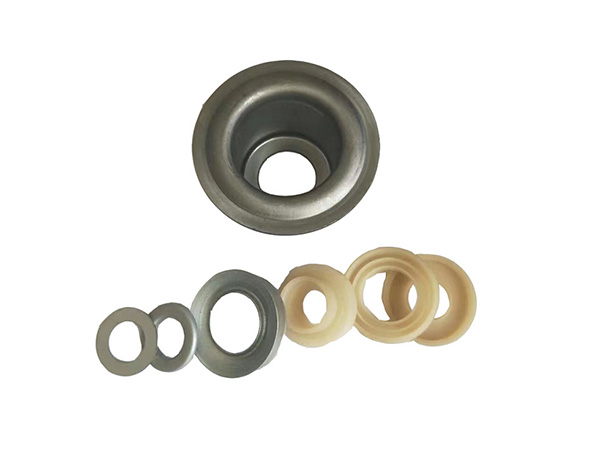
Seals determine how long the bearing survives in dust and water. A single labyrinth seal is cheap; a multi-stage labyrinth with greased chambers and a contact lip seal costs more but dramatically extends life in mining or washdown duty. Seal quality is where cheap rollers quietly fail.
1.5 Surface treatment and coating
Options range from bare steel, through paint and powder coating, to rubber-disc or ceramic lagging on the shell. Each step adds cost but extends service life or changes the function (rubber discs cushion impact; ceramic resists wear).
2. How Volume Changes Unit Price
Idler production has fixed per-batch costs: line setup, jig calibration, first-article inspection, and documentation. Spreading those across more pieces lowers the unit price. Moving from a few hundred to several thousand pieces per specification typically yields a meaningful per-unit saving, while custom one-offs carry a setup premium.
| Cost component | Fixed per batch? | Scales with volume? |
|---|---|---|
| Tooling & line setup | Yes | No |
| Raw tube & shaft material | No | Yes |
| Bearings & seals | No | Yes |
| Inspection & documentation | Partly | Small effect |
| Export packaging | No | Yes |
3. The Hidden Variables in a Quote
Two quotes are only comparable when they include the same things. Watch for these divergences:
Ex-works vs. delivered: a low ex-works price may exclude inland freight, crating, and port handling.
Packaging tier: basic cartons vs. ISPM 15-exempt plywood crates with desiccant — a real cost and a real protection difference.
Inspection: is a batch test report (runout, rotating resistance, drop test) included or extra?
Bearing spec: "bearing 6306" without a brand or class is not a complete specification.
Tolerance: radial runout tolerance affects both price and performance; tighter tolerance costs more.
4. Estimating Total Landed Cost
The unit ex-works price is only part of the story. For a true comparison, build the landed cost:
Unit price (confirmed spec-for-spec).
Export packaging and crating.
Inland freight to port + port handling.
Ocean or air freight.
Insurance.
Import duty and VAT (HS 8431.39 family for conveyor parts in many jurisdictions).
Destination handling and last-mile delivery.
A supplier offering a slightly higher unit price but complete export crating and clean documentation can be cheaper overall than a rock-bottom quote that arrives damaged or stuck in customs.
5. Negotiation Checklist for Wholesale Buyers
Send one detailed specification to every supplier so quotes are comparable.
Request price breaks at clear volume steps (e.g., 500 / 2,000 / 5,000 pcs).
Ask for the bill of materials: tube wall, bearing brand/class, seal type, coating.
Confirm whether inspection report and export packaging are included.
Clarify Incoterm and what it covers (FOB, CIF, DAP).
Request lead time and whether it changes with volume.
Manufacturers that publish their testing methods and run standardized production — such as Hebei Yuexing Conveying Machinery Manufacturing Co., Ltd. — tend to quote transparently against a written specification, which makes wholesale comparison far easier.
6. Lifecycle Cost Beats Unit Price
The cheapest roller is rarely the cheapest roller. A thinner tube or unbranded bearing may save a few percent up front but fail earlier, driving belt damage, unplanned downtime, and repeated reorders. A simple way to compare is lifecycle cost per operating hour: divide the delivered price by the expected service life in hours for the duty. A roller costing 20% more but lasting twice as long is the cheaper choice on a running conveyor. For continuous operations, downtime minutes often cost more than the entire roller population, so durability should outweigh small unit-price gaps.
7. Payment Terms and Risk
Wholesale terms typically range from T/T deposit plus balance against documents, to letter of credit for larger first orders. A reasonable structure protects both sides: a deposit to start production and a balance released on verified inspection or bill of lading copy. For new supplier relationships, a third-party pre-shipment inspection funded by the buyer is a small cost that de-risks the whole batch. Factories with transparent processes — such as Hebei Yuexing Conveying Machinery Manufacturing Co., Ltd., which publishes its testing methods — are easier to transact with because the quality evidence is already on the table.
Frequently Asked Questions
What is the typical MOQ for wholesale conveyor idler rollers?
Minimum order quantities vary by factory but commonly start around 100–500 pieces per specification for standard rollers. Custom diameters, special seals, or unusual lengths usually carry a higher MOQ because tooling and setup are shared across the batch.
Why do two suppliers quote very different prices for the same size?
Differences usually come from wall thickness of the tube, bearing brand and class, seal design, coating quality, and whether the quote includes inspection and export packaging. A low price often reflects a thinner tube or unbranded bearings that wear faster.
Does order volume significantly lower the unit price?
Yes. Setup, tooling, and quality documentation are largely fixed per batch, so unit cost drops as quantity rises. Moving from a few hundred to several thousand pieces per specification typically produces a meaningful per-unit saving.
Should I compare prices including or excluding packaging?
Always compare like for like. Request quotes that state whether the price includes export crating, moisture protection, and inland freight to the port. A cheaper ex-works price can become more expensive once export packaging and logistics are added.
Conclusion
Wholesale conveyor roller pricing is not mysterious once you separate the controllable variables from the commercial ones. The smart buyer writes a single detailed specification, demands a bill of materials, and compares landed cost rather than headline unit price. Cheapest is rarely cheapest when the roller fails on the line — and the difference between a good and a bad quote is almost always written in the details suppliers hope you will not ask about.
References
CEMA B105 — Conveyor Equipment Manufacturers Association standard defining idler classes, dimensions, and load ratings used in North American pricing benchmarks.
DIN 22112 — Belt conveyor idlers: dimensions and requirements, the European reference for roller specification.
ISO 5048 — Continuous mechanical handling equipment: belt conveyors with carrying idlers — basis for power and load calculations that inform duty class.
ISO 9001:2015 — Quality management systems; the baseline expectation for a factory's inspection and documentation discipline.
Harmonized System (HS) Code 8431.39 — Commonly applied to parts for conveyor machinery, relevant to duty estimation in landed-cost calculations.

Contact Us
Tel:8615031765579
WhatsApp:+8615031765579
E-mail:905675277@qq.com
Add:Likou Village, Chenzhuang Town, Xian County, Hebei Province, China
Url:https://www.yxidlerrollers.com