







- Site Navigation -
Threaded Flat Idlers Uses and Structure Explained: Design and Application Guide
Author:yuexing Date:2026-06-29 14:34:20 Hits:149
In conveyor systems and power transmission assemblies where precise belt tracking, adjustable tension, and secure mounting are operational requirements, threaded flat idlers provide a versatile engineering solution that combines the load-bearing function of a flat idler roller with the adjustability and security of an integrated threaded shaft. Unlike standard flat idlers with smooth shafts that rely on set screws or keyways for axial positioning, threaded flat idlers use a threaded shaft and nut system that enables infinite axial adjustment and positive locking without specialized tools. For mechanical designers, maintenance engineers, and procurement professionals in manufacturing, packaging, food processing, and material handling, understanding the uses and structure of threaded flat idlers is essential for specifying reliable, adjustable belt support and tensioning components.
What Are Threaded Flat Idlers?
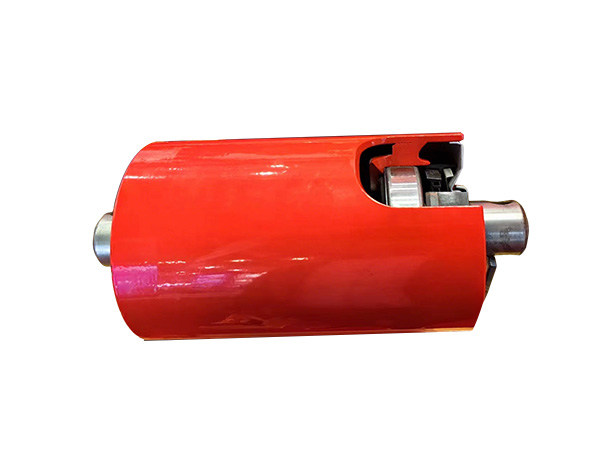
A threaded flat idler is a cylindrical roller with a flat (non-tapered) shell profile mounted on a shaft that features external threads along part or all of its length. The threaded shaft allows the idler to be mounted in a support bracket using nuts, lock washers, or threaded mounting blocks, providing secure axial positioning and enabling fine adjustment of the idler's position along the conveyor frame. The "flat" designation refers to the roller shell's uniform cylindrical profile—distinguishing it from conical, spiral, or comb-profile idlers—making it suitable for supporting flat-return belts, flat-top conveyor belts, and V-belt or timing belt drives.
The threaded flat idler is distinct from a standard flat idler in two critical ways: the threaded shaft enables position adjustment without disassembly, and the nut-based locking mechanism provides more secure axial retention than set screws, which can loosen under vibration. These characteristics make threaded flat idlers the preferred choice in applications where belt tension adjustment is frequent, where vibration levels are high, or where precise idler positioning affects belt alignment and tracking.
Structural Components of Threaded Flat Idlers
Understanding the structure of threaded flat idlers is essential for proper specification and maintenance. The principal components are:
Roller Shell
The roller shell is the outer cylindrical surface that contacts the belt. Shell materials include carbon steel (painted or zinc-plated), stainless steel (for food-grade and corrosive environments), aluminum (for lightweight applications), and engineering plastics such as Delrin or nylon (for low-noise, non-marring applications). Shell surface finish ranges from smooth (Ra 1.6 μm or better for belt protection) to knurled or grooved (for increased belt traction in drive applications).
Threaded Shaft
The shaft is the structural backbone of the threaded flat idler. Thread specifications vary by manufacturer and application: common thread standards include ISO metric threads (M10, M12, M16, M20), UNC/UNF threads (3/8"-16, 1/2"-13, 5/8"-11), and specialty fine-pitch threads for precision adjustment. The shaft may be fully threaded (threads along the entire length) or partially threaded (threads on one or both ends with a smooth midsection where the bearing is press-fitted).
Bearing Assembly
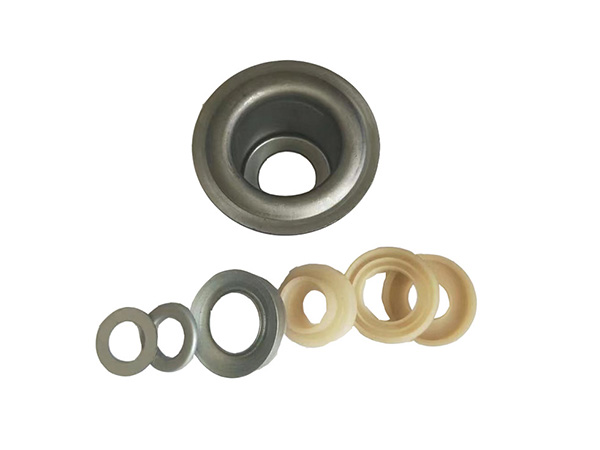
The bearing assembly enables the shell to rotate freely around the stationary shaft. Standard threaded flat idlers use sealed deep-groove ball bearings (commonly 6200 or 6300 series) press-fitted into the shell end caps. For heavy-duty applications, tapered roller bearings or spherical roller bearings are specified to handle combined radial and axial loads.
End Caps and Seals
End caps close the shell ends and house the bearing outer races. Seals—typically double-lip contact seals or labyrinth non-contact seals—protect the bearing from dust, moisture, and contamination. The seal specification is critical for idler service life in industrial environments; IP65 or higher sealing is standard for dusty applications.
Locking Nuts and Washers
The locking hardware secures the idler to the mounting bracket. Standard configurations use two hex nuts (one on each side of the bracket) with lock washers. For high-vibration applications, self-locking nylon-insert nuts (nyloc nuts) or castle nuts with cotter pins provide additional security against loosening.
Key Uses of Threaded Flat Idlers in Industrial Systems
Threaded flat idlers serve several critical functions across industrial conveyor and power transmission systems:
Use 1: Adjustable Belt Tensioning
The most common use of threaded flat idlers is as adjustable tensioning rollers in belt drive and conveyor systems. By turning the mounting nuts on the threaded shaft, the idler's position can be adjusted along the conveyor frame to increase or decrease belt tension. This adjustability eliminates the need for separate tensioning devices (such as take-up frames or gravity take-ups) in short and medium-length conveyor systems, simplifying the structural design and reducing component count.
Use 2: Belt Tracking Adjustment
In flat-belt conveyor systems, threaded flat idlers can be adjusted laterally to correct minor belt mistracking. By advancing one end of the idler shaft slightly further than the other (creating a minute skew angle), the belt is directed toward the center of the conveyor. This tracking adjustment technique is standard practice in packaging, printing, and electronics assembly conveyor systems where belt alignment tolerances are tight.
Use 3: Power Transmission Idler in Belt Drive Systems
In V-belt and timing belt power transmission systems, threaded flat idlers serve as idler pulleys that maintain belt wrap angle on drive and driven sheaves. The threaded shaft allows precise positioning of the idler to achieve the required wrap angle and tension, critical for maximizing power transmission efficiency and belt life.
Use 4: Return Belt Support in Light-Duty Conveyors
For light-duty flat-belt conveyors in food processing, pharmaceutical, and cleanroom applications, threaded flat idlers provide return belt support with the added benefit of easy height adjustment. Stainless steel threaded flat idlers with food-grade seals are standard in washdown environments where regular disassembly for cleaning is required.
Use 5: Wire and Cable Guide Roller
In wire manufacturing, cable extrusion, and textile processing, threaded flat idlers function as guide rollers that direct wire or cable through processing stages. The threaded shaft allows precise positioning of the guide roller relative to the wire path, and the flat shell profile minimizes contact stress on the product surface.
Specification and Selection Criteria
Selecting the correct threaded flat idler requires evaluating several interdependent parameters:
Shell diameter: Common diameters range from 50 mm to 200 mm for conveyor applications and 30 mm to 100 mm for power transmission applications. Larger diameters reduce belt bending stress and bearing rotational speed, extending service life.
Shell width (face length): Must exceed the belt width by 25–50 mm on each side to accommodate belt tracking oscillation without edge contact.
Shaft thread specification: Select thread size based on the required mounting strength and adjustment precision. Fine-pitch threads provide finer adjustment but are more susceptible to cross-threading during installation.
Bearing load rating: Specify bearings rated for the maximum radial load (belt tension × wrap angle factor) plus any axial loads from the mounting configuration. Apply a minimum safety factor of 1.5 for dynamic loads.
Shell material and surface finish: Match the shell material to the belt type and environmental conditions. Rubber-covered shells for belt protection; stainless steel for washdown environments; smooth finish for non-marring product contact.
Installation and Adjustment Procedures
Proper installation of threaded flat idlers is critical for achieving the specified performance and service life:
Shaft alignment: The threaded shaft must be perpendicular to the belt travel direction within ±0.5°. Use a machinist's square or laser alignment tool during installation.
Nut torque specification: Tighten locking nuts to the manufacturer's specified torque. Overtightening can deform the mounting bracket and preload the bearing excessively; undertightening allows axial movement under belt tension.
Tension adjustment procedure: Adjust belt tension incrementally (1/4 turn per nut per adjustment step) and measure belt deflection or tension after each step. Avoid large single-step adjustments that can create uneven tension distribution.
Tracking adjustment procedure: For tracking correction, adjust the idler's skew angle by advancing one end of the shaft by no more than 1/4 turn relative to the other. Excessive skew angles accelerate belt edge wear.
Post-adjustment verification: After any adjustment, run the conveyor under load for 15–30 minutes and verify that belt tension, tracking, and idler operating temperature remain within specification.
Maintenance and Service Life
Threaded flat idlers in standard industrial applications deliver service lives of 20,000–40,000 operating hours under normal conditions. Maintenance practices include:
Bearing inspection: Check bearing play every 2,000–3,000 operating hours. Replace the idler when radial play exceeds 0.3 mm or when bearing noise is detectable during manual rotation.
Thread condition assessment: Inspect the threaded shaft for damage, corrosion, or cross-threading at every maintenance interval. Damaged threads compromise the locking mechanism and must be replaced—do not attempt thread repair on loaded idler shafts.
Shell wear measurement: Measure shell diameter at the belt contact zone every 3,000–5,000 operating hours. Replace when diameter reduction exceeds 2% of original specification (which affects belt speed and tracking geometry).
Nut and lock washer replacement: Replace nyloc nuts after every disassembly cycle; lock washers after every third disassembly. Reused locking hardware loses its retention capability and risks idler displacement under vibration.
FAQ: Threaded Flat Idlers Uses and Structure
Q1: What is the difference between a threaded flat idler and a standard flat idler?
The primary difference is the shaft: threaded flat idlers have externally threaded shafts that enable position adjustment and secure nut-based locking, while standard flat idlers have smooth shafts secured by set screws, keyways, or press-fit brackets. Threaded flat idlers provide finer adjustment, more secure retention under vibration, and easier field repositioning without disassembly.
Q2: Can threaded flat idlers handle the same loads as standard flat idlers?
Yes, threaded flat idlers are available with the same bearing load ratings as standard flat idlers. The threaded shaft does not reduce load capacity when properly specified. However, the mounting bracket must be designed to support the threaded shaft at both nut contact points; single-nut mounting configurations are not suitable for high-load applications.
Q3: Are threaded flat idlers suitable for food-grade conveyor applications?
Yes. Stainless steel threaded flat idlers with FDA-compliant shell materials and IP66 or higher sealing are standard in food-grade conveyor applications. The threaded shaft enables tool-free height adjustment for cleaning and product changeover, which is a significant operational advantage in washdown environments.
Q4: How fine is the position adjustment on a threaded flat idler?
Position adjustment resolution is determined by the thread pitch. A standard M12×1.75 thread provides 1.75 mm of axial movement per full nut revolution, or approximately 0.44 mm per quarter-turn. Fine-pitch threads (e.g., M12×1.25) provide 1.25 mm per revolution, or 0.31 mm per quarter-turn—sufficient for precise belt tension and tracking adjustments.
Q5: Do threaded shafts corrode and seize in outdoor applications?
Corrosion is a valid concern for threaded flat idlers in outdoor or humid environments. Specify zinc-plated or stainless steel shafts for corrosion resistance, and apply anti-seize compound to the threads during installation. For severe outdoor applications, consider sealed thread covers or boot-type protectors that shield the threads from direct environmental exposure.
Conclusion
Threaded flat idlers combine the reliable load-bearing function of a flat idler roller with the adjustability and security of an integrated threaded shaft, making them an essential component in conveyor and power transmission systems where precise belt tension, tracking, and positioning control are required. Their structural design—roller shell, threaded shaft, bearing assembly, end caps, and locking hardware—has been refined through decades of industrial application to provide a versatile, maintainable, and cost-effective belt support solution.
For mechanical designers, maintenance engineers, and procurement professionals, specifying threaded flat idlers with appropriate thread specifications, bearing load ratings, shell materials, and sealing configurations is a direct investment in system adjustability, reliability, and reduced maintenance labor. Proper installation, adjustment, and periodic inspection ensure that threaded flat idlers deliver their full service life potential across industrial manufacturing, food processing, packaging, and material handling applications.
References
Shigley, J.E., and Mischke, C.R. Mechanical Engineering Design. 7th ed. New York: McGraw-Hill, 2004.
ISO 1536:1999. Conveyor Belts – Specification for Rubber- and Plastics-Covered Conveyor Belting of Textile Construction. Geneva: International Organization for Standardization, 1999.
Conveyor Equipment Manufacturers Association (CEMA). Belt Conveyors for Bulk Materials. 7th ed. Naples, FL: CEMA, 2014.
Brewe, D.E., and Khonsari, M.M. "Effect of Shaft Misalignment on the Performance of Rolling Element Bearings in Idler Roller Applications." Journal of Tribology, vol. 120, no. 2, 1998, pp. 334–340.
Pytko, S., and Szewczyk, J. "Threaded Fastener Loosening Under Vibration: Implications for Conveyor Idler Mounting Security." Engineering Failure Analysis, vol. 12, no. 6, 2005, pp. 932–941.

Contact Us
Tel:8615031765579
WhatsApp:+8615031765579
E-mail:905675277@qq.com
Add:Likou Village, Chenzhuang Town, Xian County, Hebei Province, China
Url:https://www.yxidlerrollers.com