







- Site Navigation -
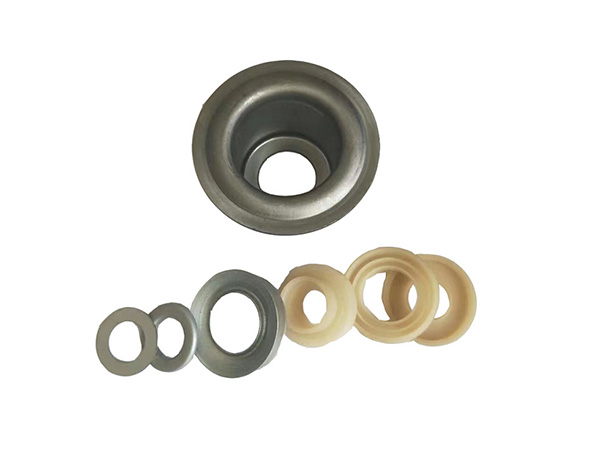
Conveyor Rollers Applications in Steel Plants Guide
Author:yuexing Date:2026-10-16 19:56:45 Hits:132
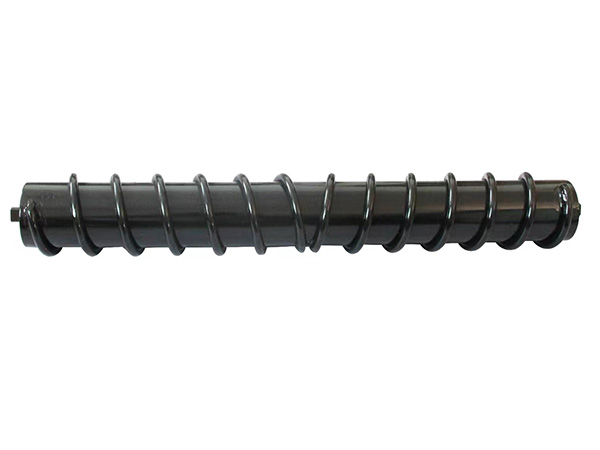
Steel plants move some of the heaviest, hottest and most abrasive bulk materials in industry. A conveyor roller in a steel works may carry red-hot sinter, sharp coke, abrasive slag, or finished product — and the conditions at each point are different enough that no single roller specification suits the whole plant. Temperature, heavy metallic load, abrasive scale and metallic dust each attack a different part of the roller, and a specification that works at one stage fails quickly at another. This article works through the steel plant material streams and explains how roller requirements change with them, so that engineers can specify to the duty rather than default to a generic part.
The Steel Plant as a Conveyor Environment
Three characteristics make steel plant conveyors unusually demanding. First, much of the material is hot — sinter leaves the cooler warm, and in some handling steps material is carried at temperatures that general-purpose rollers cannot tolerate. Second, the burden is heavy and often sharp-edged, so it both loads the bearing heavily and abrades the shell. Third, the environment is dusty with fine metallic dust and scale, which penetrates weak seals and attacks the bearing. A roller for steel plant service has to reconcile all three, usually at different points on the same network.
High temperature
Hot sinter and, where applicable, hot pellet or clinker-like streams leave their process step at elevated temperature. Above the rating of conventional bearing lubricant and elastomeric seals, the grease degrades and the seal hardens, both of which shorten bearing life sharply. Conveyors carrying hot material require rollers specified for the temperature — high-temperature grease and seal materials — and the structure must allow for thermal expansion so the roller does not bind as it heats.
Heavy and sharp burden
Sinter, pellets, coke and slag are dense and, in the case of coke and slag, angular and abrasive. The load per roller on a heavily loaded steel plant conveyor is high, making bearing capacity the governing specification, and the sharp material abrades the shell where it slides. Loading and transfer points add impact on top of the steady load, because material drops from one belt to the next. The roller must carry heavy load for its design life while resisting abrasion and, at certain points, impact.
Dust and scale
Steel plants generate fine metallic dust and scale that is both abrasive and penetrating. Like coal dust, fine metallic dust reaches any seal not designed to exclude it and, once inside the bearing, accelerates wear. The sealing requirement is a primary specification item on the dustiest conveyors, which in a steel plant are most of them.
Where Rollers Are Used in a Steel Plant
Sinter and pellet handling
Sinter and pellet conveyors carry hot, abrasive, heavy material. The dominant concerns are temperature at the hot end and abrasion and load throughout. Rollers here need temperature-rated lubricant and seals where the material is hot, and robust shells and adequate bearing capacity everywhere the burden is heavy. Loading points need impact protection as material drops from the cooler or screens.
Coke handling
Coke is sharp, abrasive and dusty, and it can carry heat from the coke oven. The rollers face abrasion from the angular coke and infiltration from the fine coke dust, which is fine enough to defeat a simple seal. Bearing capacity and shell abrasion resistance are both relevant, and sealing against fine dust is the primary specification for the dusty transfers.
Slag and scrap
Slag handling in particular is heavy, sharp and often hot, placing the maximum demand on shell and frame. Scrap handling is similarly heavy and irregular in size, with impact at the loading point. Rollers at slag and scrap conveyors should be the most robust in the plant in terms of shell, frame and bearing capacity, with impact protection at loading points.
Finished product
Finished product conveyors — billets, coils, rolled sections — are often handled on rollers suited to heavier, cleaner loads, but they can still be warm and dusty depending on the layout. The specification here depends on whether the product is still warm and on the dust level in the area; clean, cool finished-product lines can use a lighter specification than the hot burden lines upstream.
Temperature-Rated Specification
Temperature is the specification driver that most clearly separates steel plant rollers from general-purpose ones. The bearing lubricant sets the practical limit: conventional greases degrade faster as temperature rises, and above their limit the lubricant breaks down and the bearing fails. The seal material is the second limit: standard elastomers harden and lose elasticity at elevated temperature and then stop sealing. A roller specified for hot material therefore uses high-temperature grease and a seal material rated for the operating temperature, and the frame and shell are considered for thermal growth. Where the application permits, allowing the material to cool as far as possible before it reaches the rollers reduces the thermal load the rollers must withstand.
Impact and Abrasion Protection
At the points where heavy, sharp material lands on the belt, impact and abrasion dominate. Shell wall thickness is the primary abrasion defence and should be matched to the sharpness of the material and the position, with more thickness at loading and transfer points than on the mid-run. Impact-rated rollers at the loading points use a robust shell, a strong frame and an element that absorbs part of the impact energy before it reaches the bearing. Using a standard carrying roller at a slag or sinter loading point is the most common cause of early failure in a steel plant, because the steady-load specification does not address the impact and abrasion there.
Sealing Against Metallic Dust and Scale
Fine metallic dust and scale are penetrating and abrasive, and they attack the bearing from two directions: the dust itself wears the rolling elements, and any grit carried into the seal accelerates seal wear so that more dust follows. For steel plant service, a multi-stage sealing arrangement is the appropriate standard: a contact seal that keeps the bulk out, a grease-filled cavity as a secondary barrier, a labyrinth that uses the roller's rotation to fling dust outward, and an external flinger that keeps material off the seal face. The bearing should be selected with load margin, and the seal material should suit both the temperature and the dusty, abrasive environment. A roller with an inexpensive single seal will fail early in the dustiest areas of the plant.
Selection and Maintenance Notes
A buyer specifying steel plant conveyor rollers should provide the supplier with the material at each point, its temperature, the conveyor capacity, belt speed and width, the load per station, the impact conditions at loading points, and the environment. Because conditions vary so much across a steel plant, maintenance should group positions by duty — hot burden, abrasive burden, finished product — and set inspection frequency and replacement criteria for each group. Temperature measurement is particularly useful on hot-sinter conveyors, where a rising bearing temperature is an early sign of lubricant degradation, while shell wear inspection matters most on the abrasive slag and coke lines.
Position-specific specification
The most efficient specification is position-specific rather than uniform. Hot-sinter and slag lines need temperature-rated and robust rollers; coke and pellet lines need abrasion resistance and dust-tight sealing; finished-product lines may use a lighter duty-appropriate roller. A single heavy specification across the whole plant adds cost without benefit where the duty is lighter, while a single light specification under-specifies the hot and heavy lines.
FAQ
Why do steel plant conveyor rollers need temperature-rated components?
Because much of the material is hot, and conventional bearing grease and seal elastomers have temperature limits. Above those limits the grease degrades and the seal hardens, both of which shorten bearing life. Rollers carrying hot sinter or similar material need high-temperature grease and heat-resistant seals, plus allowance for thermal expansion, or they fail early.
How does coke handling differ from sinter in roller requirements?
Both are heavy, abrasive and dusty, but coke is particularly sharp and its dust is fine enough to penetrate weak seals. The sealing requirement is the primary concern on coke transfers, alongside shell abrasion resistance and bearing capacity. Sinter adds more temperature concern at the hot end. The selection emphasis shifts slightly, but both need robust, dust-tight rollers.
What shell specification suits slag and scrap conveyors?
The most robust in the plant: thick shell wall for abrasion, strong frame for the heavy and irregular load, generous bearing capacity, and impact protection at loading points. Slag in particular is heavy, sharp and often hot, so it places the maximum demand on every component of the roller.
Should the whole steel plant use the same conveyor roller?
No. The efficient approach is position-specific: temperature-rated and robust rollers on hot and heavy lines, abrasion-resistant and dust-tight rollers on coke and pellet lines, and a lighter duty-appropriate roller on clean, cool finished-product lines. A uniform specification either over-specifies the light positions or under-specifies the severe ones.
What maintenance approach suits steel plant rollers?
Group positions by duty — hot burden, abrasive burden, finished product — and set inspection frequency and replacement criteria for each group. Use temperature measurement on hot lines and shell wear inspection on abrasive lines. Recording service life by group gradually shows which specifications are working and where they need adjustment.
Conclusion
In a steel plant, the conveyor roller must serve several incompatible environments under one roof. Hot-sinter lines demand temperature-rated bearings and seals; slag and scrap lines demand maximum abrasion and impact protection; coke and pellet lines demand sealing against fine, sharp, penetrating dust; finished-product lines may need only a lighter duty-appropriate roller. Recognising these differences and specifying each stage accordingly is the basis for reliable steel plant conveying, and it makes maintenance a managed programme rather than a string of emergencies. For plant engineers and buyers, the practical value of a roller supplier who understands steel plant duty is that the specification can be matched to the material stream from the outset, instead of being discovered through repeated failures. Specified stage by stage, rollers stop being a recurring problem and become a predictable part of plant availability.
References
Conveyor Equipment Manufacturers Association. Belt Conveyors for Bulk Materials, 7th ed. CEMA, 2014.
Molnár, V., Fedorko, G., Stehlíková, B., et al. "A Failure Analysis of Idler Rolls of Belt Conveyors." Engineering Failure Analysis, vol. 45, 2014, pp. 155–165.
Harrison, A. "Determining the Life of Conveyor Rollers Using Fatigue Theory." Bulk Solids Handling, vol. 25, no. 5, 2005, pp. 290–295.
Fedorko, G., and Molnár, V. "Determination of the Idler Rollers Bearing Load." Applied Mechanics and Materials, 2013.
Zhang, Y., Yang, X., and Meng, L. "Review of Belt Conveyor Idler Roller Research." International Journal of Mining Science and Technology, vol. 33, no. 3, 2023.

Contact Us
Tel:8615031765579
WhatsApp:+8615031765579
E-mail:905675277@qq.com
Add:Likou Village, Chenzhuang Town, Xian County, Hebei Province, China
Url:https://www.yxidlerrollers.com