







- Site Navigation -
Mining Conveyor Idler Selection Guide for Engineers
Author:yuexing Date:2026-10-03 09:46:47 Hits:177
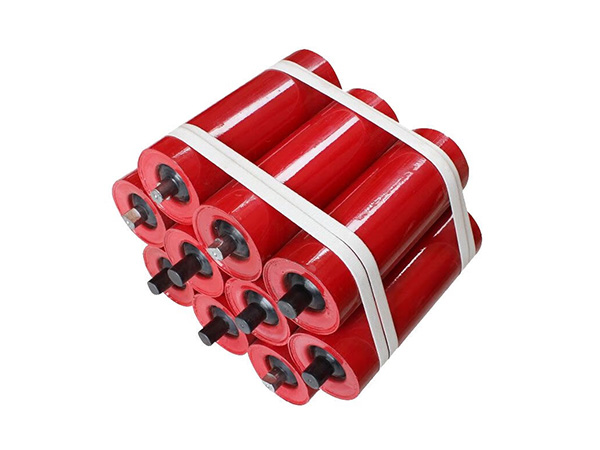
A mining conveyor idler is a simple component — a roller that supports the belt — but choosing the right one for a given position is more demanding than the simplicity suggests. Two idlers of the same diameter can have very different service lives on the same conveyor depending on how the bearing, shell and sealing are specified. Getting the selection right is the difference between a conveyor that runs to its maintenance schedule and one that keeps stopping for roller changes. This guide sets out the selection process from the ground up: define the duty, collect the data, then choose each element of the specification in turn. It is written for engineers and procurement staff who need a defensible basis for a selection decision rather than a rule of thumb.
Start With the Duty, Not the Catalogue
The most common idler selection error is beginning with a catalogue and picking the part number that looks closest to the existing roller. That approach propagates whatever specification was already there, including any inadequacy that caused earlier failures. A better starting point is to define the duty: what load does this position carry, what material passes over it, how fast does the belt run, and what environment does the roller live in? Once the duty is defined, the specification follows from it, and the catalogue becomes a place to find the product that meets the specification rather than the source of the specification itself.
Information to Gather Before Selecting
Good selection depends on having the right inputs. The following data determines the specification and should be collected before approaching a supplier.
Material characteristics
Bulk density sets the load. Abrasiveness (hardness and angularity of the particles) sets the shell requirement. Lump size range sets the impact duty and influences roller diameter. Adhesiveness — whether the material tends to build up on surfaces — determines whether a polymer or rubber-lagged shell may be needed. Moisture content and temperature matter for sealing and lubricant selection. Together these properties describe the environment the roller must survive.
Conveyor geometry and speed
Belt width defines the roller length and the trough configuration. Belt speed sets not only the bearing rotational speed and therefore fatigue loading, but also the centrifugal load on the sealing lip — high-speed conveyors above roughly five metres per second put more demand on the seal. The conveyor profile and any curves or inclines influence where load concentrates along the run.
Load per roller station
The load each roller carries is a function of belt weight, material load and the spacing between roller stations. It is the single most important input for bearing selection, because bearing life is governed by the ratio of the bearing's dynamic capacity to the load it sees. Load per station is best calculated from the belt and material weights and the actual spacing, not estimated from a nominal figure.
Environment
Whether the conveyor is above ground or underground, indoors or exposed, dusty or wet, and whether the ambient temperature and atmosphere promote corrosion, all affect shell material, sealing and frame treatment. Coastal and underground conveyors are exposed to atmospheric corrosion that a clean indoor gallery is not.
Choosing Roller Diameter and Length
Roller diameter affects the belt's bending path, the contact area with the belt, and the rotational speed for a given belt speed. Larger rollers reduce bearing rotational speed and generally reduce the load per unit of shell area, which can extend life, but they also raise the belt line and change the trough geometry, and they cost more. The appropriate diameter is the one that suits the belt width, the belt speed and the load, while keeping the belt support geometry correct. Length follows the belt width and trough configuration, with the roller length set to the design trough so that the belt is supported as intended.
Selecting the Bearing and Load Capacity
The bearing is usually the component that ends the roller's life, so its selection deserves the most attention. The governing variable is the ratio of the bearing's dynamic load capacity to the load it carries. A higher ratio means more margin against fatigue and a longer expected life. On a mining conveyor, where loads are high and stops are expensive, sizing the bearing with margin is a better decision than selecting the smallest bearing that will physically fit. When comparing idler supplier quotations, the bearing specification is the first line to compare, because it is where a lower price is most often achieved by a lower specification.
Shell Wall and Material Selection
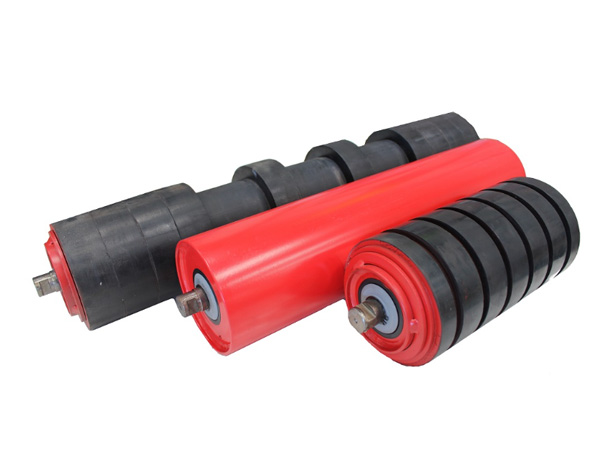
Shell wall thickness provides both the abrasion allowance and the stiffness of the roller. Thicker walls last longer under abrasive material but add weight and cost. The appropriate wall thickness is a function of the abrasiveness of the material and the position on the conveyor — a shell at a loading point needs more thickness than one on a light return run. Shell material extends the same logic: bare steel for general service, polymer or rubber lagging where material build-up, noise or belt protection are concerns, and stainless or coated steel where corrosion is severe. The selection should follow from the material and environment, not from a default preference.
Sealing for the Mining Environment
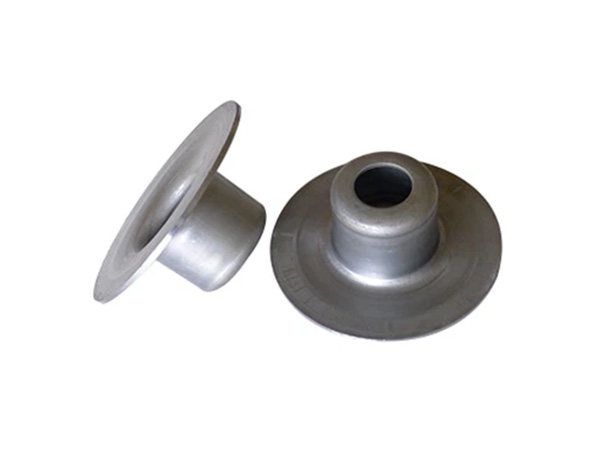
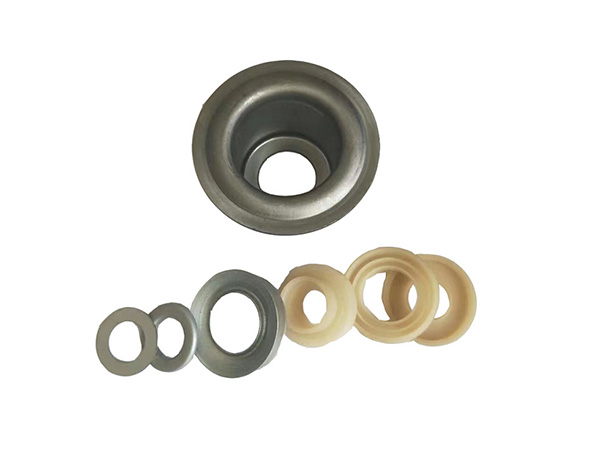
Sealing determines whether the bearing reaches its calculated life or fails early from contamination. Mining environments are the most demanding application for sealing because fine dust and moisture are ever-present. A single lip seal is rarely sufficient. Good practice is a staged arrangement: a contact seal against the shaft, a grease-filled cavity, a labyrinth that flings particles outward as the roller rotates, and an external flinger that keeps material away from the seal face. Each stage removes part of the contamination challenge, and the combination is what delivers long bearing life in a mine.
Idler Type and Spacing Along the Run
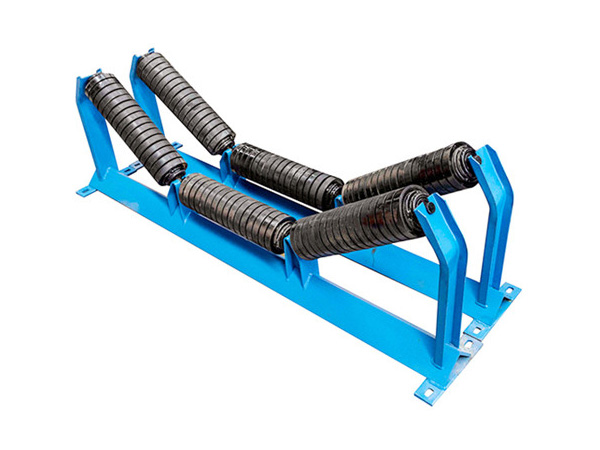
Selection is not only about the roller itself but about which type goes where and how the stations are spaced. Carrying idlers support the loaded belt on the top run and are set in trough sets to hold the belt in a curved profile. Return idlers support the empty belt beneath. Impact idlers are placed at loading and transfer points to absorb falling material. Self-aligning idlers are used where the belt tends to drift. Spacing is set to keep the belt sag within acceptable limits between stations, which is determined by the belt tension, the belt stiffness and the load — a heavily loaded, lightly tensioned belt needs closer spacing. Getting spacing right is part of idler selection, because a correctly specified roller at insufficient spacing will still give poor belt support.
Critical Versus Non-Critical Positions
A conveyor has positions where failure is merely inconvenient and positions where it stops the plant. Loading and transfer points are critical because they are most likely to fail and most disruptive when they do. The tail and head areas, and positions in confined structures, are also expensive to access. A sound selection strategy concentrates the higher specification at critical positions and uses a duty-appropriate lower specification where failure is tolerable. This is not about cutting cost everywhere — it is about applying the right specification where it produces the most reliability benefit.
Common Selection Mistakes
A few recurring mistakes account for most premature failures. Replacing a failed roller with an identical one without diagnosing why it failed repeats the failure. Selecting rollers by diameter alone ignores bearing, sealing and shell, which are what actually determine life. Under-sizing the bearing to save cost on a high-load line shortens life more than it saves. Ignoring the environment when choosing sealing produces contamination failures. And specifying a light roller for a loading zone ignores the impact duty that dominates that position. Each mistake is avoidable with a structured selection process.
Cement, port and quarry conveyors use the same logic
Although this guide focuses on mining, the same selection framework applies to cement, port and quarry conveyors. The priorities shift — for instance, cement handling raises temperature concerns and port handling emphasises salt-laden corrosion — but the process of defining the duty first and then selecting bearing, shell and sealing remains the same. The specific parameters change; the method does not.
FAQ
How do I select the right mining conveyor idler for a specific position?
Define the duty first: the load per station, the belt speed, the material's abrasiveness and lump size, and the environment. Then size the bearing to that load with margin, choose a shell wall and material suited to the abrasion, and select a sealing arrangement that resists the local dust and moisture. Finally, confirm the idler type and spacing suit the position. The catalogue is where you find the product that meets these requirements, not where you start.
What is the most important factor in idler selection?
The load the roller carries relative to the bearing's capacity, because bearing fatigue is the most common cause of idler failure. A roller with adequate bearing margin for its load will generally reach its expected life if it is also well sealed and its shell suits the abrasion. Getting the load and bearing right first prevents the failure mode that dominates in service.
Does belt speed affect idler selection?
Yes. Higher belt speed raises the rotational speed of the bearing, which increases fatigue loading, and it raises the centrifugal force on the sealing lip, which can reduce sealing effectiveness. For high-speed conveyors, sealing design and bearing margin both deserve more attention than on slower belts.
How much does the operating environment change the idler specification?
Considerably. A dusty, wet or corrosive environment demands a more robust sealing arrangement and potentially a coated or stainless shell and a protected frame. The same roller that lasts well in a clean, dry indoor gallery may fail quickly in a coastal or underground conveyor. Environment is a primary selection input, not a secondary consideration.
Can one idler specification suit an entire conveyor?
Usually not. The efficient approach is position-specific: heavier specification at loading, transfer and other critical positions, and duty-appropriate specification on the carrying and return runs. A single specification for the whole conveyor either over-specifies the light positions, adding cost, or under-specifies the critical ones, causing early failures.
Conclusion
Correct mining conveyor idler selection is systematic: define the duty, gather the load and environment data, then choose diameter, bearing capacity, shell and sealing in that order, with the idler type and spacing matched to each position along the run. The component is simple, but the specification that makes it last is not, and the difference between an idler that survives to its planned replacement and one that fails early almost always traces back to a selection decision. For buyers, the practical implication is that the most useful supplier is not the one with the lowest unit price but the one that asks about the application and can explain how each specification choice affects service life. Selecting idlers that way — as a specification exercise rather than a catalogue lookup — is what turns a conveyor from a recurring maintenance problem into a reliable asset.
References
Conveyor Equipment Manufacturers Association. Belt Conveyors for Bulk Materials, 7th ed. CEMA, 2014.
Molnár, V., Fedorko, G., Stehlíková, B., et al. "A Failure Analysis of Idler Rolls of Belt Conveyors." Engineering Failure Analysis, vol. 45, 2014, pp. 155–165.
Harrison, A. "Determining the Life of Conveyor Rollers Using Fatigue Theory." Bulk Solids Handling, vol. 25, no. 5, 2005, pp. 290–295.
Fedorko, G., and Molnár, V. "Determination of the Idler Rollers Bearing Load." Applied Mechanics and Materials, 2013.
Lodewijks, G. "Dynamics of Belt Conveyor Systems." Bulk Solids Handling, 2002.

Contact Us
Tel:8615031765579
WhatsApp:+8615031765579
E-mail:905675277@qq.com
Add:Likou Village, Chenzhuang Town, Xian County, Hebei Province, China
Url:https://www.yxidlerrollers.com