







- Site Navigation -
Load Bearing Idler Assemblies: Real-World Applications and Case Studies
Author:yuexing Date:2026-07-05 19:52:21 Hits:156
Understanding the theoretical principles behind load bearing idler assemblies is essential, but translating that knowledge into practical, site-specific decisions is where the real value lies. This article presents detailed case studies from mining, cement, and port handling operations that demonstrate how proper idler selection and installation directly impact conveyor reliability, maintenance costs, and production throughput. Each case study includes specific configuration details, performance data, and quantified return on investment to help procurement engineers and plant managers justify their equipment decisions.
Case Study 1: Open-Pit Coal Mine — Overland Conveyor System
Application Overview
An open-pit coal mine in Indonesia operates a 3.2 km overland conveyor transporting 4,500 tonnes per hour of ROM coal from the pit to a preparation plant. The conveyor features a 1,600 mm wide steel-cord belt running at 5.2 m/s, with a lift of 185 m over its length. The original installation used standard CEMA C series load bearing idler assemblies with 152 mm roller diameter and carbon steel construction.
Problem
Within the first 18 months of operation, the mine experienced recurrent idler failures at a rate of approximately 35 replacements per month across the 3.2 km system. The primary failure modes were bearing seizure (62% of failures) and roller tube wear-through (28%). Each idler replacement required a minimum 2-hour conveyor shutdown, resulting in approximately 70 hours of lost production per month at a production value of $12,000 per hour—a total monthly loss exceeding $840,000.
Solution
After a detailed root-cause analysis, the engineering team upgraded to CEMA D series load bearing idler assemblies with the following specifications:
152 mm roller diameter with 6 mm wall thickness (upgraded from 4.5 mm)
Deep-groove ball bearings (6310-2RS) with multi-lip labyrinth seals
Lithium-complex grease rated to 140°C continuous operating temperature
Hot-dip galvanized support frames for enhanced corrosion resistance in the tropical climate
Polyurethane-disc impact idlers at all three loading points, rated at 12 kN per station
Results
Following the upgrade, monthly idler replacements decreased from 35 to an average of 4 units—a reduction of 89%. Monthly conveyor downtime attributed to idler failures dropped from 70 hours to approximately 8 hours. The annual cost savings (reduced downtime, reduced replacement parts, and lower maintenance labor) totalled approximately $7.8 million, against an incremental investment of $420,000 for the upgraded assemblies. The payback period was under three months.
Case Study 2: Cement Plant — High-Temperature Clinker Handling
Application Overview
A cement plant in Kazakhstan operates a 180 m bucket elevator-to-conveyor transfer system handling clinker at temperatures of 120–150°C immediately after the cooler discharge. The conveyor uses a 1,000 mm wide heat-resistant belt running at 2.8 m/s, carrying approximately 800 tonnes per hour. The original load bearing idler assemblies were standard carbon steel units with standard grease-packed bearings.
Problem
The high clinker temperature caused rapid grease degradation in the idler bearings, leading to bearing failures every 3–5 months. Additionally, thermal expansion of the roller tubes caused dimensional changes that accelerated wear at the bearing housing interface. The plant averaged 18 unplanned shutdowns per year for idler-related repairs, each requiring 6–8 hours of cooling time before maintenance crews could safely access the conveyor.
Solution
The plant replaced the standard idlers with high-temperature-rated load bearing idler assemblies specifically designed for clinker handling applications:
Stainless steel bearing housings (304 grade) to eliminate thermal oxidation and corrosion
High-temperature synthetic grease (polyurea base) rated to 200°C continuous, 220°C intermittent
Expanded graphite seals providing superior thermal stability compared to standard nitrile rubber seals
Reduced idler spacing from 1.5 m to 1.2 m to distribute the thermal load across more stations
Insulated roller tubes with a ceramic-based thermal barrier coating to reduce heat transfer to the bearings
Results
Unplanned idler-related shutdowns decreased from 18 per year to 2 per year within the first 12 months of operation. Idler service life increased from an average of 4 months to over 18 months. The plant also observed a 12% reduction in conveyor power consumption, attributed to the improved roller alignment and reduced rotational resistance of the high-quality bearing assemblies. Annual cost savings exceeded $340,000, with the upgrade investment recovered within 8 months.
Case Study 3: Port Terminal — Iron Ore Ship Loading
Application Overview
A major iron ore export terminal in Australia operates a ship loading system with multiple conveyor belts handling 16,000 tonnes per hour of iron ore at belt speeds of 6.5 m/s. The primary loading conveyor is 2,200 mm wide and incorporates multiple transfer points with high drop heights (3–5 m). The abrasive nature of iron ore (Mohs hardness 6–7) combined with the high belt speed created an extremely demanding operating environment for load bearing idler assemblies.
Problem
Standard carbon steel roller tubes were experiencing severe abrasive wear, with some rollers requiring replacement after as few as 8,000 operating hours. The heavy impact loading at transfer points caused periodic structural failure of idler support brackets, leading to belt edge damage and material spillage onto the jetty structure—creating environmental compliance issues and additional cleanup costs.
Solution
The terminal implemented a tiered approach to load bearing idler assemblies selection:
Standard carrying sections: Upgraded to ceramic-lagged rollers with 8 mm wall thickness tubes, providing 3–4 times the wear life of standard steel rollers in abrasive service
Impact zones: Installed heavy-duty impact idlers with rubber cushion rings and a reinforced steel frame rated to 25 kN impact load
Transfer points: Custom-designed impact beds with polymer bars combined with high-capacity (CEMA E series) impact idlers
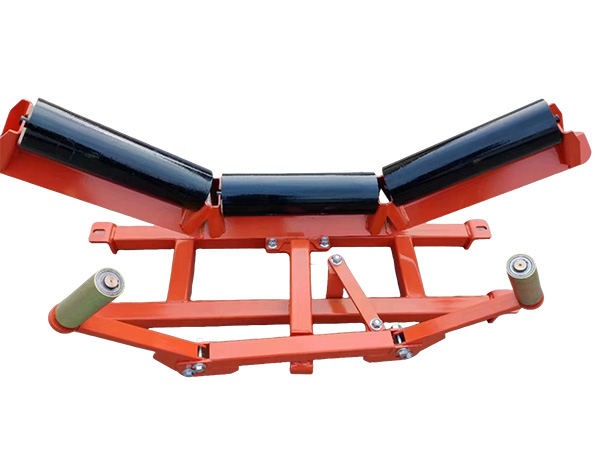
Tracking: Hydraulic self aligning idlers at 15 m intervals to maintain belt centering at the high operating speed
Results
Roller replacement frequency in carrying sections decreased by 75%, from an average replacement every 8,000 hours to approximately 32,000 hours. Impact zone failures were virtually eliminated, with zero structural failures recorded in the 24 months following the upgrade. Belt edge damage incidents decreased by 85%, and environmental spillage incidents dropped from an average of 12 per year to zero. The total project investment of $1.2 million delivered annual savings of $2.1 million in reduced maintenance, lower belt replacement costs, and eliminated environmental penalties.
Key Lessons from These Case Studies
Across diverse industries and operating conditions, several consistent themes emerge regarding the selection and application of load bearing idler assemblies:
Environment dictates specification: Standard idlers are rarely optimal. Each application's specific environmental conditions—temperature, abrasion, corrosion, moisture—must drive the idler specification, not generic catalog ratings.
Impact zones require dedicated solutions: Using standard carrying idlers at material transfer points is consistently the highest-cost selection error across all industries studied.
Bearing quality is the primary cost driver: Bearing-related failures account for 50–65% of all idler replacements in heavy-duty applications. Investing in higher-quality bearings and seals provides the greatest reduction in lifecycle cost.
Payback periods are short: In every case study, the incremental cost of properly specified idlers was recovered within 3–12 months, with ongoing annual savings of $300,000–$2,000,000+ depending on system scale.
Frequently Asked Questions
What makes an idler "heavy-duty" compared to standard load bearing idler assemblies?
Heavy-duty idlers feature thicker roller tube walls (6–8 mm vs. 4–5 mm), larger diameter shafts (25–30 mm vs. 20 mm), higher-capacity bearings (6310 vs. 6208 series), and reinforced frame brackets. They are designed for applications with high material bulk density (>2.0 t/m³), high belt speeds (>4 m/s), or severe impact loading at feed points.
How do I calculate the expected service life of load bearing idler assemblies?
Idler service life depends on bearing L10 rating (adjusted for load, speed, and contamination), roller tube wear rate (determined by material abrasiveness and belt speed), and environmental degradation of seals and coatings. Manufacturers typically provide L10 life calculations specific to their designs; field experience suggests multiplying catalog L10 ratings by a factor of 0.3–0.5 to account for real-world contamination and misalignment conditions.
Are there standards governing the design of load bearing idler assemblies?
Yes. The primary standards include CEMA (Conveyor Equipment Manufacturers Association) standards in North America, ISO 1537 for general conveyor idler dimensions and tolerances, DIN 15207 for German/European specifications, and AS 1333 for Australian standards. Additionally, specific industries such as mining may have additional regulatory requirements for idler design and fire resistance (e.g., MSHA approval in the United States).
Conclusion
These case studies demonstrate that the selection of load bearing idler assemblies is not a commodity purchasing decision—it is an engineering decision with direct, measurable impact on production reliability, maintenance costs, and environmental compliance. Operations that invest in properly specified, application-matched idler assemblies consistently achieve dramatic reductions in unplanned downtime and total cost of ownership. The key is to match the idler specification to the actual operating conditions, invest in quality bearings and seals, and provide dedicated impact protection at all material transfer points.
References
Conveyor Equipment Manufacturers Association (CEMA). CEMA 7th Edition — Belt Conveyors for Bulk Materials. CEMA, 2014.
Molnár, V., Fedorko, G., Stehlíková, B., et al. "A Failure Analysis of Idler Rolls of Belt Conveyors." Engineering Failure Analysis, vol. 45, 2014, pp. 155-165.
Harrison, A. "Determining the Life of Conveyor Rollers Using Fatigue Theory." Bulk Solids Handling, vol. 25, no. 5, 2005, pp. 290-295.
Fedorko, G., and Molnár, V. "Determination of the Idler Rollers Bearing Load." Research in Engineering, vol. 22, 2013, pp. 45-52.
Wheeler, C.A., and Munzenberger, P. "Belt Tracking: A Critical Review of the State of the Art." International Journal of Mining Science and Technology, vol. 30, 2020, pp. 753-759.

Contact Us
Tel:8615031765579
WhatsApp:+8615031765579
E-mail:905675277@qq.com
Add:Likou Village, Chenzhuang Town, Xian County, Hebei Province, China
Url:https://www.yxidlerrollers.com