







- Site Navigation -
Hydraulic Self Aligning Idler Working Principle: A Technical Deep Dive
Author:yuexing Date:2026-07-02 16:07:56 Hits:169
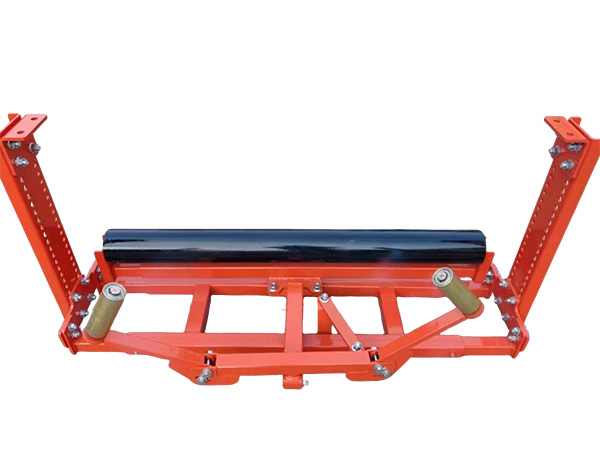
Belt misalignment remains the single most common cause of conveyor downtime in bulk material handling operations worldwide. Traditional training idlers—those that pivot mechanically to correct belt drift—have been industry standard for decades, yet they suffer from sluggish response, frequent mechanical wear, and limited correction force at high belt speeds. The hydraulic self aligning idler represents a significant evolution in belt tracking technology, using pressurized hydraulic fluid to deliver faster, more precise, and more consistent correction forces. This guide explains the complete hydraulic self aligning idler working principle for engineers, maintenance managers, and procurement professionals evaluating tracking solutions.
The Fundamental Problem: Belt Misalignment
Belt misalignment occurs when the conveyor belt deviates laterally from its intended centerline position on the idler rollers. This deviation can be caused by multiple factors including material loading asymmetry, structural frame misalignment, roller diameter variations, pulley eccentricity, and environmental conditions such as wind loading on outdoor installations. According to industry surveys, belt misalignment accounts for approximately 15–20% of all unplanned conveyor stoppages and is a leading cause of edge damage, material spillage, and belt tracking failure.
Conventional mechanical training idlers correct misalignment through a pivoting frame mechanism: when the belt drifts to one side, contact with a sensing guide (or cantilevered roller) pivots the entire idler frame, redirecting the belt back to center. While effective in many applications, this approach relies on mechanical linkage that can corrode, seize, or fatigue over time—particularly in harsh mining and port environments.
How a Hydraulic Self Aligning Idler Works: Step-by-Step Principle
The hydraulic self aligning idler working principle replaces the purely mechanical pivot with a hydraulic actuator system that detects belt deviation and applies controlled corrective force. The core operating cycle proceeds as follows:
Step 1: Belt Deviation Detection
Hydraulic self aligning idlers incorporate sensing elements on one or both sides of the idler frame. These sensors typically consist of spring-loaded guide rollers or contact plates positioned 15–25 mm from the belt edge. When the belt migrates laterally and contacts a sensor, it initiates the correction cycle. Unlike mechanical trainers that require physical displacement of the entire frame to trigger action, hydraulic sensors can detect very small deviations (as little as 5 mm) and respond proportionally.
Step 2: Hydraulic Signal Generation
Upon detecting belt contact, the sensing element activates a hydraulic valve—typically a proportional directional control valve or a pilot-operated spool valve. This valve routes pressurized hydraulic fluid (typically mineral-based hydraulic oil at 50–150 bar, depending on the system design) to a double-acting hydraulic cylinder mounted on the idler pivot mechanism. The pressure level and flow rate are directly proportional to the degree of belt misalignment detected, ensuring smooth and graduated correction rather than sudden, jerky movements that can induce belt oscillation.
Step 3: Pivoting Frame Correction
The hydraulic cylinder extends or retracts, rotating the idler frame around its central pivot axis. This angular adjustment changes the perpendicular relationship between the idler roller axis and the belt travel direction, creating a steering effect that progressively returns the belt to its centered position. The key advantage of hydraulic actuation is the ability to deliver consistent correction force regardless of environmental contamination, mechanical wear, or temperature extremes that would affect purely mechanical linkage systems.
Step 4: Automatic Reset and Continuous Monitoring
Once the belt returns to its centered position and sensor contact is relieved, the hydraulic valve returns to its neutral position. The idler frame then gradually re-centers under the influence of a return spring or counterbalance mechanism, preventing over-correction and belt oscillation. Some advanced systems incorporate position feedback sensors that continuously monitor the frame angle and provide data to the plant SCADA system, enabling predictive maintenance scheduling.
Key Advantages of the Hydraulic Correction Mechanism
Compared to conventional mechanical training idlers, the hydraulic self aligning idler offers several distinct performance advantages:
Faster response time: Hydraulic systems respond to belt deviations within 0.2–0.5 seconds, compared to 1–3 seconds for purely mechanical trainers. This rapid response prevents minor drift from escalating into significant misalignment.
Proportional correction force: The hydraulic system applies correction force proportional to the degree of misalignment, eliminating the "all-or-nothing" correction characteristic of mechanical pivot systems that can cause belt hunting and oscillation.
Consistent performance in harsh environments: Sealed hydraulic systems are largely immune to dust, moisture, and corrosion that cause mechanical linkage seizure. In underground mining applications, hydraulic trainers have demonstrated 3–5 times the service life of equivalent mechanical units.
Higher correction force capacity: Hydraulic actuators can generate substantially higher pivot forces than spring-loaded mechanical systems, making them suitable for heavy-duty applications with wide belts (1,800 mm+) and high belt tensions.
Reduced belt edge damage: The smoother, more controlled correction action minimizes belt edge contact with the conveyor structure, reducing edge wear and extending belt service life by an estimated 15–25%.
Application Scenarios and Suitability
The hydraulic self aligning idler is particularly well-suited for the following applications:
Long overland conveyors: Systems exceeding 500 m in length where cumulative misalignment can cause significant tracking errors at discharge points
High-speed belt installations: Belt speeds above 5 m/s where mechanical trainers struggle to respond quickly enough to prevent edge damage
Multiple material loading points: Systems with three or more loading stations where asymmetric loading frequently causes misalignment
Harsh environmental conditions: Mining, port, and aggregate handling environments with high dust levels, moisture, and temperature variations
Wide belt applications: Belts exceeding 1,400 mm width where the high belt tension makes effective mechanical correction more challenging
Installation and Maintenance Best Practices
Proper installation is critical to realizing the full benefits of hydraulic self aligning idlers. Install units at intervals of 15–30 m along the carrying run, with additional units positioned 5–10 m upstream and downstream of each material feed point. Ensure the hydraulic reservoir is filled with the manufacturer-specified hydraulic fluid and that all connections are properly tightened to the recommended torque values. Establish a quarterly inspection schedule that includes hydraulic fluid level checks, hose condition assessment, and sensor alignment verification.
Frequently Asked Questions
What hydraulic fluid is used in a hydraulic self aligning idler?
Most manufacturers recommend ISO VG 46 or VG 68 mineral-based hydraulic oil. For extreme temperature applications (below -20°C or above 60°C ambient), synthetic hydraulic fluids with appropriate viscosity ratings should be specified. Always use the fluid grade specified by the idler manufacturer to ensure optimal seal compatibility and system performance.
How does a hydraulic aligning idler differ from a mechanical training idler?
The primary difference is the correction mechanism. Mechanical training idlers use a pivoting frame actuated by belt contact with guide rollers, while hydraulic self aligning idlers use a hydraulic cylinder and valve system to apply controlled correction force. The hydraulic system provides faster response, proportional correction, and more consistent performance in contaminated environments.
Can hydraulic self aligning idlers be retrofitted to existing conveyors?
Yes, most hydraulic self aligning idlers are designed as drop-in replacements for standard training idler frames. However, verify that the existing idler mounting brackets are rated for the slightly higher weight of the hydraulic assembly and that adequate space exists for the hydraulic cylinder and connecting hoses during full pivot travel.
What is the typical service life of hydraulic components?
With proper maintenance, the hydraulic cylinder and valve assembly in a hydraulic self aligning idler typically achieves 40,000–60,000 operating hours. Seal kits are available for field refurbishment, and most manufacturers offer exchange programs for hydraulic components to minimize downtime during maintenance.
Does a hydraulic aligning idler require an external power source?
No. Most hydraulic self aligning idlers are self-contained systems with a pre-charged hydraulic accumulator or manual pump that maintains system pressure. No external hydraulic power unit or electrical connection is required, simplifying installation and ensuring operation during power outages.
Conclusion
The hydraulic self aligning idler represents a mature and proven technology for addressing the persistent challenge of conveyor belt misalignment. Its hydraulic correction mechanism delivers faster, more controlled, and more reliable belt centering than conventional mechanical trainers, with particular advantages in high-speed, heavy-duty, and environmentally challenging applications. For operations experiencing frequent belt tracking issues, high spillage rates, or excessive belt edge damage, upgrading to hydraulic self aligning idlers typically delivers return on investment within 12–18 months through reduced downtime, extended belt life, and lower maintenance costs.
References
Conveyor Equipment Manufacturers Association (CEMA). CEMA 7th Edition — Belt Conveyors for Bulk Materials. CEMA, 2014.
Harrison, A. "Belt Conveyor Idler Roll Dynamics." Bulk Solids Handling, vol. 16, no. 3, 1996, pp. 447-452.
Wheeler, C.A., and Munzenberger, P. "Belt Tracking: A Critical Review of the State of the Art." International Journal of Mining Science and Technology, vol. 30, 2020, pp. 753-759.
Maton, A.E. "Belt Conveyor Idler Roll Behavior Under Dynamic Conditions." Bulk Solids Handling, vol. 12, no. 4, 1992, pp. 637-642.
Zhang, S., Xia, Y., and Wang, Z. "Research on Hydraulic Belt Alignment System for Long-Distance Conveyors." Journal of Mechanical Engineering, vol. 58, no. 8, 2022, pp. 1124-1135.

Contact Us
Tel:8615031765579
WhatsApp:+8615031765579
E-mail:905675277@qq.com
Add:Likou Village, Chenzhuang Town, Xian County, Hebei Province, China
Url:https://www.yxidlerrollers.com