







- Site Navigation -
Heavy Duty Idler Rollers in Mining Conveyor Applications
Author:yuexing Date:2026-09-30 08:03:45 Hits:89
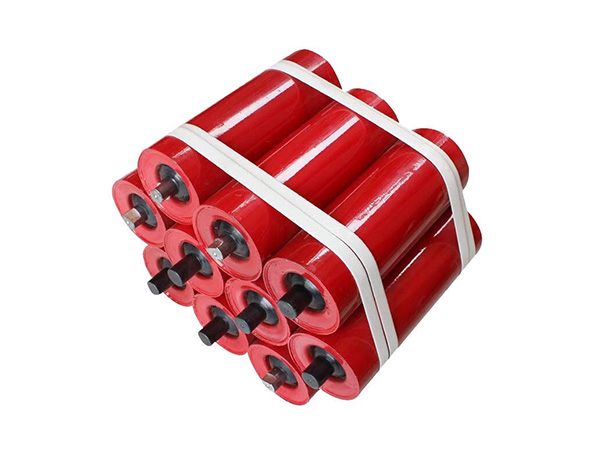
Mining conveyors are the hardest working belt systems in bulk handling. They carry abrasive ore, run long distances at speed, operate continuously, and are exposed to dust, moisture and impact in conditions that would destroy a standard roller within a short time. A heavy duty idler roller exists to survive that environment, but the term itself is often used loosely. A roller is not heavy duty because a supplier says so, or because it is heavier than another roller in a catalogue. It is heavy duty because its load capacity, shell construction, sealing and frame are matched to a duty that a general-purpose roller cannot withstand. This article explains where those conditions occur on a mining conveyor, how they affect each part of the roller, and how to match the specification to the position rather than applying a single roller type across an entire run.
What Makes a Roller Heavy Duty
Heavy duty is a statement about load capacity and durability, not a marketing category. The rollers in a mining conveyor fall into a range of duty classes defined by the load each roller carries and the environment it operates in. At the light end are rollers for low-tonnage, clean, low-speed service. At the heavy end are rollers carrying several hundred to over a thousand newtons per station in an environment of continuous contamination and periodic impact.
Three things separate a heavy duty roller from a general-purpose one. First, the bearing load capacity relative to the load it carries — a high duty roller is sized with margin, so that fatigue life is measured in many thousands of hours rather than barely reaching the first replacement interval. Second, the shell, which must resist abrasion and impact without deforming. Third, the sealing, which must keep the bearing protected in an environment where dust and moisture attack continuously. A roller that is strong but poorly sealed will fail from contamination; one that is well sealed but undersized will fail from fatigue. Heavy duty means both.
Where Heavy Duty Rollers Are Required in a Mine
Not every position on a mining conveyor needs the heaviest available roller. Over-specifying the whole conveyor adds cost and weight without benefit; under-specifying the critical positions produces repeated failures that drag down availability. Heavy duty specification is best applied where the duty actually concentrates.
Primary crushing and loading zones
The loading zone is the single most demanding position on any conveyor. Material leaves a crusher, a chute or a feeder and lands on the belt with kinetic energy proportional to the drop height and the lump mass. A large lump falling from height delivers a sharp impact to the belt and to the roller beneath it. Repeated thousands of times an hour, those impacts fatigue the bearing, deform the shell and loosen the frame. Rollers in this position must be impact-rated: a thicker, more robust shell, a heavier frame, and in many designs a resilient element that absorbs part of the impact before it reaches the bearing. The same roller that suits the middle of a conveyor run would be destroyed at the loading point in a matter of months.
Transfer points between conveyors
Transfer points share the loading-zone problem in a concentrated form. At each transfer, material drops from one belt to the next, and the rollers immediately beneath the transfer chute see the same impact duty as a primary loading zone. Because transfers are often located in confined structures, access for replacement is harder, which makes premature failure more expensive — the roller is not only more likely to fail, it is also harder and slower to change. Heavy duty specification at transfer points pays for itself through reduced downtime even before the roller cost is considered.
High-tonnage overland conveyors
Long overland conveyors carrying high tonnage load every carrying roller with a substantial share of the belt and material weight. The load per station is a function of the belt weight, the material load and the spacing of the rollers, and on a heavily loaded conveyor it is the steady, unrelenting component of the duty that shortens bearing life. Here the critical specification is bearing capacity — the roller must be sized so that the C/P ratio leaves enough fatigue margin for the expected operating hours. An undersized bearing on a high-tonnage line fails early not because of a single event but because the cumulative fatigue reaches the limit sooner than planned.
The Duty Environment: Abrasion, Impact and Contamination
Three mechanisms dominate roller degradation in mining service, and each attacks a different part of the roller. Abrasion wears the shell as the belt and the conveyed material rub against it, and it accelerates where the material is coarse and hard. Impact deforms the shell and fatigues the bearing, concentrated at loading and transfer points. Contamination attacks the bearing and the seal, and it is present everywhere in a mine — the fine dust that settles on every surface also finds its way toward any seal that is not designed to resist it.
These mechanisms interact. A shell worn thin by abrasion is less able to resist impact. A bearing already stressed by impact load has less margin against the additional load that comes from a misaligned or eccentrically loaded shell. Contamination that raises bearing friction raises operating temperature, which degrades lubricant, which shortens bearing life further. Because of this interaction, a heavy duty roller must be specified as a system rather than as a single upgraded component.
How Heavy Duty Specification Is Built
Bearing and load capacity
The bearing is the component that most often ends a roller's life, and load capacity is the lever that controls it. In the design of a heavy duty roller, the bearing is selected so that the ratio of its dynamic capacity to the load it carries is high enough to deliver the expected service life with margin. Sizing the bearing generously relative to the load is the most reliable way to extend roller life on a high-tonnage conveyor, and it is the first specification a buyer should confirm when comparing heavy duty rollers.
Shell construction
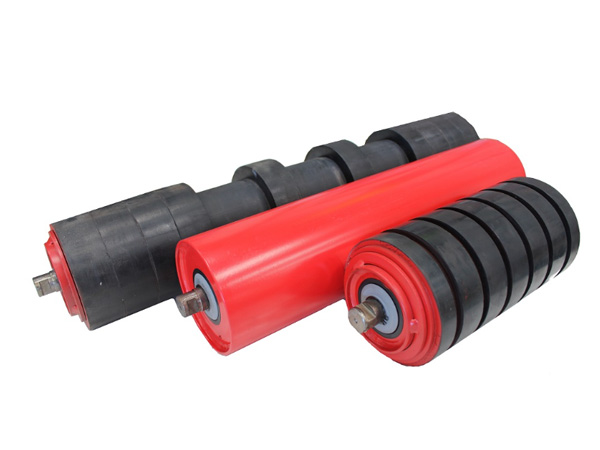
Shell wall thickness and material set the abrasion and impact resistance. On a mining conveyor, the appropriate wall thickness depends on the abrasiveness of the ore and the position of the roller. Shells at the loading point need more thickness than those on the clean return run, because impact and abrasion both concentrate there. Where material tends to adhere, or where noise and belt protection matter, a polymer or rubber-lagged shell may be preferred over bare steel. The right choice is a function of the duty, not of a blanket preference.
Sealing for mine conditions
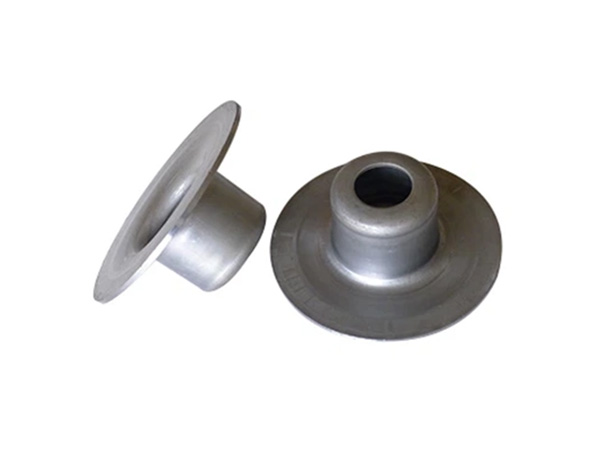
Sealing is where heavy duty rollers differ most from general-purpose ones, and where cheap products reveal themselves. A mining conveyor requires a sealing arrangement that keeps dust and water away from the bearing across many thousands of hours. Good practice is a multi-stage design: a contact seal against the shaft, a grease-filled cavity as a secondary barrier, a labyrinth that uses rotation to fling contamination outward, and an external flinger that deflects material away from the seal face. This layered approach means that no single barrier has to be perfect; each stage protects the next.
Frame and mounting
The frame locates the roller and transmits load to the conveyor string, and on a mining conveyor it must do so without deflecting under load or corroding away. A frame that flexes under heavy load tilts the roller, which causes belt mistracking and concentrates load on part of the shell and bearing. The frame section should be matched to the duty, and the surface treatment should suit the environment — galvanising or an equivalent coating system for outdoor and underground conveyors where atmospheric corrosion is a constant.
Matching Roller Type to Position
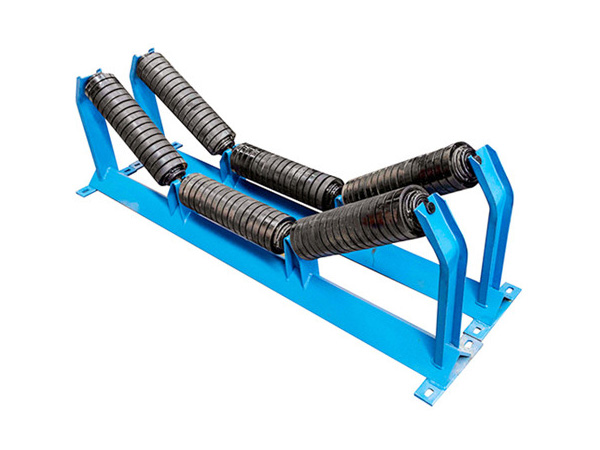
The most efficient heavy duty specification is position-specific rather than uniform. Carrying rollers in the mid-run of a conveyor need load capacity and abrasion resistance. Return rollers run under lighter load and can often use a lighter specification, though they still need sealing against dust. Impact rollers at loading and transfer points need the heaviest shell and frame, plus an impact-absorbing element. Self-aligning (training) rollers are used where the belt tends to run off centre, and these must combine their alignment function with a duty-appropriate load capacity. Matching the type to the position keeps the important positions robust while avoiding the cost and weight of over-specifying the whole conveyor.
Common Failure Modes in Mining Service
When a heavy duty roller fails early, the cause is usually one of a few patterns. Bearing seizure from contamination indicates inadequate sealing for the dust and moisture present. Shell wear-through indicates a wall thickness or shell material that does not match the abrasiveness of the ore. Broken or deformed shells at the loading point indicate missing or insufficient impact protection. Frame deflection or corrosion indicates a frame section or treatment that is not suited to the duty. In each case the failure points to a specification decision rather than to a manufacturing defect, which is why diagnosing the position and the environment is the first step toward a roller that lasts.
Selection Considerations for Buyers
A buyer sourcing heavy duty idler rollers for a mining conveyor should provide the supplier with enough information to size the product properly:
The material conveyed, including lump size range, hardness and any adhesiveness.
Conveyor capacity, belt speed, belt width and the load carried per roller station.
The drop height and lump size at loading and transfer points, so impact duty can be assessed.
The environment — surface or underground, dusty or wet, ambient temperature range, and whether corrosion is a factor.
The position of each roller group on the run, so the specification can be matched to the duty.
The expected service life and maintenance interval the operation is targeting.
A supplier who asks these questions is positioning to specify correctly. A supplier who quotes heavy duty rollers on the basis of diameter and quantity alone is guessing, and a guess on a mining conveyor becomes an early failure in the field.
Impact idlers as a distinct category
Within the heavy duty family, impact idlers deserve separate consideration because their duty is different in kind, not just in degree. Their function is to absorb energy from falling material, and their design reflects that — a robust shell, a strong frame and usually a resilient element beneath the shell or in the roll assembly. Buying impact idlers as if they were simply heavier carrying rollers overlooks the energy-absorption function and tends to produce early failures at exactly the position where failure is most disruptive.
FAQ
How do I know if a conveyor position needs a heavy duty idler roller?
Look at three factors: the load the roller carries (a function of belt weight, material load and roller spacing), the abrasiveness and lump size of the material, and the impact energy at the position. Positions with high load, abrasive material or material landing from height need heavy duty or impact-rated rollers. The middle of a lightly loaded run usually does not.
What is the difference between a heavy duty roller and an impact roller?
A heavy duty roller is built to carry high steady loads in a demanding environment. An impact roller is designed to absorb the energy of falling material at loading and transfer points, which requires a robust shell, a strong frame and usually a resilient element. Impact rollers are a specialised part of the heavy duty range, used where dynamic impact rather than steady load is the dominant duty.
Why do heavy duty rollers still fail early in mining service?
Usually because the specification does not match the duty. The most common causes are sealing that cannot keep out the local dust and moisture, a shell wall or material too light for the abrasiveness of the ore, and a missing or insufficient impact protection at a loading point. Diagnosing which of these applies to the failed position is the first step toward a specification that lasts.
Should the whole conveyor use the same heavy duty roller?
No. Specifying the heaviest roller across an entire conveyor adds cost and weight without improving the positions that do not need it. The efficient approach is position-specific: heavy duty or impact-rated rollers at loading and transfer points, load-appropriate rollers on the carrying run, and lighter specification on the return run where the duty permits, while maintaining adequate sealing throughout.
What information should I give a supplier when ordering mining conveyor rollers?
The material and its characteristics, the conveyor capacity, belt speed and width, the load per station, the impact conditions at loading and transfer points, the operating environment, and the position of each roller group. With this information a supplier can specify to the duty rather than to a dimension, which is the difference between rollers that last and rollers that are replaced repeatedly.
Conclusion
A heavy duty idler roller is the right answer to a specific set of conditions — high load, abrasive material, impact at loading points and relentless contamination — and it is the wrong answer applied uniformly across a whole conveyor. The value comes from matching the specification to the duty position by position: generous bearing capacity where the load is high, robust and abrasion-resistant shells where the material bites, multi-stage sealing everywhere dust and moisture are present, and dedicated impact protection at the points where material lands. For mining operations, the practical route to reliable conveyor availability is not a single premium roller but a considered specification applied where it matters, supported by a supplier who understands the application well enough to advise on it. That understanding, more than any single product feature, is what keeps a mining conveyor running.
References
Conveyor Equipment Manufacturers Association. Belt Conveyors for Bulk Materials, 7th ed. CEMA, 2014.
Molnár, V., Fedorko, G., Stehlíková, B., et al. "A Failure Analysis of Idler Rolls of Belt Conveyors." Engineering Failure Analysis, vol. 45, 2014, pp. 155–165.
Harrison, A. "Determining the Life of Conveyor Rollers Using Fatigue Theory." Bulk Solids Handling, vol. 25, no. 5, 2005, pp. 290–295.
Fedorko, G., and Molnár, V. "Determination of the Idler Rollers Bearing Load." Applied Mechanics and Materials, 2013.
Zhang, Y., Yang, X., and Meng, L. "Review of Belt Conveyor Idler Roller Research." International Journal of Mining Science and Technology, vol. 33, no. 3, 2023.

Contact Us
Tel:8615031765579
WhatsApp:+8615031765579
E-mail:905675277@qq.com
Add:Likou Village, Chenzhuang Town, Xian County, Hebei Province, China
Url:https://www.yxidlerrollers.com