







- Site Navigation -
Conveyor Idler RFQ Specification Sheet: A Template for Industrial Buyers
Author:yuexing Date:2026-11-25 11:51:09 Hits:118
A conveyor idler RFQ specification is the single document that determines whether the quotations you receive are comparable. Send ten suppliers a one-line request for "conveyor rollers, 133 mm, 500 pieces" and you will get ten different products, ten different prices and no reliable way to choose. The gap is almost never the supplier's fault; it is the missing specification. A well-built RFQ converts an inquiry from a price request into a controlled technical comparison, and it is also the strongest protection a buyer has against a roller that arrives dimensionally correct but unsuitable for the duty. This article sets out the fields that belong in that document and why each one earns its place.
Start With the Conveyor Duty Data
The first block of any idler RFQ describes the conveyor, not the roller. State the material handled, its bulk density and lump size, the design and peak tonnage, belt width and belt speed, the carrying and return idler spacing, the trough angle, and the operating environment including temperature, moisture, dust and any corrosive or washdown exposure. Note the loading conditions at transfer points, including drop height and whether impact rollers or buffer beds are used.
This data is what allows a competent supplier to sanity-check the request. If a buyer asks for a light-duty series on a high-tonnage hard-rock conveyor, a supplier working from complete duty data will raise the concern; a supplier working from a diameter alone has no basis to do so. Duty data also anchors the load calculation and bearing life target, so the quoted rollers can be verified against a defined service condition rather than a guess.
Define the Roller Geometry Precisely
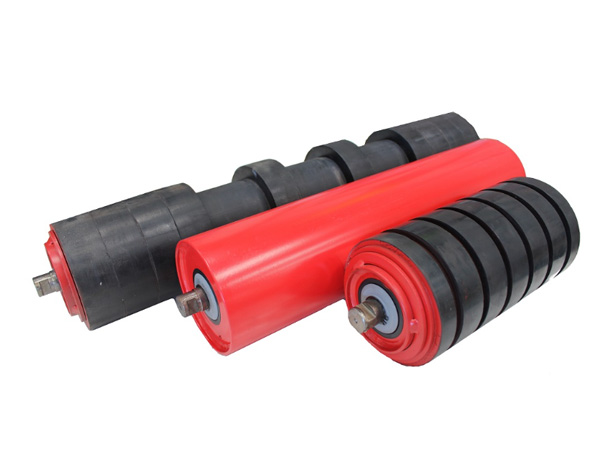
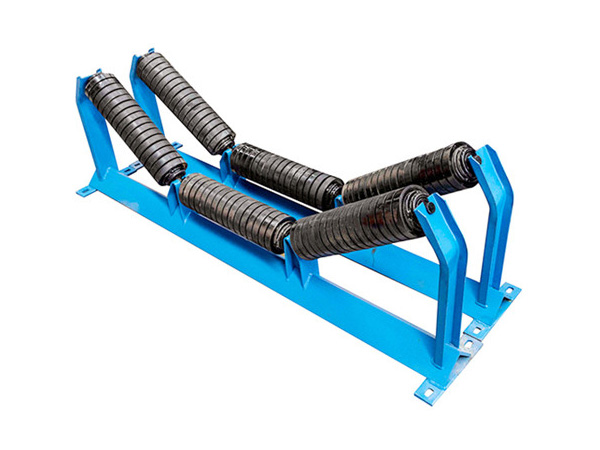
The geometry block should leave no dimension to interpretation: roller diameter and its tolerance, face length, shaft diameter, shaft length and the shape of the shaft ends, the overall assembly length, and the frame or bracket interface. For troughing sets, specify the number of rolls, the trough angle, and the gap between adjacent rolls. For return rollers, state whether a single flat roll, a V-return pair or a rubber-disc configuration is required. Reference a drawing wherever a dimension is easier to show than to describe.
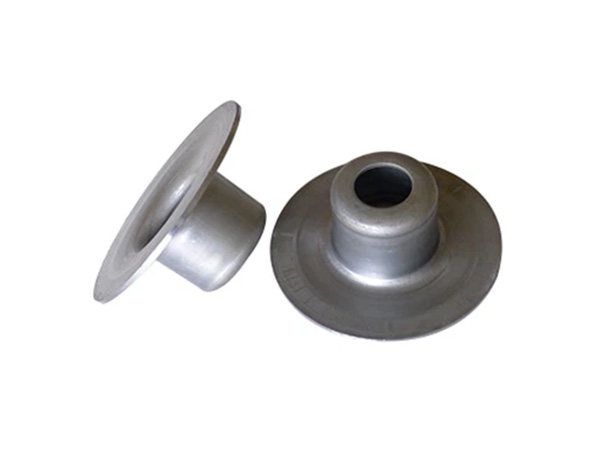
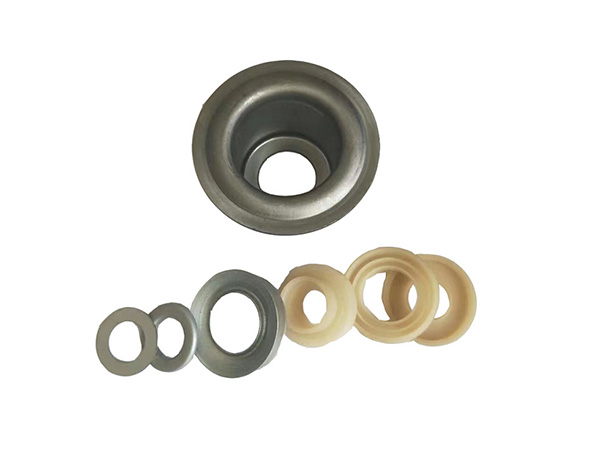
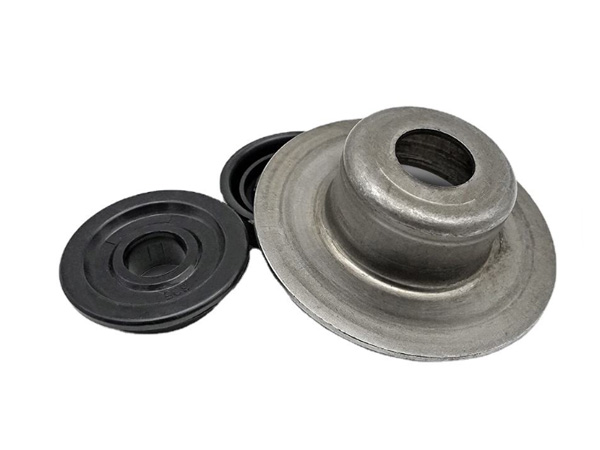
This is also the place to name the bearing housing series and the mounting standard in use. Stamped bearing housings, for example, are produced in several established series with different seat geometries; naming the series and attaching a drawing prevents a nominally "equivalent" part that will not seat correctly in the existing frame. Details of common stamped bearing housing types are worth reviewing before this field is written.
Specify Bearings, Seals and Lubrication
Roller life is usually decided inside the housing. The RFQ should state the bearing type and size, the internal clearance class appropriate to the fit and speed, the sealing arrangement, and the lubricant type and fill. Where the application demands it, specify whether bearings are to be sealed for life or regreasable, and define the seal type, such as a labyrinth or multi-stage non-contact arrangement, together with any requirement for a contact seal on the outboard side.
Acceptance criteria belong here too. State the maximum rotational resistance, the maximum radial runout of the finished roller, and the required bearing life target. These are measurable, so they can be checked at inspection. A specification that names a bearing brand but omits clearance, sealing and acceptance limits has specified a component while leaving the performance undefined.
Materials, Tolerances and Surface Protection
List the material for each part: tube material and wall thickness, shaft material, and housing material. State the required tube straightness, concentricity and the finished roller's radial runout tolerance, referencing a geometric tolerancing standard so that the measurement method is unambiguous. Then define the surface protection: coating system, minimum dry film thickness where applicable, galvanizing where required, and any cosmetic or colour requirement.
Corrosion protection is frequently under-specified on outdoor and coastal conveyors. Naming a coating system with a defined preparation grade and film thickness, and asking the supplier to state the expected service environment class, gives the quotation a defensible basis. Where stainless steel, HDPE or other non-ferrous shells are intended, the RFQ should say so explicitly rather than assuming a carbon-steel default.
Quality, Inspection and Testing Requirements
A technically complete RFQ tells the supplier how the goods will be judged. Name the applicable product and testing standards, define the sampling plan for dimensional and rotational checks, and state the acceptance criteria for each characteristic. Ask for the inspection records that will accompany the shipment: dimensional reports, rotational resistance or runout test results, material certificates where relevant, and a certificate of conformity.
If a pre-shipment inspection or a first-article approval is required, make it a contractual condition and define who performs it and who bears the cost of a re-inspection after a failed one. Buyers who plan to sample against an AQL standard should say which standard and which inspection level, so both sides work from the same definition of an acceptable lot.
Quantities, Packaging and Marking
Beyond the roller itself, the RFQ should state the exact quantity by type, the acceptable quantity tolerance, the packing method, and the marking required on each roller and each package. Marking matters more than it appears: a part number, production batch and date on the roller allows traceability when a warranty question arises months later. For export orders, define the packaging standard, any heat treatment or fumigation requirement for wooden packing, and the maximum package weight or dimensions for the receiving site's handling equipment.
State the required documentation set with the order: commercial invoice, packing list, certificate of origin, material or test certificates, and any declaration needed for customs classification. Ambiguity here is a common cause of clearance delays that have nothing to do with the quality of the rollers.
Commercial and Contractual Fields
Finally, close the RFQ with the commercial frame: the applicable delivery term, the required delivery date and any partial-shipment rules, the warranty period and its scope, the payment terms, the quotation validity, and the currency. Ask suppliers to return a completed specification sheet with their quote, showing any deviation from each requested parameter. A quotation that silently changes wall thickness or bearing clearance is far easier to catch when deviations must be listed.
Requesting a structured response also makes evaluation faster. When every supplier fills the same fields, the comparison becomes a table rather than a negotiation over incompatible offers, and the eventual purchase order can simply reference the agreed sheet.
Frequently Asked Questions
What is the single most commonly omitted RFQ field?
Conveyor duty data. Buyers frequently specify the roller but not the tonnage, bulk density, spacing or loading conditions. Without that context a supplier cannot verify that the proposed series suits the application, and the quotation cannot be checked against a load calculation.
Should I name a specific bearing brand in the RFQ?
Naming an approved brand or an equivalent is reasonable, but it is not a substitute for specifying bearing type, size, clearance, sealing, lubrication and life target. Performance is defined by those parameters; the brand mainly controls sourcing and interchangeability.
How detailed should the drawing be?
Detailed enough to fix every interface dimension, shaft end geometry and frame connection. Where a dimension is critical to fit or function, show it on a controlled drawing and give it a tolerance, rather than relying on a written description that can be read two ways.
Do I need acceptance criteria for rotational resistance and runout?
Yes. These are measurable indicators of build quality that correlate with noise, vibration and bearing life. Stating a maximum value and a test method turns them into enforceable requirements instead of subjective judgements at incoming inspection.
Why require suppliers to list deviations?
Because most specification drift is quiet rather than deliberate. A mandatory deviation list forces every substitution into the open, so the buyer can approve it knowingly or reject it before an order is placed.
Conclusion
A conveyor idler RFQ specification is worth building once and reusing. By capturing conveyor duty data, precise roller geometry, bearing and sealing choices, materials and tolerances, inspection and acceptance criteria, packaging and marking, and the commercial frame, it turns a loose inquiry into a controlled comparison. The discipline pays twice: quotations become genuinely comparable, and the agreed sheet becomes the reference for inspection, delivery and any later warranty discussion. For a component whose failure can stop an entire line, that clarity is inexpensive insurance.
References
- DIN 22112, Idlers for belt conveyors — Dimensions and requirements, Deutsches Institut für Normung.
- CEMA, Belt Conveyors for Bulk Materials and CEMA idler series / load-rating guidance, Conveyor Equipment Manufacturers Association.
- ISO 1101:2017, Geometrical product specifications (GPS) — Geometrical tolerancing — Tolerances of form, orientation, location and run-out.
- ISO 2859-1:1999, Sampling procedures for inspection by attributes — Part 1: Sampling schemes indexed by acceptance quality limit (AQL) for lot-by-lot inspection.
- ISO 9001:2015, Quality management systems — Requirements.

Contact Us
Tel:8615031765579
WhatsApp:+8615031765579
E-mail:905675277@qq.com
Add:Likou Village, Chenzhuang Town, Xian County, Hebei Province, China
Url:https://www.yxidlerrollers.com