







- Site Navigation -
How to Choose the Right Conveyor Idler Roller Guide
Author:yuexing Date:2026-10-28 10:45:25 Hits:159
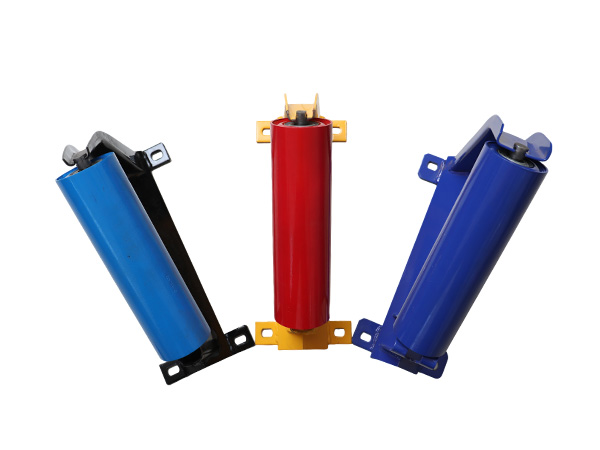
Choosing a conveyor idler roller looks simple from a catalogue: a diameter, a length, a quantity. In service it is more demanding, because two rollers with identical dimensions can deliver very different lives depending on how the bearing, shell and sealing are specified. The selection that works at a clean, light return run is wrong at a dusty loading point, and the selection that satisfies one regional standard may not satisfy the documentation a project elsewhere requires. This guide sets out the selection process from the duty upward, so that the specification follows from the application rather than from a part number that happened to be there before.
Define the Duty Before the Catalogue
The first step in conveyor idler selection is to describe the duty, not to browse products. The duty is the combination of load, speed, material and environment at the position in question. Once those are known, the specification follows from them, and the catalogue becomes a place to find a product that meets the specification rather than the source of the specification itself. A common error is to replace a failed roller with an identical one without asking why it failed — which repeats the failure by propagating the original specification, including any inadequacy.
Collect the Inputs That Drive Specification
The material conveyed: bulk density, abrasiveness (hardness and angularity), lump size range, moisture, temperature and any adhesiveness.
The conveyor: belt width, belt speed, trough angle, and the load carried per roller station.
The position: carrying run, return run, loading point, transfer point, or a critical area that is hard to access.
The environment: indoor or outdoor, dusty or clean, wet or dry, corrosive or benign, and the ambient temperature range.
The regional standard the project references — CEMA in North America, ISO/DIN-based practice in much of Europe and international projects, AS in Australia, or other national standards.
With these, the roller can be specified to the position rather than guessed.
Choose Bearing Load Capacity First
The bearing is usually the component that ends a roller's life, so its selection deserves priority. Bearing fatigue life is governed by the ratio of the bearing's dynamic load capacity (C) to the load it actually carries (P). A higher ratio leaves more margin against fatigue and gives a longer expected life. On a heavily loaded conveyor, sizing the bearing generously relative to the load is the most reliable way to extend life. When comparing quotations, the bearing specification is the first line to check, because a lower price is most often achieved by a lower-capacity bearing. The load P should be calculated from belt weight, material load and roller spacing.
Match Sealing to the Environment
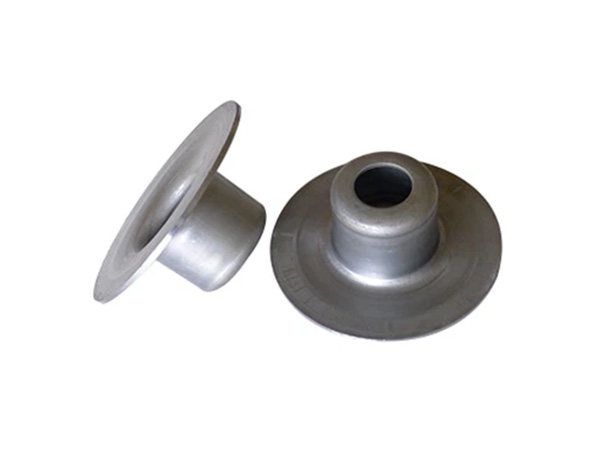
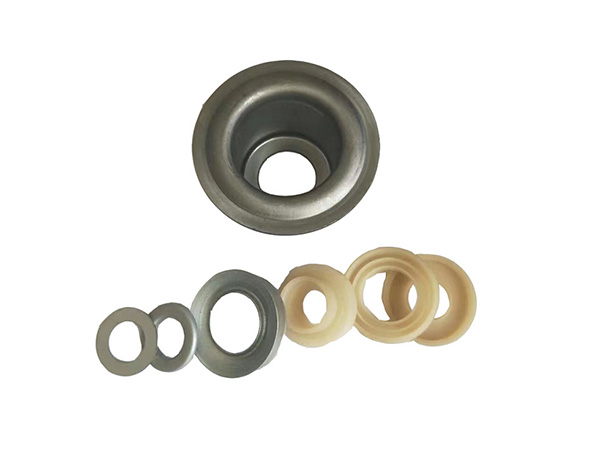
Contamination is the other dominant cause of bearing failure, and it is governed by sealing. In dusty, wet or corrosive service, fine particles reach the bearing through any seal not designed to exclude them. A staged sealing arrangement — a contact seal at the shaft, a grease-filled cavity, a labyrinth that flings particles outward as the roller turns, and an external flinger — protects the bearing far better than a single lip seal. Sealing effectiveness is often the difference between a roller that reaches its calculated life and one that fails early. The environment, not the diameter, should set the sealing specification.
Regional note on sealing and standards
International buyers should note that while the principle of multi-stage sealing is universal, the way a specification is documented and verified varies by region. A project written to CEMA references a North American framework; one written to ISO/DIN references an international one. Confirming which standard the project uses before ordering avoids supplying rollers that are correct in engineering but mismatched on paper.
Specify the Shell for Abrasion and Impact
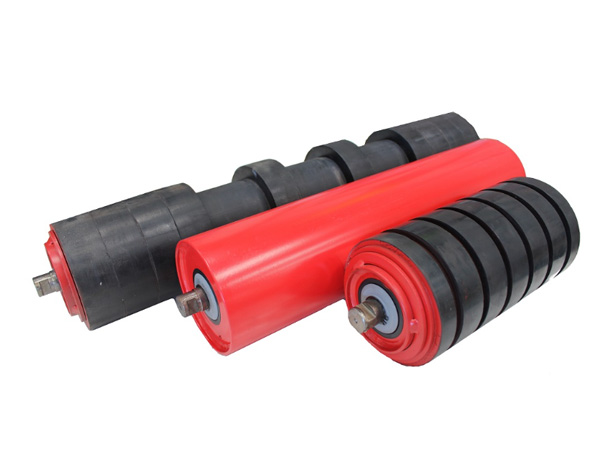
The shell resists abrasion from the belt and material and provides stiffness under load. Shell wall thickness sets the abrasion allowance; thicker walls last longer under abrasive material but add weight and cost. The shell material extends the logic: bare steel for general service, polymer or rubber lagging where material build-up, noise or belt protection matter. At loading and transfer points, where material lands with impact, the shell needs more thickness and an impact-absorbing element. The shell specification should follow the material and the position, not a default preference.
Choose the Idler Type and Spacing
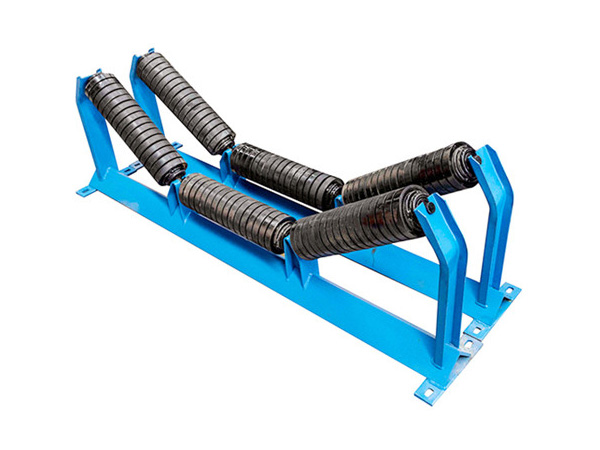
Selection is not only about the roller but about which type goes where and how stations are spaced. Carrying idlers support the loaded top run in a trough; return idlers support the empty belt; impact idlers absorb loading-point energy; self-aligning idlers correct drift. Spacing is set to keep belt sag within acceptable limits between stations, which depends on belt tension, stiffness and load. A correctly specified roller at excessive spacing still gives poor belt support, so spacing is part of the selection, not a separate detail.
Surface Treatment and Frame
The frame carries the roller and locates it on the string. In corrosive environments — coastal sites, underground, or wash-down areas — a galvanised or coated frame resists section loss that would otherwise let the roller deflect under load. An adequately painted frame may be sufficient indoors. Surface treatment is a regional and environmental decision: a frame that is correct in a dry inland plant may be inadequate on a seaport conveyor.
Consolidate the Enquiry
A usable quotation requires a usable enquiry. Supplying the material characteristics, conveyor geometry, load per station, environment and regional standard lets a supplier recommend rather than guess. Even a modest forecast of annual consumption helps, because committed volume lets a factory plan production and quote more competitively. A buyer who provides this information gets a specification and price tied to the real duty; one who sends only a diameter and quantity gets a number that may not survive contact with the application.
Common Selection Mistakes
Replacing a failed roller without diagnosing the failure — repeats the root cause.
Selecting by diameter alone, ignoring bearing, sealing and shell.
Under-sizing the bearing on a high-load line to save cost.
Ignoring the environment when choosing sealing.
Using a light roller at a loading point where impact dominates.
Assuming one regional standard fits a project specified to another.
FAQ
What is the most important factor when selecting a conveyor idler roller?
The load the roller carries relative to its bearing capacity, because bearing fatigue is the most common failure mode. A roller with adequate bearing margin for its load will generally reach its expected life if it is also well sealed and its shell suits the abrasion. Where contamination is severe, sealing becomes equally decisive.
How do regional standards affect idler selection?
They affect how the specification is documented and verified. A project written to CEMA (North America) references a different framework from one written to ISO/DIN (Europe and many international projects) or AS (Australia). The engineering principles overlap, but confirming which standard the project uses before ordering prevents supplying rollers that are correct in design but mismatched on paperwork.
Should one idler specification suit the whole conveyor?
Usually not. The efficient approach is position-specific: heavier specification at loading, transfer and other critical positions, and duty-appropriate specification on carrying and return runs. A single specification across the conveyor either over-specifies the light positions or under-specifies the critical ones.
What information should I give a supplier to get an accurate quote?
Material characteristics (density, abrasiveness, lump size, moisture, temperature), conveyor geometry and speed, load per station, the environment, the position of each roller group, and the regional standard the project references. With these, a supplier can specify to the duty rather than guess, which is what makes a quotation usable.
How much does the environment change the idler specification?
Considerably. A dusty, wet or corrosive environment demands a more robust sealing arrangement and potentially a coated shell and protected frame. The same roller that lasts in a clean dry indoor gallery may fail quickly in a coastal or underground conveyor. Environment is a primary selection input, not a secondary one.
Conclusion
Correct conveyor idler selection is systematic: define the duty, gather the load and environment data, then choose bearing capacity, sealing, shell and frame in that order, matched to the position and to the regional standard the project references. The component is simple, but the specification that makes it last is not, and the difference between an idler that survives to its planned replacement and one that fails early almost always traces back to a selection decision. For buyers, the practical implication is that the most useful supplier is not the one with the lowest unit price but the one that asks about the application and can explain how each specification choice affects service life — and that, for international projects, confirms the standard the rollers must meet. Selecting idlers as a specification exercise rather than a catalogue lookup is what turns a conveyor from a recurring maintenance problem into a reliable asset.
References
Conveyor Equipment Manufacturers Association. Belt Conveyors for Bulk Materials, 7th ed. CEMA, 2014.
Molnár, V., Fedorko, G., Stehlíková, B., et al. "A Failure Analysis of Idler Rolls of Belt Conveyors." Engineering Failure Analysis, vol. 45, 2014, pp. 155–165.
Harrison, A. "Determining the Life of Conveyor Rollers Using Fatigue Theory." Bulk Solids Handling, vol. 25, no. 5, 2005, pp. 290–295.
Fedorko, G., and Molnár, V. "Determination of the Idler Rollers Bearing Load." Applied Mechanics and Materials, 2013.
Zhang, Y., Yang, X., and Meng, L. "Review of Belt Conveyor Idler Roller Research." International Journal of Mining Science and Technology, vol. 33, no. 3, 2023.

Contact Us
Tel:8615031765579
WhatsApp:+8615031765579
E-mail:905675277@qq.com
Add:Likou Village, Chenzhuang Town, Xian County, Hebei Province, China
Url:https://www.yxidlerrollers.com