







- Site Navigation -
Factors Affecting Conveyor Idler Roller Performance
Author:yuexing Date:2026-10-13 17:32:35 Hits:64
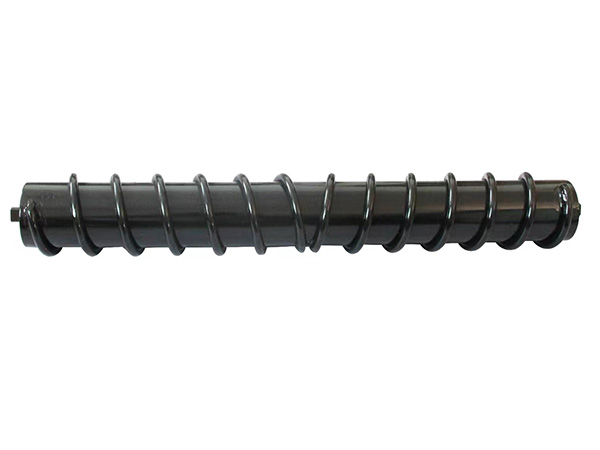
When a conveyor idler roller is quoted with an expected service life, that figure is an estimate built on assumptions about load, speed, contamination and maintenance. In service, the actual life is the product of how well the roller's design matches those conditions. Two rollers of identical dimensions can deliver very different lives on the same conveyor depending on bearing sizing, sealing and the position they occupy. Understanding the factors that govern performance is the basis for specifying rollers that last and for diagnosing why a roller did not. This article sets out those factors in the order a reliability engineer would consider them, and explains how to measure and improve performance in the field.
What "Performance" Means for an Idler Roller
For a conveyor roller, performance is best measured as achieved service life under the actual duty, expressed either as operating hours or as tonnes conveyed per replacement. A roller that reaches its planned interval without failure is performing well; one that is replaced repeatedly before its interval is not, regardless of how it looks on paper. Performance is therefore an outcome of design matched to duty, and the factors below are the levers that move it.
Bearing Load and the C/P Ratio
The bearing is usually the component that ends the roller's life, and its fatigue life is governed by the ratio of its dynamic load capacity (C) to the load it actually carries (P). A higher C/P ratio means more margin against fatigue and a longer expected life. On a heavily loaded conveyor, sizing the bearing generously relative to the load is the single most reliable way to extend roller life. When comparing rollers, the bearing specification is the first line to examine, because a lower price is most often achieved by a lower-capacity bearing. The load P should be calculated from the belt weight, the material load and the roller spacing, not estimated loosely, because the ratio is sensitive to the load assumption.
Sealing Effectiveness and Contamination
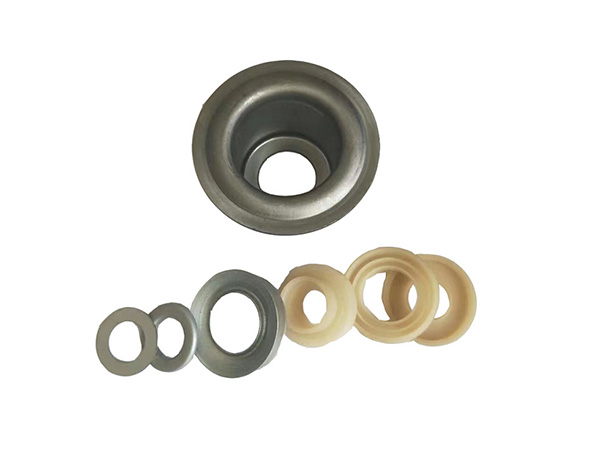
Fatigue is not the only way a bearing fails; contamination is the other dominant mechanism, and it is governed by sealing. In dusty, wet or corrosive environments, fine particles reach the bearing through any seal that is not designed to exclude them, and once inside they accelerate wear sharply. A staged sealing arrangement — a contact seal, a grease-filled cavity, a labyrinth that flings particles outward as the roller turns, and an external flinger — protects the bearing far better than a single lip seal. Sealing effectiveness is often the factor that separates a roller that reaches its calculated life from one that fails early for no apparent mechanical reason.
Shell Construction and Wear
The shell resists the abrasion of the belt and conveyed material and provides the stiffness to carry load without deforming. Shell wall thickness sets the abrasion allowance; a thicker wall lasts longer under abrasive material but adds weight and cost. The shell material extends this logic: bare steel for general service, polymer or rubber lagging where material build-up or belt protection is a concern. Shell wear-through is a visible failure mode, and it is governed by how well the wall and material match the abrasiveness of the local duty. A shell that wears through early indicates a wall thickness or material that does not suit the application.
Speed, Temperature and Lubrication
Belt speed raises the bearing rotational speed and therefore the fatigue loading, and it also raises the centrifugal force on the sealing lip, which can reduce sealing effectiveness at high speed. Temperature affects the bearing lubricant: conventional greases degrade faster as temperature rises, and above their rated limit the lubricant breaks down and the bearing fails. High-temperature service therefore requires high-temperature grease and heat-resistant seals. Lubrication condition interacts with all of these — a degraded lubricant raises operating temperature, which degrades the lubricant further. Speed, temperature and lubrication are therefore linked, and a change in one shifts the others.
Mounting, Alignment and Frame
How the roller is mounted affects how evenly it carries load. A frame that flexes under load tilts the roller, which concentrates load on part of the shell and bearing and causes mistracking. Misaligned or skewed idler sets push the belt sideways, which increases the transverse load on the rolls. Rigid, square, centred mounting is the quiet precondition for both good tracking and even load distribution. A roller with an excellent bearing and seal can still underperform if it is mounted in a frame that lets it tilt under load.
Duty Position and Load Distribution
The position of the roller on the conveyor changes which factor dominates. Loading and transfer points are dominated by impact, and a roller there needs impact protection more than anything else. The mid-run carrying section is dominated by steady load, so bearing capacity governs. Return runs carry lighter load and are governed mainly by sealing against dust. A performance strategy that treats every position the same will over-specify the light positions and under-specify the ones that fail. Matching the specification to the position is the practical way to raise average performance across the conveyor.
How to Measure and Improve Performance
Improving roller performance starts with measuring it. Recording the operating hours or tonnes conveyed at each failure, grouped by duty position, shows where rollers are underperforming and what factor is likely responsible. A cluster of bearing seizures at a dusty position points to sealing. Early shell wear-through at a loading point points to wall thickness or impact protection. Rising bearing temperature on a hot line points to lubricant. With this information, the specification can be adjusted at the failing position rather than across the whole conveyor, which concentrates the improvement where it pays off.
A conditional approach to specification
Because the dominant factor varies by position, the specification should be set conditionally: if the duty is dusty, prioritise sealing; if it is heavily loaded, prioritise bearing capacity; if it is impact-prone, prioritise shell and impact protection; if it is hot, prioritise temperature-rated lubricant and seals. Stating these conditions in the enquiry is what lets a supplier specify correctly, and verifying the achieved life by position is what confirms the specification is working.
FAQ
What is the most important factor in conveyor roller performance?
The bearing load relative to its capacity, because bearing fatigue is the most common cause of roller failure. A roller with adequate bearing margin for its load will generally reach its expected life if it is also well sealed and its shell suits the abrasion. Where contamination is severe, sealing becomes equally decisive, because a contaminated bearing fails regardless of its fatigue margin.
Why do rollers fail early even though the bearing looks adequately sized?
Usually because contamination reached the bearing through inadequate sealing. Fine dust or water enters a weak seal, accelerates wear, and seizes the bearing well before fatigue would. The visible failure is a bearing problem, but the root cause is sealing, and the fix is a staged seal arrangement rather than a larger bearing.
Does belt speed affect roller performance?
Yes. Higher belt speed raises the bearing rotational speed and therefore fatigue loading, and it raises the centrifugal force on the sealing lip, which can reduce sealing effectiveness. On high-speed conveyors both bearing margin and seal design deserve more attention than on slower belts.
How does duty position change which factor matters most?
Loading and transfer points are dominated by impact, so shell and impact protection matter most there. The mid-run carrying section is governed by steady load, so bearing capacity leads. Return runs are governed mainly by sealing against dust. Matching the specification to the position concentrates performance improvement where failures actually occur.
How can I measure conveyor idler roller performance in the field?
Record the operating hours or tonnes conveyed at each roller failure, grouped by duty position. Patterns reveal the dominant factor: bearing seizures at dusty positions indicate sealing, early shell wear at loading points indicates wall thickness or impact protection, rising temperature on hot lines indicates lubricant. Adjusting the specification at the failing positions, rather than the whole conveyor, is the efficient way to improve performance.
Conclusion
Conveyor roller performance is not a single number but the outcome of how bearing load, sealing, shell, speed, temperature, mounting and duty position combine in service. The bearing load ratio drives fatigue life; sealing protects against the contamination that causes most early failures; the shell resists wear; and speed, temperature and lubrication interact to accelerate or slow degradation. Because the dominant factor shifts by position, the practical route to better performance is position-specific specification backed by measurement: record where rollers fail and why, then adjust the specification at the failing position rather than across the whole conveyor. For reliability engineers and buyers, the value of this approach is that it turns roller replacement from a recurring emergency into a managed, improving process — and it makes the supplier who can explain these trade-offs a more useful partner than one who merely quotes a price.
References
Conveyor Equipment Manufacturers Association. Belt Conveyors for Bulk Materials, 7th ed. CEMA, 2014.
Harrison, A. "Determining the Life of Conveyor Rollers Using Fatigue Theory." Bulk Solids Handling, vol. 25, no. 5, 2005, pp. 290–295.
Molnár, V., Fedorko, G., Stehlíková, B., et al. "A Failure Analysis of Idler Rolls of Belt Conveyors." Engineering Failure Analysis, vol. 45, 2014, pp. 155–165.
Fedorko, G., and Molnár, V. "Determination of the Idler Rollers Bearing Load." Applied Mechanics and Materials, 2013.
Zhang, Y., Yang, X., and Meng, L. "Review of Belt Conveyor Idler Roller Research." International Journal of Mining Science and Technology, vol. 33, no. 3, 2023.

Contact Us
Tel:8615031765579
WhatsApp:+8615031765579
E-mail:905675277@qq.com
Add:Likou Village, Chenzhuang Town, Xian County, Hebei Province, China
Url:https://www.yxidlerrollers.com