







- Site Navigation -
Conveyor Idler Roller Market Trends and New Innovations
Author:yuexing Date:2026-09-02 13:41:18 Hits:94
The global market for conveyor idler rollers sits at roughly 3.5 to 4 billion dollars annually, serving mining, port, cement, power generation and general manufacturing sectors across every continent. It is a mature market in the sense that the basic product has not changed fundamentally in 40 years. It is a rapidly evolving market in the sense that the digital and materials technology now available to idler manufacturers is opening up capabilities that did not exist a decade ago. This article surveys the trends that are actually changing how idlers are specified, purchased and maintained, rather than the ones that look good in a trade show booth but have not yet demonstrated field longevity. The gap between a technology that works in a pilot and one that survives five years in an iron ore port is wide, and the difference matters enormously for a plant buyer making a commitment.
Smart Bearings and the Move Toward Predictive Maintenance
The most commercially active innovation area in the conveyor idler roller market right now is smart bearing integration. Vendors now offer bearing assemblies with embedded temperature and vibration sensors that communicate via wireless node to a plant's condition monitoring system. The sensor data enables a transition from time-based replacement schedules — changing idlers every 30,000 hours regardless of condition — to condition-based replacement where idlers are changed when the data indicates degradation, not when a calendar says to. The field data from early adopters in Australian mining shows a 25–40% reduction in unplanned conveyor stoppages attributable to idler-related failures, with the majority of the improvement coming from catching bearing degradation before it becomes a seizure rather than replacing components that still had life remaining.
The sensors themselves are now reliable enough. The limiting factor is the wireless infrastructure required to collect and act on the data in environments where WiFi is unavailable and cellular coverage is inconsistent. Several manufacturers are addressing this with self-contained edge computing nodes that process the sensor data locally and transmit only an alert signal when a threshold is crossed, reducing the infrastructure burden significantly. A plant running a conveyor network in an underground mine is a different proposition from one operating in a surface port, and the sensor solution that works in one environment may not transfer directly to the other.
Composite and Advanced Polymer Shells
The traditional steel roller shell is being challenged in specific applications by composite and advanced polymer alternatives. Glass-fibre-reinforced polymer (GFRP) shells offer a weight reduction of 40–60% compared to equivalent steel rollers, which matters significantly on long overland conveyors where the mass of the idler rollers themselves contributes to the no-load power consumption of the drive system. For a conveyor running 24 hours a day, a 40% reduction in idler mass on a 5 km line translates to measurable energy savings — some manufacturers of composite idler shells claim 8–12% reduction in total conveyor drive power, though independent verification across real operating conditions is still limited.
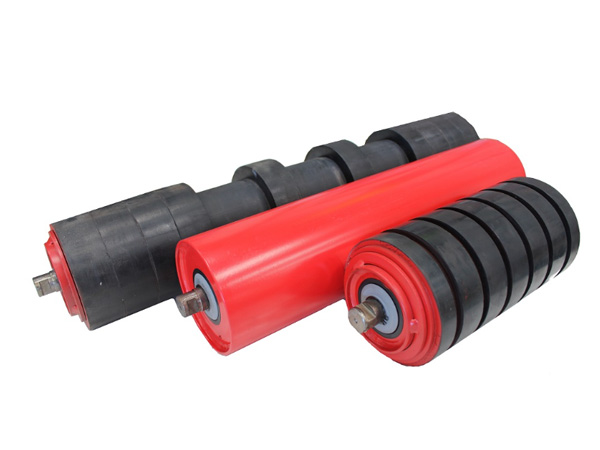
For sticky material handling, polyurethane and polyurethane-hybrid shells continue to gain share against rubber-lagged steel in markets where build-up and carryback are chronic problems. The newer development is polyurethane with ceramic-filled wear surfaces that extend shell life in highly abrasive applications beyond what unfilled polyurethane can achieve. These hybrid shells are more expensive than unfilled polyurethane — typically 30–50% more per unit — but in applications where material build-up and shell wear are both problems, they are finding a genuine market niche that standard steel shells cannot serve.
Sustainable Manufacturing and Recycled Materials
Sustainability requirements from major mining operators are starting to influence idler roller specification and procurement. Several large multinational miners have issued supplier sustainability standards that include requirements for recycled steel content, energy-efficient manufacturing processes, and take-back schemes for end-of-life components. This is driving idler manufacturers to audit and disclose their supply chain more transparently and to invest in production processes — electric arc furnaces, solar-powered finishing lines — that reduce the carbon footprint of the manufacturing phase.
End-of-life recycling is an area where the conveyor idler roller sector has historically underperformed relative to other industrial equipment. Steel is easily recycled, but the sealed bearing assembly — which contains lubricant, rubber seals and mixed metal alloys — is typically landfilled. A growing number of manufacturers are now offering take-back programs where the complete roller assembly is returned to the factory, the components are separated and recycled, and the recovered steel and non-ferrous metals are reintroduced into the supply chain. The economics of these programs are still marginal without a regulatory requirement, but the trend is clearly toward their expansion as major buyers embed end-of-life provisions into supplier contracts.
Digital twins and Conveyor Performance Modelling
Several idler manufacturers are now offering digital twin services where the conveyor geometry, belt tension profile and idler load distribution are modelled computationally to optimise the idler selection across a conveyor run. The model uses the actual material flow data, belt speed and conveyor profile to calculate the load per idler station at every position along the run, rather than applying a single average loading figure across the entire conveyor. This allows the model to specify heavier idlers at high-load positions and lighter idlers at lower-load positions — an optimisation that can reduce the total idler spend by 10–15% while maintaining or improving reliability, because the idler investment is matched to the actual demand rather than defaulted to the worst-case position across the whole run.
The barrier to adoption is not the modelling capability — it is the data requirement. Running an accurate digital twin requires material flow data, belt tension profile measurements and conveyor geometry drawings that many plant operators do not have in a structured digital format. The manufacturers who offer digital twin services are typically working with larger engineering teams at major mining operations who can supply this data and interpret the output. For a medium-sized plant with limited engineering resource, the conventional approach of applying the calculated maximum load per station across all positions is still the practical choice.
Additive Manufacturing for Replacement Parts
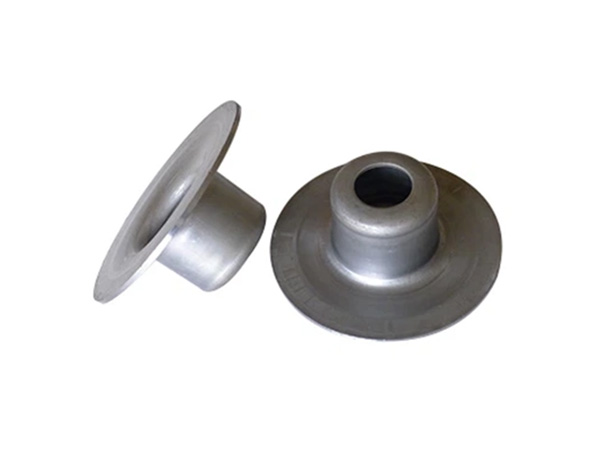
3D printing — specifically metal additive manufacturing — is beginning to appear in the conveyor idler roller market for one specific use case: producing replacement end caps, bearing housings and seal carriers for legacy idler models that are no longer in active production. Rather than redesigning the conveyor to accommodate a current-generation idler, a plant can supply a reverse-engineered CAD file to a manufacturer with additive capability and receive a functionally equivalent replacement part within days. This is particularly valuable for idlers on older conveyors where the original manufacturer no longer supports the product line.
Additive manufacturing for new idler production is not yet economically viable at scale — the cost per unit is still 5–10 times that of conventional manufacturing for the geometries involved in a roller shell. The niche is spare parts for obsolete models, and it is a genuine and growing one.
FAQ
Are smart conveyor idler roller systems ready for mainstream adoption?
For large high-throughput conveyors in mining and port operations with existing wireless infrastructure and condition monitoring capability, yes — the technology is proven and the return on investment is demonstrable. For smaller plants without monitoring infrastructure, the adoption barrier is the infrastructure cost, not the sensor technology itself. The next 3–5 years will likely see the infrastructure barrier fall as edge-computing nodes become cheaper and more widely supported.
Do composite idler roller shells actually reduce energy consumption?
The physics supports the claim — a lighter roller mass reduces the no-load power requirement. The practical energy saving depends on the specific conveyor geometry and operating hours. Claims of 8–12% total drive power reduction are plausible for long high-speed conveyors running continuously, but the actual saving at a specific plant needs to be calculated from the plant's actual belt power data, not estimated from manufacturer claims.
What sustainability requirements are buyers actually asking for?
At the time of writing, the most common buyer requirements are recycled steel content certification, disclosure of manufacturing energy source, and end-of-life take-back provisions. These are typically appearing in supplier qualification questionnaires from major multinational miners rather than in everyday spot-purchase orders. The trend is clearly toward more formalised requirements over the next 3–5 years.
Can I get replacement idler parts for an obsolete model?
Yes, through additive manufacturing or reverse engineering. Several manufacturers now offer this service for legacy idler models. Lead times are typically 1–3 weeks from receipt of the original part or a detailed drawing, and the cost is higher than the original part but significantly lower than redesigning the conveyor to accept a current-generation idler.
Conclusion
The conveyor idler roller market is being shaped by the intersection of condition monitoring technology, materials innovation and sustainability pressure from major buyers. Smart bearings and predictive maintenance are the most commercially active developments in the near term. Composite shells and digital twin optimisation are gaining traction in specific niches. Additive manufacturing is solving a specific spare-parts problem for legacy conveyors. A procurement engineer or plant manager should evaluate these technologies against their specific operational context — the technology that transforms performance at a coastal port may be irrelevant for a cement plant, and vice versa.
References
Conveyor Equipment Manufacturers Association. CEMA 7th Edition — Belt Conveyors for Bulk Materials. CEMA, 2014.
Molnár, V., Fedorko, G., Stehlíková, B., et al. "A Failure Analysis of Idler Rolls of Belt Conveyors." Engineering Failure Analysis, vol. 45, 2014, pp. 155-165.
Lodewijks, G. "Two Decades of Dynamics of Belt Conveyor Systems." Bulk Solids Handling, vol. 22, no. 2, 2002, pp. 124-132.
Zhang, Y., Yang, X., and Meng, L. "Review of Belt Conveyor Idler Roller Research." Mining Science and Technology, vol. 33, no. 3, 2023, pp. 415-428.

Contact Us
Tel:8615031765579
WhatsApp:+8615031765579
E-mail:905675277@qq.com
Add:Likou Village, Chenzhuang Town, Xian County, Hebei Province, China
Url:https://www.yxidlerrollers.com