







- Site Navigation -
Inside the Conveyor Idler Roller Factory Production Process
Author:yuexing Date:2026-11-06 18:54:59 Hits:196
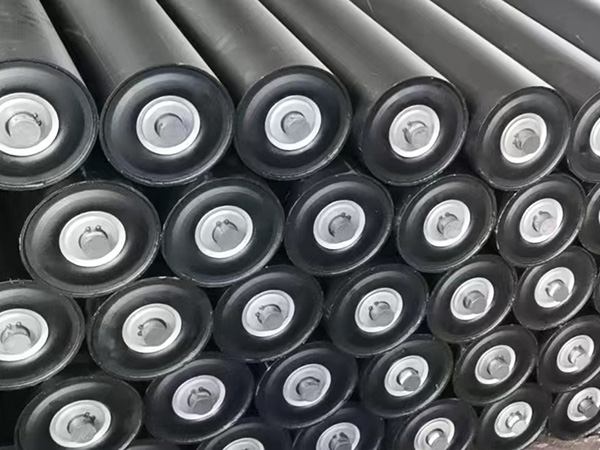
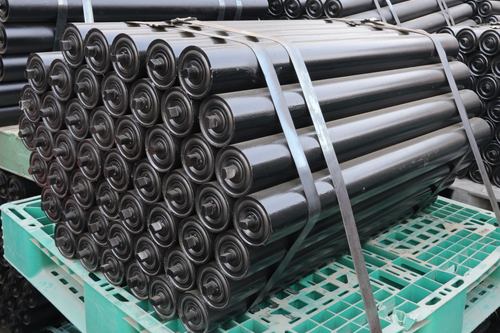
For buyers evaluating a conveyor roller factory, the production line is the real product brochure. Two factories can quote the same part, but the one with disciplined tube handling, clean bearing assembly, and documented testing will deliver rollers that run for years instead of months. This walkthrough follows a typical idler roller from raw steel to finished, tested unit.
1. Receiving and Cutting the Steel Tube
Production begins with the shell. Steel tube — typically welded or seamless, in wall thicknesses around 3.0–4.5 mm — arrives in long lengths and is cut to the required roller length on a precision circular saw or tube-cutting machine. Cut squareness matters: an out-of-square end forces the housing off-axis and creates runout later. Edges are then chamfered or deburred so they seat cleanly against the bearing housing.
2. Shaft Machining
The shaft is turned on a CNC lathe to tight tolerances. Critical features are the bearing seat diameters, the step that locates the housing, and any threads or flats for the fixing hardware. Shaft straightness is checked because a bent shaft cannot be hidden by assembly — it transmits directly into bearing load and vibration.
3. Stamped Bearing Housing Forming
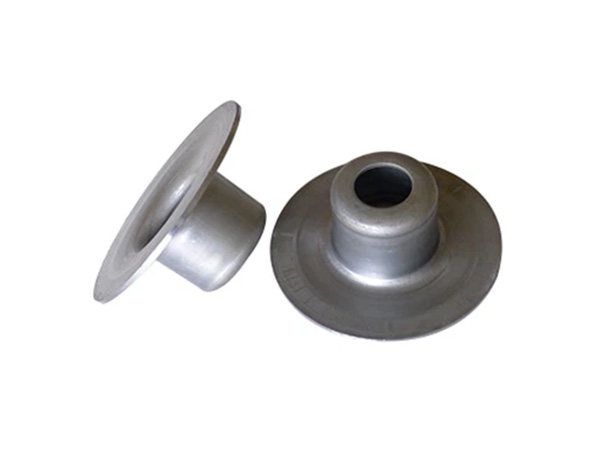
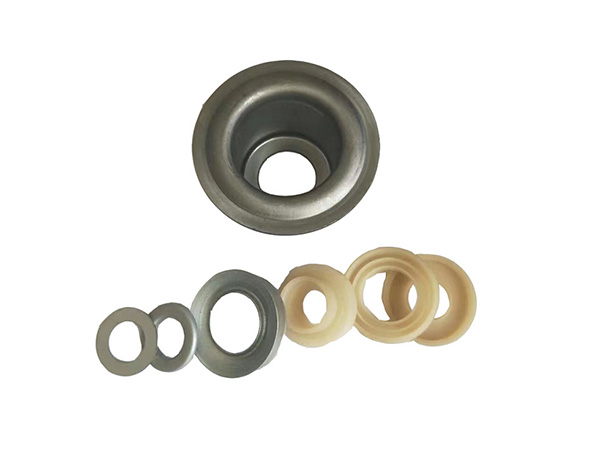
The stamped bearing housing is produced on progressive dies that cut and form sheet steel into a precise cup holding the bearing and seal. Stamping gives consistent geometry at high volume and lower cost than machined housings. For heavier duty, pressed or machined housings are used. Housings are then cleaned to remove stamping oil and debris before assembly.
5. Assembly: Pressing Housings onto the Tube
The sealed bearing-housing assemblies are pressed onto both ends of the tube. Pressing force and depth are controlled so the housings sit concentric with the tube axis. In many lines the shaft is then pressed through both housings, or the assembly is built around the shaft depending on the design (through-shaft vs. dead-shaft).
6. Welding and Structural Joining
Where the housing meets the tube, a circumferential weld or crimp secures the joint. Weld consistency prevents local distortion that would throw the roller out of balance. Some designs use friction welding or roll crimping instead of arcs to keep heat distortion low.
7. Runout and Balance Control
Each roller is checked or sampled for radial runout — the deviation of the rotating surface from true roundness as it turns. Excessive runout causes vibration, noise, and accelerated belt and bearing wear. Rollers intended for high-speed lines may be dynamically balanced. Controlling runout is why square tube cutting and concentric pressing in earlier steps matter.
| Process stage | Main quality risk if done poorly |
|---|---|
| Tube cutting | Out-of-square ends → housing misalignment → runout |
| Shaft machining | Bent or oversized seat → bearing overload |
| Housing stamping | Inconsistent bore → bearing fit issues |
| Bearing/seal mounting | Contamination → early bearing failure |
| Welding | Heat distortion → imbalance |
| Runout control | Vibration, noise, belt wear |
8. Surface Treatment
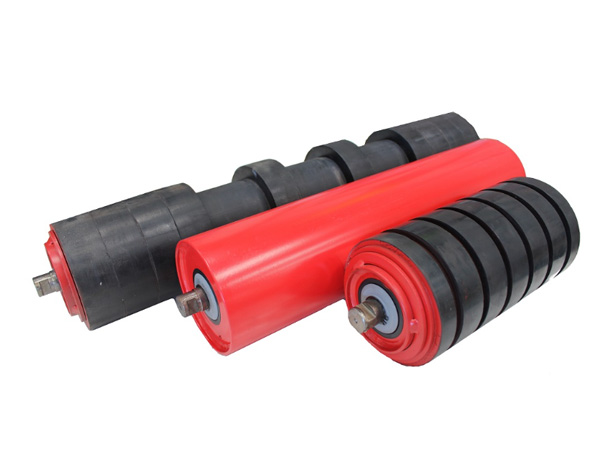
Depending on application, rollers are painted, powder-coated, or left bare. For impact zones, rubber discs or rings are pressed onto the shell; for extreme wear, ceramic tiles are bonded. Coating also protects the steel during storage and ocean transit.
9. Final Inspection and Batch Testing
Before packing, finished rollers pass acceptance tests. A disciplined testing routine typically includes:
Radial runout — deviation of the shell surface while rotating.
Rotating resistance — torque needed to spin the roller, indicating seal and bearing condition.
Axial displacement — end-play of the shaft relative to the housing.
Drop test — impact resistance of the assembly.
Noise measurement — audible irregularity that hints at internal defects.
Results are recorded per batch so an export shipment can be traced to its test report.
10. Why Process Discipline Beats Price
The difference between a premium and a budget roller is rarely visible in a photo. It lives in square tube cuts, clean bearing mounting, controlled welds, and documented testing. A conveyor idler in a mining line may spin millions of revolutions; the margin between success and premature failure is set on the factory floor, long before shipping.
11. Quality System and Traceability
A modern conveyor roller factory does not rely on individual skill alone; it relies on a documented quality system. Incoming tube and shaft steel are verified against mill certificates; in-process checks catch squareness and straightness before they propagate; and finished rollers are logged to a batch number that links each crate to its test report. This traceability is what lets a buyer investigate a field failure months later instead of guessing. A factory operating to a documented quality management discipline treats every batch as a record, not just a shipment.
12. Layout, Capacity, and Flexibility
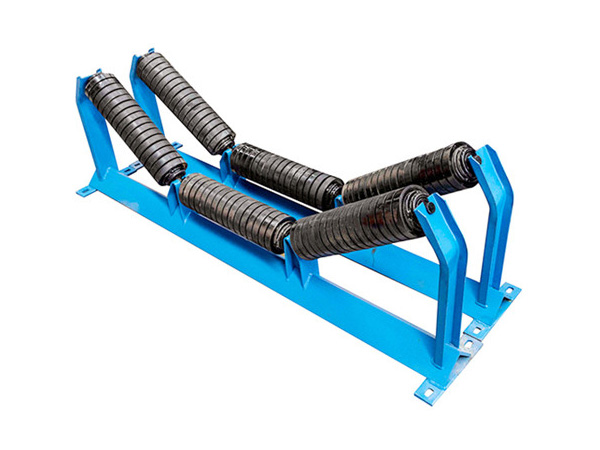
Factory capability shows up in layout. A logical one-way flow — receiving, cutting, machining, housing, assembly, welding, test, pack — minimizes cross-contamination and handling damage. Capacity is set by the bottleneck station (often pressing or testing), and flexibility by how quickly tooling can switch between diameters and lengths. Buyers with mixed specifications benefit from a line that handles short changeovers without large minimums. The range of idler types a factory can build — trough, impact, training, transition, guide — is a good proxy for how mature its process control really is.
Frequently Asked Questions
What is the most important quality step in idler roller production?
Bearing and seal assembly is the most critical step. How cleanly the bearing is mounted, how well the labyrinth seal is greased, and how the housing is pressed on determines the roller's service life far more than the tube itself.
Why is dynamic balancing or runout control important?
Excess radial runout makes the roller vibrate and noise, accelerates belt wear, and shortens bearing life. Controlling runout during assembly keeps the roller smooth at conveyor speed.
How are stamped bearing housings made?
Stamped bearing housings are produced by progressive dies that cut and form sheet steel into a precise cup that holds the bearing and seal. They are then pressed onto the tube ends and welded or crimped in place.
What tests should a finished roller pass before shipment?
Typical acceptance tests include radial runout measurement, rotating resistance check, axial displacement check, drop test, and noise measurement. Batch test reports should accompany export shipments.
Conclusion
A conveyor roller factory is only as good as the discipline of its line. From the first square cut of the steel tube to the final runout test, every stage either adds life or quietly removes it. Buyers who visit the line — or at least ask for the test report and the runout tolerance — separate factories that engineer rollers from those that merely assemble parts. The roller you receive is a direct record of the process that made it.
References
CEMA B105 — Conveyor Equipment Manufacturers Association standard for idler classes, dimensions, and performance expectations.
DIN 22112 — Belt conveyor idlers: dimensions and requirements, used to specify housing and roller geometry.
ISO 5048 — Continuous mechanical handling equipment: belt conveyors with carrying idlers — calculation basis for duty and load.
ISO 9001:2015 — Quality management systems; the framework behind batch testing and traceability.
SKF / major bearing manufacturers' technical literature on deep-groove ball bearing fit and sealing practice for idler applications.

Contact Us
Tel:8615031765579
WhatsApp:+8615031765579
E-mail:905675277@qq.com
Add:Likou Village, Chenzhuang Town, Xian County, Hebei Province, China
Url:https://www.yxidlerrollers.com