







- Site Navigation -
Conveyor Idler Lifespan and Durability: What Determines How Long They Last
Author:yuexing Date:2026-09-11 20:05:40 Hits:132
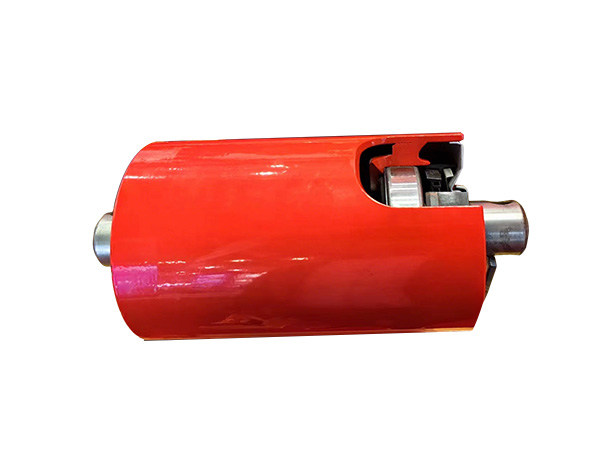
A plant manager who asks "how long will these idlers last" is asking the right question but expecting the wrong kind of answer. Idler life is not a single number that applies uniformly across a conveyor. It varies by position, by duty, and by how well the specification matched the actual conditions. A return idler on the bottom run of a clean conveyor might reach 70,000 operating hours. A carrying idler directly under a rock box on the same conveyor might not make 12,000. Understanding what drives that variation is more useful than any headline lifespan figure, because it tells you where to spend attention and budget to actually improve the average life across the run.
The Bearing Is Usually the Weakest Link
In roughly two-thirds of all idler replacements, the bearing is the component that quit first. That makes bearing quality the single biggest lever on conveyor idler lifespan. The life of a rolling element bearing is governed by the L10 formula, which calculates the hours at which 90% of a population will still be running. The key variable is the ratio of dynamic capacity C to equivalent load P — a ratio engineers call the C/P ratio. An idler bearing running at a C/P of 3 is living on the edge of its fatigue limit and will not reach its potential life. One running at C/P of 6 or higher has comfortable margin and will outlast it comfortably.
In our factory, we size bearings to maintain a C/P of at least 4 for standard duty and 6 or above for heavy-duty or long-life targets. Suppliers who specify to a lower C/P ratio to hit a lower unit price will produce idlers that appear adequate on paper and fail earlier than expected in the field. The C/P ratio is not a complex calculation — any bearing supplier can provide it — and a buyer who asks for it before ordering is already separating themselves from those who do not.
Sealing: The System That Keeps the Bearing Alive
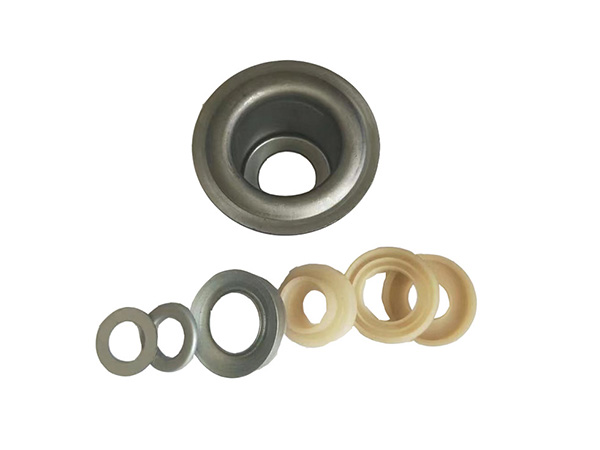
A bearing that never sees contamination will reach its calculated L10 life. A bearing in a dusty mining environment without adequate sealing will not. The sealing system is what stands between the bearing and the contamination that destroys it, and in practice it is the quality of the sealing arrangement that determines whether the bearing actually reaches its calculated life rather than failing at a fraction of it.
A quality conveyor idler uses a multi-stage sealing arrangement: an elastomeric lip seal at the shaft entry, a grease-packed cavity as a second barrier, a machined labyrinth that uses centrifugal force to fling particles outward, and an external V-ring flinger on the shaft face. This four-stage system is what we have seen deliver consistent results across mining, port and cement installations. A bearing sealed only with a double-lip seal, by contrast, relies on the lip material maintaining contact with the shaft against centrifugal force — as the lip wears, effectiveness drops and contamination finds a path to the raceway.
Shell Wall Thickness and Abrasiveness
The roller shell on a conveyor idler faces two distinct challenges: wear from material abrasion and deformation from impact load. Both are addressed by specifying sufficient wall thickness for the duty. A 4.5 mm wall tube is adequate for standard coal or aggregate duty at low-to-moderate throughput. It will not survive extended iron ore service — the abrasive particles cut through it faster than the bearing wears out, leaving the factory with a reputation for poor quality when the real problem was a specification mismatch.
For abrasive materials, 6 mm minimum wall is the practical floor; 8–10 mm is the standard for loading zone impact idlers on heavy ore conveyors. The additional material cost is a fraction of the total idler cost, but it is the difference between an idler that lasts 30,000 hours and one that lasts 12,000 hours on the same conveyor. A manufacturer who recommends 4.5 mm wall for an iron ore application is either not paying attention or is saving money at the buyer's future expense.
Duty Position and the Loading Zone Problem
The most important position-specific factor on any conveyor is the loading zone — the section where material falls onto the belt. Falling material transfers kinetic energy directly to the belt and the idler beneath it, and the magnitude of that energy scales with drop height and lump size. A 200 mm lump falling 2.5 metres onto a loaded belt delivers roughly 1,500 joules to the idler below. That energy pulse fatigues the bearing, deforms the shell, and stresses the frame — all in a single event. Multiply that by hundreds of tonnes per hour and the cumulative damage accumulates rapidly.
The result is that idlers in loading zones consistently show conveyor idler lifespan of 40–60% of equivalent positions on the rest of the run. A loading zone impact idler with 8 mm wall and a heavy frame might reach 20,000 operating hours; a standard carrying idler on the same conveyor might reach 45,000. Specifying impact idlers at every loading zone position is the correction — without that, the loading zone positions drag down the average lifespan and create a cluster of reactive failures that maintenance teams find impossible to schedule predictably.
Temperature and Lubricant Degradation
Heat is the enemy of bearing life that is often underestimated. Every 15 degrees Celsius rise in bearing operating temperature halves the lubricant service life. A bearing running at 70 degrees Celsius in a warm gallery will have lubricant that lasts roughly half as long as one running at 55 degrees. In ambient temperatures above 40 degrees Celsius — common in cement plants, steel mills and tropical surface mines — the bearing operating temperature can easily reach 90–100 degrees Celsius without any load or speed problem, simply from the ambient heat.
The fix for high-temperature idler durability is two-pronged: high-temperature-rated grease (polyurea or synthetic at 160–180 degrees Celsius rating versus the standard 120 degrees lithium-complex), and if ambient temperatures are extreme, a bearing with a higher temperature-rated seal material. FKM fluoroelastomer seals resist degradation at temperatures where standard nitrile rubber fails within months. These upgrades add cost, but the alternative is lubricant failure followed by bearing seizure at a fraction of the expected life.
Realistic Lifespan Ranges by Application
Based on field data from mining, port and cement operations, the following conveyor idler lifespan ranges represent what a properly specified idler achieves in the stated conditions. These are L10 figures — the hours at which 90% of units are still operating:
Standard carrying idlers on coal or aggregate conveyors in dry conditions typically reach 35,000–55,000 operating hours. Heavy-duty carrying idlers on iron ore or copper in abrasive conditions reach 20,000–40,000 hours depending on wall thickness and sealing specification. Return idlers on clean indoor conveyors reach 55,000–80,000 hours because the load is low and contamination is minimal. Impact idlers in high-energy loading zones on ore conveyors reach 12,000–22,000 hours regardless of specification — the duty is that severe, and the goal is to get the best life from that position rather than to match the rest of the run. Reversible conveyor idlers in stacker-reclaimer service typically run 20–30% shorter than equivalent unidirectional units due to the stresses of directional changes on the bearing and sealing system.
FAQ
What is the average conveyor idler lifespan in a typical mining operation?
For a properly specified and maintained idler on a mining conveyor: standard carrying idlers 25,000–40,000 hours, return idlers 40,000–65,000 hours, and loading zone impact idlers 12,000–22,000 hours. The average across all positions on a typical mining conveyor is usually around 28,000–35,000 hours, with the loading zone pulling the average down significantly.
Why do identical idlers on the same conveyor have different lifespans?
Because their positions expose them to different conditions. Loading zones, belt bends, and high-load carrying sections experience forces that equivalent idlers on the straight run do not. The bearing and shell are working harder in those positions, and without position-specific specification — heavier wall, impact-rated frame — those positions will consistently fail earlier than the rest of the run.
Can I extend idler durability with better maintenance?
Yes, but mainly by catching failures early before they cascade. Regular temperature measurement and vibration monitoring allows condition-based replacement — replacing idlers when the data indicates degradation rather than on a fixed calendar. This typically reduces unplanned failures by 25–40% and also reduces unnecessary replacements of idlers that still had life remaining. Maintenance cannot change the fundamental duty severity at a given position, but it can prevent a bearing degradation from becoming a catastrophic seizure.
Does belt speed affect conveyor idler lifespan?
Yes, through two mechanisms. Higher speed increases bearing rpm and therefore fatigue loading, reducing L10 life proportionally. Speed above 5 m/s also increases the centrifugal force on the lip seal, reducing sealing effectiveness and accelerating contamination ingress. For high-speed conveyors above 5 m/s, specifying a higher C/P ratio bearing and ensuring the sealing system includes a labyrinth or V-ring to counter centrifugal lip lift is essential for maintaining expected lifespan.
Conclusion
Conveyor idler lifespan is not a single number — it is a distribution shaped by position, specification and maintenance. The factors within a buyer's or plant engineer's control are the most important: specifying sufficient C/P ratio in the bearing, fitting a multi-stage sealing system for the environment, choosing wall thickness matched to the material abrasiveness, and protecting loading zones with dedicated impact idlers. These four decisions account for the majority of the difference between an idler that reaches 40,000 hours and one that fails at 15,000. A manufacturer who makes these choices deliberately rather than defaulting to the cheapest option on every order is worth the premium.
References
Conveyor Equipment Manufacturers Association. CEMA 7th Edition — Belt Conveyors for Bulk Materials. CEMA, 2014.
Molnár, V., Fedorko, G., Stehlíková, B., et al. "A Failure Analysis of Idler Rolls of Belt Conveyors." Engineering Failure Analysis, vol. 45, 2014, pp. 155-165.
Harrison, A. "Determining the Life of Conveyor Rollers Using Fatigue Theory." Bulk Solids Handling, vol. 25, no. 5, 2005, pp. 290-295.
Fedorko, G., and Molnár, V. "Determination of the Idler Rollers Bearing Load." Research in Engineering, vol. 22, 2013, pp. 45-52.

Contact Us
Tel:8615031765579
WhatsApp:+8615031765579
E-mail:905675277@qq.com
Add:Likou Village, Chenzhuang Town, Xian County, Hebei Province, China
Url:https://www.yxidlerrollers.com