







- Site Navigation -
Conveyor Belt Alignment Using Idler Rollers: Guide
Author:yuexing Date:2026-10-10 15:48:30 Hits:81
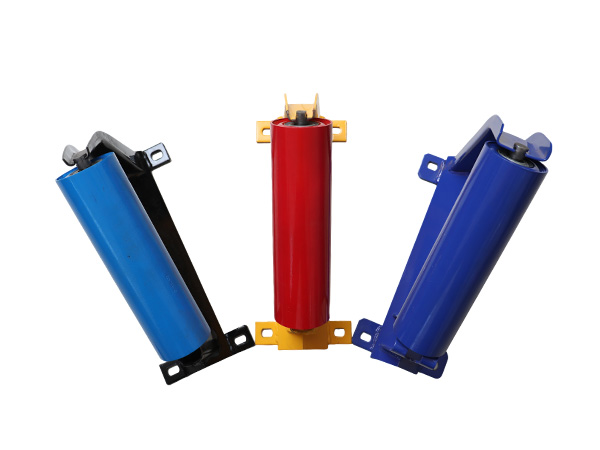
A belt that runs off centre is a belt that spills material, wears its edges, damages the structure and, in the worst cases, comes off the conveyor entirely. Much of this mistracking originates not in the belt but in the idler rollers that support it. A roller that is skewed in its frame, seized so it no longer rotates, or worn so its surface is no longer true, applies a sideways force to the belt and pushes it off line. Because idlers are numerous and distributed along the whole conveyor, they are both the most common cause of tracking problems and the most practical place to correct them. This guide explains how idlers affect belt alignment and how to use them — including training idlers — to keep the belt tracking true.
What Causes Belt Misalignment on Conveyors
Before correcting tracking, it helps to understand the forces at work. A belt tracks to one side when something introduces a consistent sideways component of force. That force can come from the belt itself — a mistimed splice, an uneven load, or a crooked joint — but very often it comes from the rollers. A carrying idler set whose rolls are not aligned to the belt centreline forms a shallow "V" or skewed trough that steers the belt sideways. A return roller that is not perpendicular to the belt centreline does the same on the return run. A seized roll creates a sliding rather than rolling contact, which both wastes power and drags the belt sideways through friction. Identifying which of these is present is the first step to a lasting correction.
The Role of Idlers in Belt Tracking
Idlers shape the belt continuously along its length, so their geometry sets the belt's path. Four idler-related factors dominate tracking.
Trough angle and symmetry
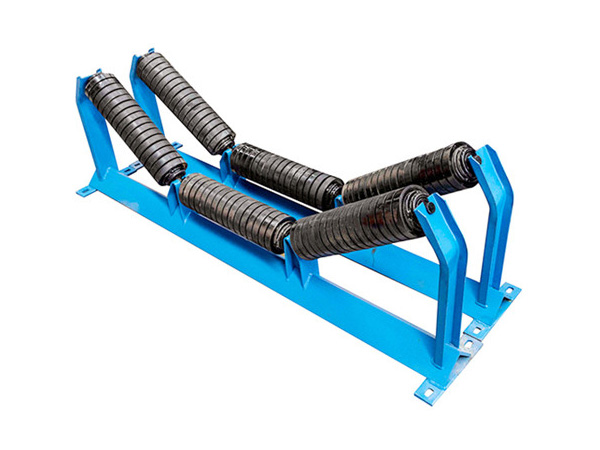
The rolls of a carrying idler set are angled to form a trough. If the two side rolls are at the same angle and the set is centred on the belt, the belt is balanced and runs straight. If one side roll is at a different angle, or the whole set is offset to one side, the trough is asymmetric and guides the belt toward the lower side. Correct, symmetric trough angles are the baseline of good tracking, and they are worth checking first whenever a belt runs to one side.
Roll-to-roll alignment
Each roll in a set, and each idler station along the run, should be aligned to the same centreline and should be square to the belt travel direction. A single station skewed by a few degrees introduces a sideways push that accumulates over the conveyor length. Alignment should be checked station by station, because one skewed frame can override the effect of a dozen correct ones.
Free rotation and roll condition
A roller that rotates freely lets the belt roll over it with minimal transverse force. A seized or sluggish roller forces the belt to slide, and the friction at that point pulls the belt sideways. Worn rolls whose surface is no longer cylindrical, or rolls with material build-up making them eccentric, create the same off-centre force. Keeping rolls in good condition — free-rotating, true, clean — is a continuous contribution to alignment.
Mounting and frame symmetry
The frame that holds the roller must place it squarely and keep it there under load. A frame that flexes allows the roller to tilt under belt load, which reintroduces a sideways component. Symmetric, adequately rigid mounting is the quiet precondition for stable tracking; without it, even well-aligned rolls drift under load.
Training Idlers: How They Work
A training idler is a carrying or return idler set mounted in a frame that can pivot slightly around a vertical axis. As the belt drifts to one side, it pushes harder on one wing of the pivoting set, which rotates the set to steer the belt back toward centre. In effect, the training idler continuously corrects small misalignments automatically, responding to the belt rather than being set once and left.
Pivoting frame type
The common design is a frame carrying the rolls that is free to rotate a few degrees about a central pivot, sometimes with a guide roll at the belt edge that the belt contacts when it drifts. When the belt reaches the guide roll, the resulting force rotates the frame, and the angled rolls steer the belt back. The arrangement is self-correcting for moderate tracking drift and does not require continuous manual adjustment.
Where to place training idlers
Training idlers are most effective on the return run and on the carrying run near the tail, where the belt is still settling onto the conveyor and small corrections are easy. Placing them at intervals along long runs provides correction before drift becomes large. They should be located where the belt is accessible and where there is enough belt length for the correction to take effect, rather than immediately at a loading point where impact and chute forces dominate.
Using Standard Idlers to Correct Tracking
Not every correction needs a training idler. Many tracking problems are solved by returning the standard idlers to correct geometry. Adjusting a skewed carrying set so its rolls are square and centred, realigning an offset return roller, and replacing a seized or worn roll often restores tracking without additional hardware. Standard idlers, correctly aligned and maintained, keep the belt true; training idlers are the supplementary layer that handles residual drift. Using them in the right order — correct the standard geometry first, then add training idlers where drift persists — avoids masking a basic misalignment behind an automatic corrector.
Common Alignment Mistakes Related to Idlers
Several recurring mistakes cause idler-related mistracking. Setting the trough angle asymmetrically, by accident or through worn brackets, steers the belt. Leaving a single station skewed relative to the line is enough to defeat otherwise good alignment. Failing to replace seized rolls lets a sliding contact drag the belt sideways. Mounting frames that flex under load allows rollers to tilt. And adding a training idler to mask a basic geometric misalignment treats the symptom and leaves the cause, so the training idler works harder and the underlying problem returns elsewhere. Each of these is a geometry or condition issue, not a belt defect.
Step-by-Step Alignment Check
A practical field check for idler-related misalignment runs in order of increasing intervention:
Walk the conveyor and note where the belt begins to drift; the cause is usually just upstream of the first visible offset.
Check the carrying idler sets at and just before the drift point for symmetric trough angle and centre alignment to the belt.
Check return idlers along the run for squareness to the belt centreline; return-run tracking problems are often a skewed return roller.
Spin each suspect roll by hand — any that do not rotate freely should be flagged for replacement.
Inspect rolls for wear or build-up that makes them eccentric, and replace or clean as needed.
Verify that mounting frames are not flexing under load, which would let aligned rolls tilt.
Only where drift persists after geometry and condition are corrected, add or adjust training idlers at appropriate points.
This sequence diagnoses the problem before acting on it, which is faster and more durable than guessing and adjusting whichever idler is nearest the visible drift.
Checking alignment on installation
The cheapest alignment correction is the one done at installation. Setting every idler station square and centred, confirming symmetric trough angles, and verifying that rolls are free and frames rigid before the belt runs, prevents most tracking problems from appearing. Re-checking alignment after the belt has been running under load, when frames have settled, catches the drift that load introduces.
FAQ
Can idler rollers really cause belt mistracking?
Yes, and often. A skewed idler set, a seized roll, a worn or eccentric roll, or a misaligned return roller all apply a sideways force to the belt and push it off line. Because idlers are distributed along the whole conveyor, they are one of the most common sources of tracking problems, and correcting them is frequently the fastest route to restoring alignment.
How do training idlers correct belt tracking?
A training idler is mounted in a frame that pivots slightly about a vertical axis. When the belt drifts, it contacts a guide roll or pushes on one wing of the set, rotating the frame so the angled rolls steer the belt back toward centre. The device corrects small drifts automatically rather than being set once, and it is most effective on the return run and near the tail.
Should I fix the idlers or just add a training idler?
Fix the standard idler geometry first. Correct skewed sets, realign offset return rollers, and replace seized or worn rolls; most tracking problems resolve there. Add a training idler only where drift persists after the basic geometry is correct, otherwise the training idler masks an underlying misalignment that will return.
Why does the belt track fine until it is loaded?
Load reveals misalignment that the empty belt tolerates. Under load, a flexible frame can tilt a roll, an off-centre trough can steer the weighted belt, and any residual skew accumulates. Checking alignment under load, after the belt has run and frames have settled, captures the drift that the unloaded inspection misses.
Where should training idlers be placed?
On the return run and on the carrying run near the tail, where the belt is easiest to correct and there is enough length for the steering to take effect. Avoid placing them right at loading points where impact and chute forces dominate. Space them along long runs so correction happens before drift becomes large.
Conclusion
Conveyor belt alignment is, in practice, largely an idler problem, and that is good news, because idlers are the most adjustable and replaceable component on the conveyor. Symmetric trough angles, square and centred stations, free-rotating and true rolls, and rigid mounting provide the baseline of straight tracking; training idlers add automatic correction for residual drift. The durable approach is to correct the standard geometry first and use training idlers as a supplement, rather than masking a basic misalignment behind an automatic corrector. For maintenance teams, a disciplined step-by-step alignment check — finding where the belt starts to drift, then working upstream through geometry and roll condition — resolves most tracking issues without guesswork and prevents the spillage, edge wear and damage that mistracking causes.
References
Conveyor Equipment Manufacturers Association. Belt Conveyors for Bulk Materials, 7th ed. CEMA, 2014.
Lodewijks, G. "Dynamics of Belt Conveyor Systems." Bulk Solids Handling, vol. 22, no. 2, 2002.
Harrison, A. "Determining the Life of Conveyor Rollers Using Fatigue Theory." Bulk Solids Handling, vol. 25, no. 5, 2005, pp. 290–295.
Molnár, V., Fedorko, G., Stehlíková, B., et al. "A Failure Analysis of Idler Rolls of Belt Conveyors." Engineering Failure Analysis, vol. 45, 2014, pp. 155–165.
Zhang, Y., Yang, X., and Meng, L. "Review of Belt Conveyor Idler Roller Research." International Journal of Mining Science and Technology, vol. 33, no. 3, 2023.

Contact Us
Tel:8615031765579
WhatsApp:+8615031765579
E-mail:905675277@qq.com
Add:Likou Village, Chenzhuang Town, Xian County, Hebei Province, China
Url:https://www.yxidlerrollers.com