







- Site Navigation -
Conveyor Idler Rollers in Coal Handling Systems Guide
Author:yuexing Date:2026-10-06 23:19:59 Hits:119
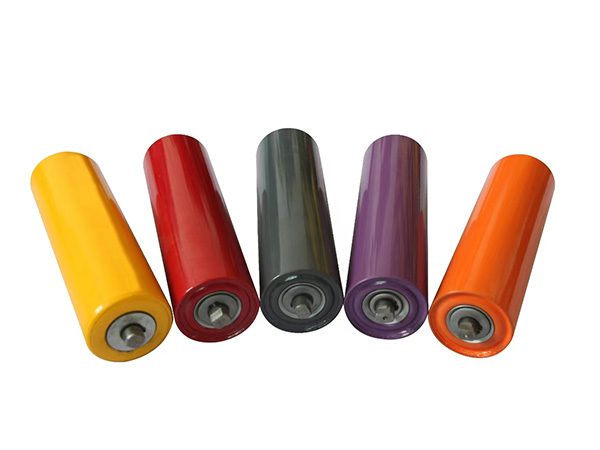
Coal handling moves enormous tonnages by belt conveyor, and the conditions those rollers face change as the material moves from mine or stockyard to plant. A coal conveyor idler at a receiving hopper sees coarse, lumpy material and heavy impact; one on a fine-coal transfer sees dust so fine it penetrates weak seals; one in an outdoor stockyard sees moisture, corrosion and, in cold climates, freezing. These are different problems, and a roller specified well for one may fail quickly in another. The point of this guide is to show how idler requirements shift along the coal handling chain, and how to specify each stage so that the rollers reach their planned life instead of being replaced on a repeating emergency schedule.
Why Coal Handling Puts Specific Demands on Idlers
Three conditions dominate roller degradation in coal systems, and each is present to a different degree at different points in the plant. The first is fine coal dust, which is fine enough to reach any seal not designed to exclude it, and which attacks the bearing once inside. The second is moisture, which in washed-coal plants and outdoor yards combines with dust into an abrasive paste and, in cold regions, freezes into build-up on the belt and rolls. The third is abrasion and impact, present wherever coarse or lumpy coal lands on the belt. A coal plant idler specification has to deal with all three, often within the same conveyor network.
Fine coal dust
Coal produces one of the most penetrating dusts in bulk handling. The fine fraction, particularly after crushing and washing, is small enough to pass through the clearances of a simple lip seal and reach the bearing. Once inside, the dust acts like a lapping compound, accelerating wear and shortening bearing life. The sealing requirement on a coal conveyor is therefore a primary specification item, not an afterthought, and it is most demanding on the fine-coal and transfer conveyors where the dust is finest.
Moisture and freezing
Washed coal and outdoor stockyards introduce water into the system. Water itself is a contamination path to the bearing, and where it combines with fine coal it forms a slurry that is both abrasive and adhesive. In cold climates the bigger problem is freezing: damp coal adheres to the shell and builds up into a mass that makes the roller eccentric, which increases bearing load and causes belt mistracking. A roller specification for a cold-climate coal plant should consider shell surface and any features that reduce material build-up, in addition to sealing against water.
Abrasion and impact
Run-of-mine and crushed coal is hard and angular, and it wears the shell where the belt slides and impacts the roll at loading points. The impact component is concentrated at the receiving hopper and at transfer points, where material drops onto the belt. Rollers at these positions need more shell thickness and impact protection than rollers on the steady-run portions of the conveyor, because the duty there is dominated by impact rather than steady load.
Idler Types Across the Coal Handling Chain
Receiving and crushing
The conveyors that receive raw coal from trucks, wagons or mine belts and feed the crusher handle the coarsest, heaviest material and see the most impact. Loading-point idlers here should be impact-rated — a robust shell, a strong frame and an element that absorbs part of the impact energy before it reaches the bearing. Sealing must cope with coarse, often damp dust rather than the finest fraction.
Stockyard and reclaim
Stockyard conveyors are typically outdoor, which introduces atmospheric corrosion and, depending on climate, moisture and freezing. The rollers need corrosion-resistant frame treatment — galvanising or an equivalent coating — and seals that resist both dust and water. Reclaim conveyors that pick coal back up from the pile may see frozen or compacted material in winter, which raises the impact and build-up load and argues for robust shells and attention to build-up prevention.
Plant feed conveyors
Conveyors feeding the boiler or preparation plant often carry finer, sometimes washed, coal, so dust infiltration becomes the dominant sealing concern. The load may be high on high-capacity feed belts, making bearing capacity the governing specification. At this stage the roller must keep fine dust out for many thousands of hours while carrying a steady, heavy load.
Sealing Against Coal Dust
Sealing is the specification item that most separates a coal-plant roller from a general-purpose one. A single lip seal is not adequate against fine coal dust. Good practice is a staged arrangement: a contact seal at the shaft, a grease-filled cavity as a secondary barrier, a labyrinth that uses the roller's rotation to fling dust outward away from the bearing, and an external flinger that keeps material off the seal face. Each stage removes part of the contamination challenge, and together they are what deliver long bearing life in fine-coal dust. A roller with an inexpensive single seal will appear adequate on delivery and fail early in the dustiest areas of the plant.
Shell and Frame for Coal Service
At the receiving and crushing end of the chain, shell wall thickness is the primary defence against abrasion and impact, and it should be matched to the coarseness of the material and to the position — loading zones need more than the mid-run. Where coal tends to adhere to the belt or the roll, a polymer or rubber-lagged shell can reduce build-up and protect the belt. The frame must carry the load without deflecting and must resist corrosion in outdoor and wash-down areas; a galvanised or coated frame is the appropriate standard for exposed stockyard conveyors, while an adequately painted frame may be acceptable indoors.
Corrosion and Outdoor Coal Yards
Outdoor coal yards expose rollers to weather and, in coastal or industrial atmospheres, to corrosive conditions. The frame and mounting hardware are the parts most affected, because atmospheric corrosion reduces the frame section over time and, at high levels, allows the roller to deflect under load. Hot-dip galvanising, or an equivalent protective coating, is the practical response for outdoor service, and frames in aggressive atmospheres should be inspected periodically for section loss. A roller specification that ignores the outdoor environment may have a perfectly good bearing and shell but a frame that fails first.
Selection Considerations for Coal Plants
A buyer specifying coal conveyor idler rollers should give the supplier enough information to size the product to the position:
The coal type and condition at each point — run-of-mine, crushed, washed, fine, or frozen in cold climates.
Conveyor capacity, belt speed, belt width and the load carried per roller station.
Drop height and material size at loading and transfer points, so impact duty can be assessed.
Whether each conveyor is indoor or outdoor, and the local corrosion and temperature conditions.
The position of each roller group along the run, so the specification can be matched to the duty.
The expected service interval the operation is targeting.
A supplier who asks about these conditions is positioning to specify correctly. One who quotes coal idlers on diameter and quantity alone is guessing, and a guess in a coal plant becomes an early failure at the dustiest or wettest position.
FAQ
Why do coal conveyor idlers fail early even when the bearing looks fine?
Usually because fine coal dust reached the bearing through inadequate sealing. Coal dust is fine enough to penetrate a simple lip seal, and once inside it accelerates bearing wear. The visible failure is a seized bearing, but the root cause is sealing, not the bearing itself. A staged sealing arrangement is the effective defence.
Do outdoor coal yard conveyors need different idlers?
Yes. Outdoor conveyors add corrosion and moisture to the duty, so the frame should be galvanised or coated, and the seals should resist water as well as dust. In cold climates, frozen coal build-up on the shells is an additional concern that argues for robust shells and attention to build-up on the roll surface.
How should idlers be specified at coal loading points?
Loading points concentrate impact and abrasion, so impact-rated rollers — robust shell, strong frame, and an impact-absorbing element — are appropriate there. Simply using a standard carrying roller at a loading point is the most common cause of early failure on a coal conveyor, because the steady-load specification does not address the impact duty.
What shell thickness suits a coal handling conveyor?
It depends on the coarseness of the coal and the position. Coarse, run-of-mine coal at receiving and crushing points needs a thicker shell than fine coal on a steady run. The shell wall should be matched to the local abrasion and impact, with more thickness at loading and transfer points than on the mid-run.
Should the whole coal conveyor network use the same idler?
No. The efficient approach is position-specific: impact-rated rollers at receiving and transfer points, dust-tight sealed rollers on fine-coal conveyors, and corrosion-protected rollers on outdoor stockyard conveyors. A single specification across the network either over-specifies the light positions or under-specifies the severe ones.
Conclusion
A coal conveyor idler has to serve several different environments within one plant. Receiving and crushing points demand impact protection and abrasion resistance; fine-coal transfers demand sealing against dust fine enough to defeat a simple seal; outdoor yards demand corrosion protection and, in cold regions, resistance to frozen build-up. Recognising these differences and specifying each stage accordingly is the basis for reliable coal handling, and it also makes maintenance predictable — inspection and replacement by duty group rather than treating the network as uniform. For plant engineers and buyers, the practical benefit of working with a roller supplier who understands coal handling is that the specification can be matched to the stage from the outset, instead of being discovered through repeated failures. Specified stage by stage, idlers become a managed component rather than a recurring emergency.
References
Conveyor Equipment Manufacturers Association. Belt Conveyors for Bulk Materials, 7th ed. CEMA, 2014.
Molnár, V., Fedorko, G., Stehlíková, B., et al. "A Failure Analysis of Idler Rolls of Belt Conveyors." Engineering Failure Analysis, vol. 45, 2014, pp. 155–165.
Harrison, A. "Determining the Life of Conveyor Rollers Using Fatigue Theory." Bulk Solids Handling, vol. 25, no. 5, 2005, pp. 290–295.
Fedorko, G., and Molnár, V. "Determination of the Idler Rollers Bearing Load." Applied Mechanics and Materials, 2013.
Zhang, Y., Yang, X., and Meng, L. "Review of Belt Conveyor Idler Roller Research." International Journal of Mining Science and Technology, vol. 33, no. 3, 2023.

Contact Us
Tel:8615031765579
WhatsApp:+8615031765579
E-mail:905675277@qq.com
Add:Likou Village, Chenzhuang Town, Xian County, Hebei Province, China
Url:https://www.yxidlerrollers.com