







- Site Navigation -
Conveyor Idler Applications in the Cement Industry
Author:yuexing Date:2026-09-26 22:14:23 Hits:129
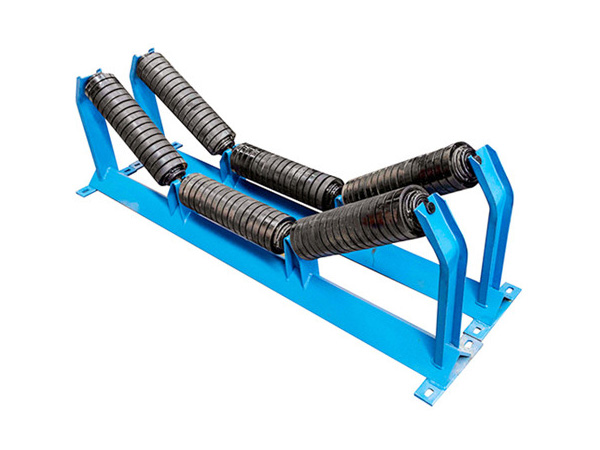
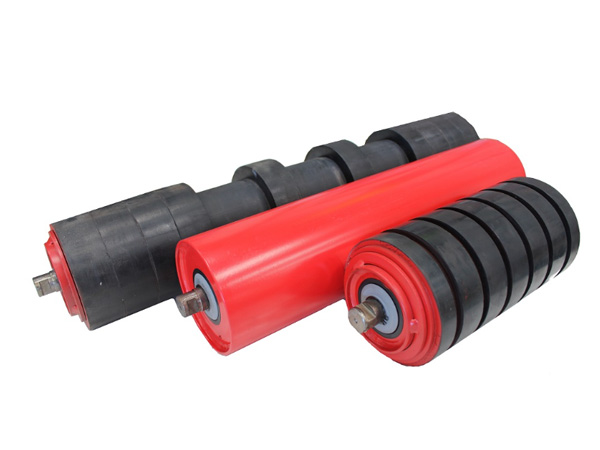
Cement production moves an enormous quantity of material by belt conveyor, and the conditions the rollers face change dramatically as the material moves through the process. At the front of the plant, a cement conveyor idler handles raw limestone, shale and clay — heavy, coarse and abrasive. In the middle, it carries ground raw meal and then hot clinker. At the back, it handles finished cement that is fine, dry and highly alkaline. Each of these stages places a different demand on the roller, and a specification that serves one stage well may fail quickly at another. Understanding where each roller sits in the process, and what that position demands, is the basis for a roller specification that lasts. This article follows the material through a cement plant and explains how idler requirements change with it.
Why Cement Handling Is Hard on Conveyors
Three characteristics make cement plant conveyors unusually demanding. First, the raw materials are abrasive — limestone and shale are hard and angular, and they cut into steel surfaces over time. Second, part of the process runs hot — clinker leaves the kiln at high temperature and the conveyors that carry it operate under thermal conditions that general-purpose rollers cannot tolerate. Third, cement dust is fine and strongly alkaline, and it attacks both the seals that protect bearings and the frames that carry them. A roller specification for a cement plant has to reconcile all three of these, often at different points on the same conveyor network.
Abrasive raw materials
Limestone, shale, marl and clay arrive at the plant as large, hard, irregular lumps. The material is dropped from trucks or loaders and crushed, and the conveyors that move it see both steady abrasion from the material sliding against the shell and impact at the loading points. Shell wear is a real concern, and the appropriate wall thickness is dictated by the abrasiveness of the local raw materials rather than by a generic figure.
High temperatures at the kiln end
Clinker leaves the kiln at a temperature far above what general-purpose idler components can survive. Standard bearing greases and elastomeric seals have temperature limits, and above those limits the lubricant degrades and the seal hardens, both of which shorten bearing life sharply. Conveyors carrying hot clinker therefore require rollers specified for elevated temperature — high-temperature grease and seal materials — and the design must also account for thermal expansion in the roller and the structure.
Alkaline dust and moisture
Cement dust is fine, persistent and chemically aggressive. It works its way into seals, where it can damage both the seal material and, once inside, the bearing. Moisture, whether from raw materials, wash-down or the atmosphere, combines with the dust to form an aggressive paste that attacks the frame and mounting hardware. Sealing and surface treatment that are adequate in a general-purpose plant may be insufficient in a cement plant, particularly in the finishing areas where the dust is finest.
Matching Idlers to Each Stage of the Process
Raw material intake and crushing
The conveyors that receive and feed raw materials to the crusher handle the coarsest and most abrasive material in the plant. Impact duty at the loading point is significant, and abrasion is continuous. Rollers here need robust shells and impact protection at the loading zones, with a shell wall suited to the abrasiveness of the local stone. Sealing has to cope with dust that is coarse and damp rather than fine and dry.
Raw mill feed and blending
After crushing, the material is finer and more consistent, but it is still abrasive and can be damp. The load per roller may be high on a high-capacity raw mill feed conveyor, making bearing capacity the governing specification. Sealing remains important because the material is fine enough to penetrate poor seals, and moisture content can vary with the source of raw materials.
Clinker handling
This is the stage where temperature dominates. Conveyors carrying clinker from the cooler to the clinker store see elevated material temperature, and the roller specification must reflect that. High-temperature grease and seal materials are essential, and where the temperature is high enough, the roller design may need to account for thermal growth. Standard rollers substituted here will fail early, and the failure is often traced to lubricant degradation rather than to any mechanical defect.
Cement grinding and despatch
The finished cement is fine, dry and strongly alkaline, and the conveyors that move it — feed to the mill, transport to the silos, and despatch — are exposed to the finest and most aggressive dust in the plant. Sealing against fine alkaline dust is the primary concern, and frames need surface treatment that resists the alkaline environment. Where cement is handled in bagging and despatch areas, dust control may reduce the burden, but the roller should still be specified for a dusty, alkaline environment rather than assumed to be in clean conditions.
Temperature Considerations for Clinker Conveyors
Temperature is the specification driver that most clearly separates cement plant rollers from general-purpose ones. The bearing lubricant sets the practical limit: conventional greases degrade faster as temperature rises, and above their rated limit the lubricant breaks down and the bearing fails. The seal material is the second limit: standard elastomers harden and lose elasticity at elevated temperature, at which point they stop sealing and contamination enters. A roller specified for clinker service therefore uses high-temperature grease and a seal material rated for the operating temperature, and the frame and shell are considered for thermal expansion so that the roller does not bind as it heats. Where the application permits it, keeping the hottest material off the belt for as long as possible before it reaches the rollers reduces the thermal load the rollers must withstand.
Sealing and Bearing Choice for Alkaline Dust
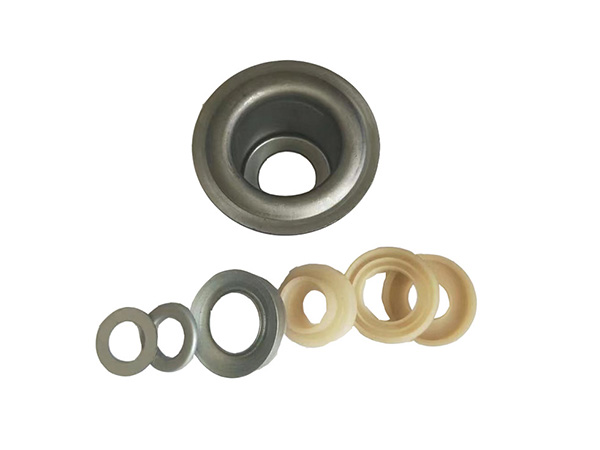
Cement dust is fine enough to reach any seal that is not designed to exclude it, and alkaline enough to attack seal materials and degrade the lubricant that protects the bearing. For cement plant service, a multi-stage sealing arrangement is the appropriate standard: a contact seal that keeps the bulk of the dust out, a grease-filled cavity as a secondary barrier, a labyrinth that uses the roller's rotation to fling dust away, and an external flinger to keep material off the seal face. The bearing itself should be selected with load margin, and the seal material should be chosen for compatibility with the alkaline environment as well as the operating temperature. A roller with an inexpensive single seal will appear adequate on delivery and fail early in the dustiest areas of the plant.
Shell Material and Abrasion
At the raw material end of the plant, abrasion dominates, and shell wall thickness is the primary defence. The appropriate thickness depends on the hardness and angularity of the local raw materials and on the position — loading zones need more than the mid-run. Where material tends to adhere to the belt or the roller, a polymer or rubber-lagged shell can reduce build-up and protect the belt, though the choice depends on the specific material behaviour. In the hot clinker area, the shell material must also tolerate elevated temperature, which constrains the options compared with a cold bulk material conveyor. There is no single shell specification for a whole cement plant; each stage has its own abrasion, adhesion and temperature profile.
Maintenance Planning in a Cement Plant
Because the conditions vary so much across a cement plant, a maintenance plan that treats all rollers the same will either over-maintain the light positions or under-maintain the severe ones. A better approach is to group conveyor positions by duty — raw material, clinker, finished cement — and set inspection frequency and replacement criteria for each group. Temperature measurement is particularly useful on clinker conveyors, where a rising bearing temperature is an early sign of lubricant degradation. Visual inspection focused on seal condition and shell wear is valuable in the raw material and finishing areas. Recording the service life achieved at each duty group gradually reveals which specification is working and where it needs to change, turning maintenance from a repeating set of replacements into an improving process.
FAQ
Why do cement plant conveyors need different idlers at different stages?
Because the material and conditions change fundamentally across the process. The raw material end is coarse, heavy and abrasive; the clinker end is hot; the finished cement end is fine, dry and alkaline. Each set of conditions places its main demand on a different part of the roller — shell at the raw end, temperature-rated lubricant and seals at the clinker end, sealing against fine dust at the finishing end. Matching the roller to the stage is what keeps it working.
What temperature can a standard conveyor idler handle?
General-purpose rollers are limited by their bearing lubricant and seal material, which are typically rated for service well below the temperature of hot clinker. Conveyors carrying clinker require rollers specified for elevated temperature, using high-temperature grease and heat-resistant seal materials. Standard rollers substituted into clinker service fail early, usually because the lubricant degrades or the seal hardens.
How does cement dust damage conveyor idlers?
Cement dust is fine enough to reach any seal not designed to exclude it, and alkaline enough to attack seal materials and degrade bearing lubricant once inside. The result is bearing wear and eventual seizure, often long before the roller's mechanical life is reached. A multi-stage sealing arrangement — contact seal, grease cavity, labyrinth and external flinger — is the effective defence.
What shell specification suits abrasion-heavy cement raw material?
The shell wall thickness should be matched to the abrasiveness of the local raw material and to the position on the conveyor, with more thickness at loading and transfer points than on the mid-run. Where material tends to adhere, a polymer or rubber-lagged shell may help. Because the abrasion profile changes from raw material to finished cement, the shell specification should be set per stage rather than uniformly.
How should maintenance differ across a cement plant's conveyors?
Group positions by duty — raw material, clinker, finished cement — and set inspection frequency and replacement criteria for each group. Temperature measurement is most valuable on clinker conveyors and shell wear inspection on raw material conveyors, while seal condition inspection matters most in the dustiest finishing areas. Recording service life by group gradually shows which specifications are working and where they need adjustment.
Conclusion
In a cement plant, the cement conveyor idler has to serve several different environments under one roof. The raw material conveyors demand abrasion resistance and impact protection; the clinker conveyors demand temperature-rated bearings and seals; the finishing conveyors demand sealing against fine, alkaline dust. Recognising these differences and specifying each stage accordingly is the basis for reliable conveyor operation, and it is also the basis for sensible maintenance — inspecting and replacing by duty group rather than treating the whole network as though it were uniform. For plant engineers and buyers, the value of working with a roller supplier who understands the cement process is that the specification can be matched to the stage from the outset, rather than discovered through repeated failures. Specified stage by stage, idlers stop being a recurring problem and become a predictable, manageable part of the plant's maintenance programme.
References
Conveyor Equipment Manufacturers Association. Belt Conveyors for Bulk Materials, 7th ed. CEMA, 2014.
Molnár, V., Fedorko, G., Stehlíková, B., et al. "A Failure Analysis of Idler Rolls of Belt Conveyors." Engineering Failure Analysis, vol. 45, 2014, pp. 155–165.
Harrison, A. "Determining the Life of Conveyor Rollers Using Fatigue Theory." Bulk Solids Handling, vol. 25, no. 5, 2005, pp. 290–295.
Fedorko, G., and Molnár, V. "Determination of the Idler Rollers Bearing Load." Applied Mechanics and Materials, 2013.
Zhang, Y., Yang, X., and Meng, L. "Review of Belt Conveyor Idler Roller Research." International Journal of Mining Science and Technology, vol. 33, no. 3, 2023.

Contact Us
Tel:8615031765579
WhatsApp:+8615031765579
E-mail:905675277@qq.com
Add:Likou Village, Chenzhuang Town, Xian County, Hebei Province, China
Url:https://www.yxidlerrollers.com