







- Site Navigation -
What Is the Load Capacity of Conveyor Idlers?
Author:yuexing Date:2026-03-13 17:38:01 Hits:57
The load capacity of a conveyor idler is the maximum safe radial load it can bear continuously, usually based on a bearing life of 30,000 hours (L₁₀). It mainly depends on idler size, bearing type, shaft, and wall thickness, and is classified by standards like CEMA, ISO, MT.
Typical Load Ranges
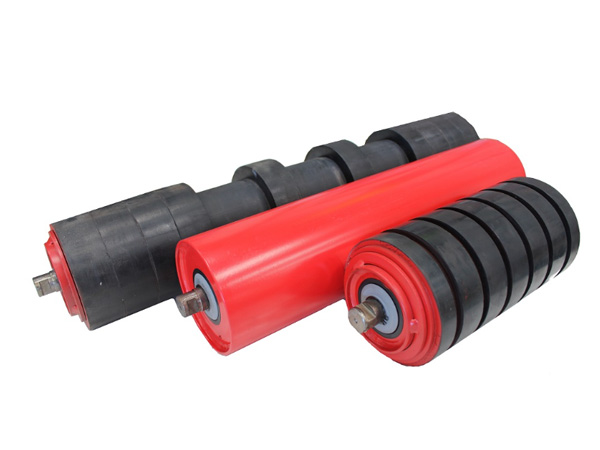
Light-duty idlers (small diameter, PVC/HDPE)
Load: 50–500 kg per idler
Used for light conveying, logistics, packaging.
Standard industrial idlers (steel, CEMA B/C/D)
Load: 180–1,200 kg per idler
Most widely used in mines, ports, cement, and bulk material handling.
Heavy‑duty & impact idlers (CEMA E/F, large bearings)
Load: 1,200–2,200+ kg per idler
For high‑tonnage, heavy impact, long‑distance conveyors.
Main Factors Affecting Load Capacity
Bearing type and size
Larger and heavier‑duty bearings (deep‑groove ball, spherical roller) support higher loads.
Idler diameter and wall thickness
Larger diameter and thicker steel mean higher stiffness and load capacity.
Shaft diameter and material
Common shaft sizes: 20 mm, 25 mm, 30 mm, 40 mm, 45 mm.
Working conditions
Impact loads from material dropping require an impact factor (1.2–2.0).
Inclined belts also introduce axial loads that affect selection.
Simple Calculation Logic
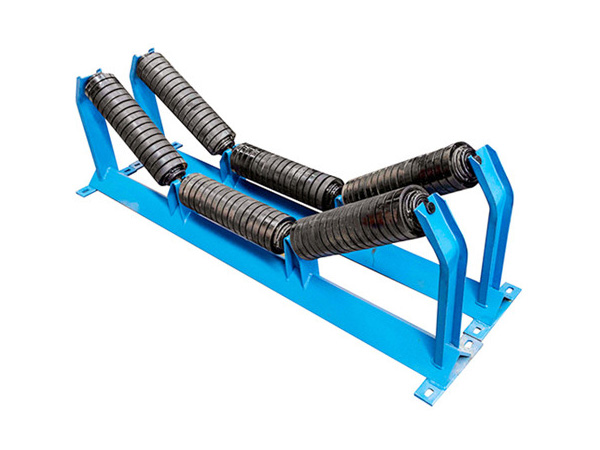
For a 3‑roller trough set:
Total load per set = (belt weight + material weight per meter) × idler spacing × impact factor
Load per roller = total load × distribution ratio (middle roller ~60–70%, side rollers ~15–20%)

Contact Us
Tel:8615031765579
WhatsApp:+8615031765579
E-mail:905675277@qq.com
Add:Likou Village, Chenzhuang Town, Xian County, Hebei Province, China
Url:https://www.yxidlerrollers.com