







- Site Navigation -
What Information Is Required to Order Conveyor Idlers?
Author:yuexing Date:2026-03-13 17:51:54 Hits:78
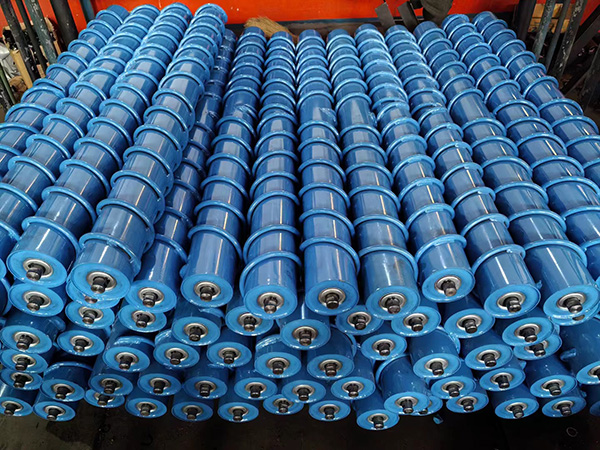
When ordering conveyor idlers, providing complete and accurate information is essential to ensure proper fit, performance, and service life. Missing key parameters often leads to mismatched installation, increased wear, higher maintenance costs, or even safety hazards. Below is the detailed information you need to prepare.
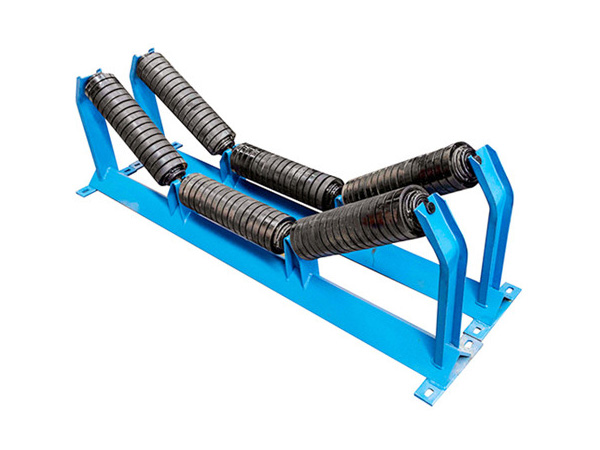
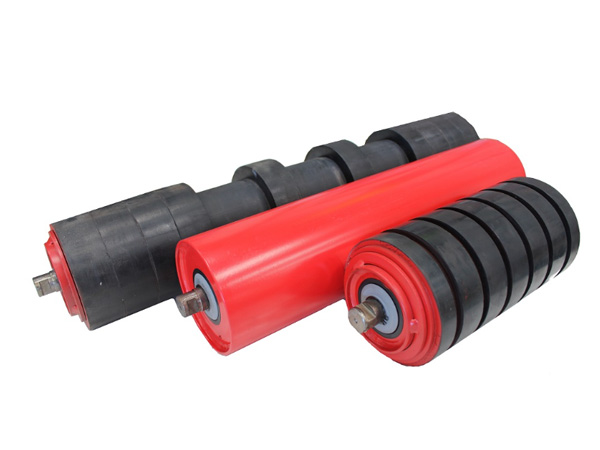
First, you must clarify the type of conveyor idlers. Common types include carrying idlers, return idlers, impact idlers, friction idlers, and troughing idlers. Each serves a different function: impact idlers absorb shock at loading points, while return idlers support the empty belt. Clearly stating the type helps suppliers provide the correct structure.
Second, core dimensional parameters are critical. These include the diameter of the idler shell, length of the idler, shaft diameter, bearing model, and total length between brackets. You should also provide the belt width of the conveyor, as idler specifications are closely matched to belt size. Accurate dimensions guarantee smooth installation and alignment with your conveyor frame.
Third, you need to confirm application environment and working conditions. Inform the manufacturer about factors such as temperature range, humidity, dust concentration, and exposure to water, oil, acid, or alkali. For high-temperature environments, heat-resistant idlers are required; for corrosive settings, stainless steel or anti-corrosion coated idlers are necessary. Sealing structure should also be selected based on dust and water protection levels.
Fourth, load capacity and operating speed must be provided. The weight of conveyed materials, running speed of the conveyor belt, and working frequency determine the structural strength and bearing grade. Heavy-duty mining conditions require thicker steel tubes and high-load bearings, while light-duty logistics systems can use standard-duty idlers.
Finally, you should specify surface treatment, materials, and special requirements. Common options include painted, galvanized, or rubber-coated surfaces. You may also need to define noise limits, anti-static properties, flame resistance, or certification standards. Providing brand preferences for bearings or sealing systems can further ensure quality stability.
In conclusion, ordering conveyor idlers requires detailed information on type, size, environment, load, speed, and special needs. With complete data, manufacturers can produce highly compatible, reliable, and long-lasting idlers that improve conveyor efficie
GB/T 7714:
Cousseau T,Robinson P W,O’Shea J,et al.Optimizing friction losses of conveyor systems using large‑diameter idler rollers[J].Lubricants,2025,13(3):104.DOI:10.3390/lubricants13030104.
APA:
Cousseau,T.,Robinson,P.W.,O’Shea,J.,Ryan,S.,&Hoette,S.(2025).Optimizing friction losses of conveyor systems using large‑diameter idler rollers.Lubricants,13(3),104.https://doi.org/10.3390/lubricants13030104
MLA:
Cousseau,Tiago,et al.“Optimizing Friction Losses of Conveyor Systems Using Large‑Diameter Idler Rollers.”Lubricants,vol.13,no.3,2025,p.104,doi:10.3390/lubricants13030104.ncy and reduce long-term operating costs.

Contact Us
Tel:8615031765579
WhatsApp:+8615031765579
E-mail:905675277@qq.com
Add:Likou Village, Chenzhuang Town, Xian County, Hebei Province, China
Url:https://www.yxidlerrollers.com